






















Commercial Bug Sweep Service: Protect Your Business from Hidden Surveillance Risks
Protect your business from hidden surveillance with a commercial bug sweep service. Identify concealed listening devices and protect confidential information.

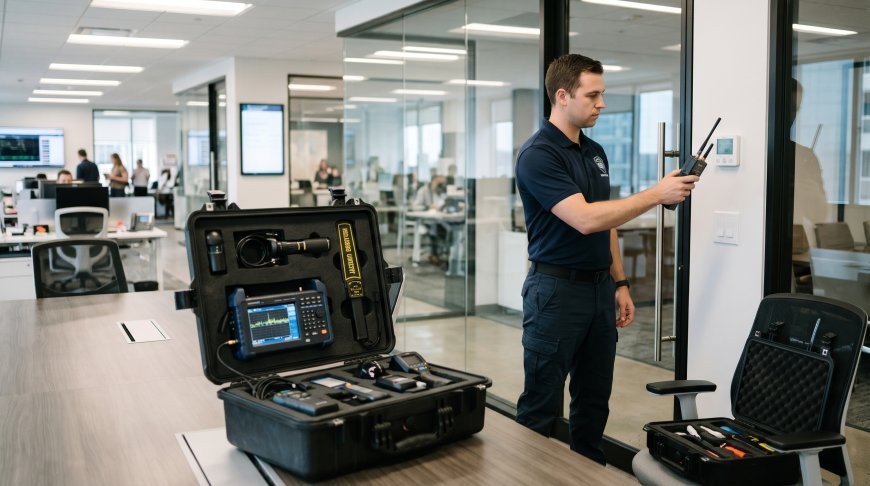
Businesses handle sensitive information every day. From private meetings and financial discussions to client negotiations and future business plans, confidential conversations play an important role in daily operations. However, hidden recording devices and unauthorised surveillance equipment can put this information at risk. A professional commercial bug sweep service helps businesses identify concealed listening devices, hidden cameras, and other surveillance equipment that may have been placed inside their offices or commercial properties without permission.
Corporate surveillance is not always easy to recognise. Small recording devices can be concealed inside everyday objects, while certain wireless equipment may operate without attracting attention. Business owners and management teams should therefore take reasonable steps to protect their workplaces. A professional technical inspection can help identify potential security weaknesses and provide greater confidence that private business information is being handled safely.
Why Businesses Need Protection Against Hidden Surveillance
Business security involves more than protecting computers, physical documents, and office entrances. The privacy of conversations and internal communications also deserves attention.
Companies frequently discuss information that should remain within authorised teams. If these conversations are recorded or monitored without consent, the consequences can extend beyond a simple privacy concern.
Some common risks include:
-
Confidential business information: Private discussions about pricing, contracts, partnerships, and expansion plans may be exposed.
-
Financial information: Sensitive financial conversations could become accessible to unauthorised individuals.
-
Client confidentiality: Businesses may be responsible for protecting information shared by customers and commercial partners.
-
Employee privacy: Unauthorised recording equipment can create serious workplace privacy concerns.
-
Competitive disadvantages: Leaked business strategies may affect negotiations and commercial relationships.
These risks make workplace privacy an important part of a company's overall security arrangements.
What Is a Commercial Bug Sweep Service?
A commercial bug sweep service is a professional security inspection designed to identify potential electronic surveillance equipment within business premises. It is commonly associated with Technical Surveillance Countermeasures (TSCM), a specialist field focused on detecting and assessing technical surveillance threats.
During an inspection, trained professionals may examine office spaces, meeting rooms, boardrooms, executive offices, and other areas where confidential discussions take place.
Depending on the inspection requirements, different detection methods and specialist equipment may be used to assess possible security threats.
Common Types of Surveillance Equipment
Hidden surveillance devices can take different forms. Some are designed to record conversations, while others may transmit information through wireless signals.
Examples include:
-
Hidden microphones: Small recording devices that may be concealed in office furniture or everyday objects.
-
Wireless listening devices: Equipment designed to transmit audio information through wireless communication.
-
Hidden cameras: Compact cameras that may be positioned to monitor private office areas.
-
Unauthorised recording equipment: Devices that may be installed to capture confidential workplace discussions.
-
Compromised electronic equipment: Certain electronic devices may require further examination when suspicious activity or unauthorised modifications are identified.
Not every unfamiliar electronic device represents a security threat. Proper assessment is important before any equipment is classified as suspicious.
How Professional Bug Sweeping Inspections Work
A professional inspection involves more than simply looking around an office for unusual objects. A structured process is followed to examine the premises, assess potential risks, and investigate suspicious findings.
Although the exact process depends on the property and its security requirements, several important stages are generally involved.
1. Initial Security Assessment
The inspection usually begins with an understanding of the business environment and its privacy requirements.
The inspection team may review:
-
The size and layout of the commercial property.
-
Areas where confidential meetings are conducted.
-
Previous security concerns or suspicious incidents.
-
The type of information that requires additional protection.
-
Any relevant history of unauthorised access.
This information helps determine which areas require closer attention.
2. Physical Inspection of Business Premises
A physical inspection is an important part of identifying suspicious equipment.
Meeting rooms, executive offices, conference areas, and other sensitive spaces may be examined for unfamiliar objects, unexpected modifications, and signs of tampering.
Particular attention may be given to furniture, electrical fittings, office accessories, and other locations where surveillance equipment could potentially be concealed.
3. Electronic and Radio Frequency Assessment
Specialist detection equipment may be used to assess radio frequency activity and identify signals that require further investigation.
However, not every detected signal indicates the presence of a surveillance device. Office environments contain many legitimate wireless systems, including Wi-Fi networks, Bluetooth equipment, and mobile communications.
Professional interpretation is therefore essential to distinguish normal electronic activity from potentially suspicious signals.
4. Investigation of Suspicious Findings
Any unusual findings should be examined carefully before conclusions are reached.
Where appropriate, additional testing may be performed to determine whether an object or electronic signal represents a genuine security concern.
Findings should be documented, and appropriate recommendations should be provided to the business.
5. Inspection Report and Security Recommendations
Once the inspection has been completed, the business should receive a clear explanation of the findings.
Depending on the service provider, the report may include:
-
Areas that were inspected.
-
Detection methods used during the assessment.
-
Suspicious findings, if any.
-
Identified security weaknesses.
-
Recommended corrective actions.
-
Suggestions for future security inspections.
Clear documentation allows management teams to make informed decisions about workplace privacy.
Which Business Areas Should Be Inspected?
Not every area within a commercial property carries the same level of privacy risk. Businesses should prioritise spaces where sensitive information is regularly discussed or handled.
A professional inspection may cover several important locations.
Executive Offices
Senior management offices often contain confidential business discussions involving company finances, strategic decisions, and future planning.
These spaces should receive appropriate attention as part of a workplace security assessment.
Conference and Meeting Rooms
Boardrooms and conference rooms are frequently used for negotiations, internal discussions, and meetings with external partners.
Because sensitive information may be exchanged in these locations, their privacy should be treated as a priority.
Financial and Legal Departments
Accounting teams, financial managers, and legal professionals regularly handle confidential records and sensitive commercial information.
Unauthorised surveillance in these areas could create additional risks for the organisation.
Reception Areas and Shared Offices
Shared workspaces and reception areas may also require assessment, particularly when confidential conversations take place nearby.
The inspection scope should reflect how each area is used rather than relying on a standard checklist alone.
When Should a Business Arrange a Bug Sweep Inspection?
A business does not necessarily need to wait for a security incident before reviewing its workplace privacy arrangements.
Certain situations may justify a professional assessment.
Consider arranging an inspection when:
-
Your business is preparing for an important merger or acquisition.
-
Confidential negotiations are taking place.
-
An unfamiliar electronic device has been discovered.
-
There are concerns about unauthorised access to private meeting spaces.
-
Your organisation has recently moved into new commercial premises.
-
Senior management has identified unusual privacy concerns.
-
Sensitive business discussions require additional security assurance.
Regular assessments may also form part of a wider corporate security programme, depending on the organisation's risk profile.
Choosing the Right Commercial Bug Sweep Service Provider
Selecting a qualified provider is an important decision. A reliable inspection should be supported by technical knowledge, suitable equipment, and a clear understanding of commercial security requirements.
Businesses should look beyond advertising claims and evaluate the provider's actual experience and inspection standards.
Relevant Technical Experience
Look for professionals with experience in technical surveillance detection and commercial security inspections.
Their understanding of electronic surveillance technologies should be supported by practical experience and appropriate technical training.
Suitable Detection Equipment
A professional provider should be able to explain which equipment and assessment methods will be used.
The tools selected should reflect the property's size, layout, and identified security concerns.
Confidentiality and Discretion
Commercial security inspections involve access to sensitive business environments.
Inspection arrangements and findings should therefore be handled confidentially. The provider should also explain how collected information and inspection reports will be protected.
Clear Reporting
A professional service should provide understandable findings rather than making unsupported claims about hidden surveillance.
Businesses should know what was inspected, which methods were used, and whether any further action is recommended.
The Importance of Ongoing Corporate Security
A single inspection can help identify certain security concerns, but workplace privacy requires continued attention.
Office environments change over time. New equipment is introduced, employees move between departments, contractors enter commercial premises, and meeting spaces are frequently reorganised.
These changes can create new security considerations.
Businesses can strengthen their privacy arrangements through several practical measures:
-
Restrict access to sensitive office areas.
-
Maintain proper visitor and contractor records.
-
Review access permissions regularly.
-
Establish clear policies for electronic devices in confidential meetings.
-
Secure meeting rooms before important negotiations.
-
Arrange professional inspections when risk assessments indicate a need.
-
Train employees to report unfamiliar or suspicious equipment.
A consistent approach can help reduce avoidable security risks while supporting a more responsible workplace environment.
Final Thought
Confidential business information is one of the most valuable assets an organisation holds. Protecting it requires attention to both digital security and physical workplace privacy. A professional commercial bug sweep service can help businesses assess potential surveillance threats, investigate suspicious equipment, and identify areas that may require additional protection. By working with experienced TSCM professionals and maintaining sensible security procedures, organisations can create a more secure environment for employees, clients, and business partners. Ultimately, protecting private conversations is not simply about preventing information leaks. It is about maintaining trust, safeguarding commercial interests, and ensuring that important business decisions remain confidential.
What's Your Reaction?
 Like
0
 Dislike
0
 Love
0
 Funny
0
 Angry
0
 Sad
0
 Wow
0