

















Dog Skin Stapler vs Traditional Sutures for Veterinary Wound Closure
Compare a dog skin stapler with traditional sutures for wound closure. See how speed, tension, removal and patient factors guide the choice for dogs.

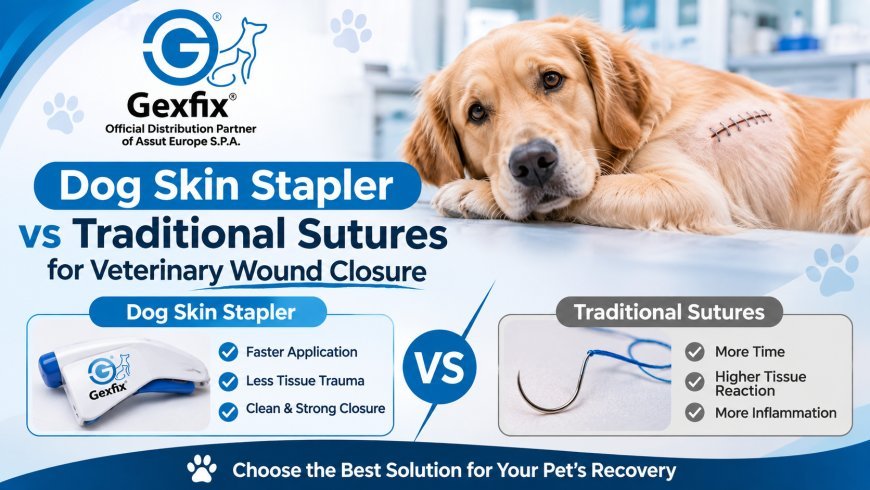
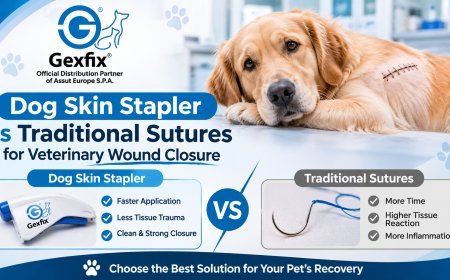
Every skin closure is a trade between speed and control. Staples go in quickly and sit at even intervals. Sutures take longer but give the surgeon more say over tension and tissue alignment. Neither one wins every time. This guide compares a dog skin stapler with traditional sutures for wound closure in dogs. It looks at speed, tissue fit, comfort and removal and then at the patients and sites where each method does best. It is general educational information and the attending veterinarian makes the final choice for each patient.
The Quick Answer
Staples suit long straight incisions in skin that is thick enough to hold them. Sutures suit thin skin and irregular wounds and any closure under tension. Many surgeries use both. Deep layers are closed with suture and the skin is finished with staples.
Rapid closure is the main advantage staples offer over sutures. Control is the main advantage of suture. The sections below show how those strengths play out in practice.
How a Skin Stapler Works
The Device
A skin stapler places a stainless steel staple across the edges of an incision and holds them together while the skin heals. Some people call it a scalp stapler because the term is common in human medicine. In veterinary practice the device is usually called a skin stapler. It remains the simplest of the stapling devices to master.
Most disposable models arrive sterile and preloaded. Some carry 35 staples and show the remaining count on the side of the handle. A matching remover with metal tip jaws takes the staples out after healing.
Where It Fits
A stapler closes the skin layer only. The layers beneath still need suture. Staples work well on straight incisions along the abdomen or limb where the edges meet easily. Teams should avoid very high tension or heavily contaminated areas and take care to evert the skin edges.
How Traditional Sutures Work
Closure Patterns
Sutures give the surgeon a choice of pattern. A simple interrupted pattern allows each stitch to be adjusted. A continuous pattern is faster. Mattress and buried patterns share tension across wider tissue or hide the knots under the skin. This flexibility is why sutures remain the default for wounds with irregular edges or uneven tension.
Material and Size
A vet suture comes in absorbable and non absorbable types and in monofilament and braided structures. Skin closure in dogs commonly uses sizes from 4/0 to 2/0 depending on body weight and skin thickness. Non absorbable monofilament such as nylon keeps its strength and is removed later. Absorbable material in a buried pattern avoids a removal visit. The surgeon picks material and size and needle together.
Staples and Sutures Compared
Speed
Staples are faster. Staplers close skin much faster than suturing and give even spacing and tension from one staple to the next. That saves anesthesia time and reduces hand strain on days with many procedures.
Speed also showed up in research. A canine study compared staples and n-butyl cyanoacrylate glue with an intradermal suture pattern. The intradermal pattern was better than glue and not significantly better than staples and the authors suggested staples when time matters.
Tissue Fit and Tension
Sutures handle tension better. A surgeon can place a tension relieving pattern or choose a heavier thread over a joint. Staples sit in the skin alone so thin or stretched skin can let them tip. Thin skin does not always give enough depth to seat a staple so staples tend to tip or rotate and become hard to remove.
Placing a layer of subcuticular suture first helps. One veterinarian advises an intradermal suture to bring the edges close and keep tension off the staples. That combination is common in practice.
Patient Comfort and Removal
Removal tends to go more smoothly with staples. In one comparison staple removal was judged easier and less stressful for the patient than removing skin sutures and the cosmetic result was similar at 10 to 14 days. The same source noted that a few staples had fallen out or turned. Staples can also cause trouble when tissue swells. An embedded staple can cut into swollen skin and make removal painful.
Buried sutures avoid removal altogether. For anxious dogs or owners who cannot return for a recheck that matters. Absorbable staples are another way around it. A trial in dogs after tibial plateau leveling osteotomy found that absorbable staples did not increase inflammation or infection. It was one study so the evidence is limited.
Choosing by Patient and Site
Small and Thin Skinned Dogs
Size changes the answer. One veterinary surgeon uses regular width staples on cats and on dogs with thin skin or a weight under 30 kg and finds wide staples more likely to rotate or fall out in animals under 20 kg. That reflects one clinician's experience and not a rule. Toy breeds and lean breeds such as sighthounds often have skin that tears easily around thread so a fine buried suture may be gentler than any staple.
Large and Medium Dogs
Thick skin holds staples well. A long flank or abdominal incision in a large dog is a common use for a dog skin stapler because the skin is deep enough to seat the staple and the incision is long enough to benefit from the speed. Heavier sutures are still used for deep layers and for any area with tension.
High Motion Areas
Sites over joints or along the neck and flank move more than the abdomen. Staples can loosen as the skin shifts. A suture pattern that shares load across a wider area often works better there. Dogs with loose folded skin bring a similar problem because edges are harder to line up.
Where Adhesive Fits
Adhesive offers a thread free finish for short shallow wounds with little tension. Skin glue for dogs is usually an n-butyl cyanoacrylate product. One veterinary label lists it for clean fresh wounds with easily apposed edges and warns against infected wounds and against applying it over pooled blood or fluid.
Another label cautions against letting adhesive drip into the cavity because it can cause a foreign body reaction. Some product descriptions also list sealing a suture or staple line as a use and note that the adhesive sloughs off as healing occurs. In that role it protects a closure that is already sound and does not replace one.
Technique Tips for Both Methods
For staples a veterinarian answering a reader question in dvm360 gave three habits that keep them in place. Apply each staple perpendicular to the wound edge and not at an angle and center the indicator over the wound so equal portions of the staple sit on each side. Lift and evert the edges with fine forceps before firing.
For sutures bite distance and spacing matter more than speed. Bites too close to the edge can tear through skin and bites too far apart can leave gaps. A knot tied too tight squeezes tissue and reduces blood flow. Use enough throws to hold fine monofilament without leaving a bulky knot.
Aftercare and Removal
Both methods need the same basic care. Keep the incision clean and dry and stop the dog licking or chewing at the line. An e-collar usually works. Owners should watch for redness and discharge and for any staple or stitch that has turned or come loose. A recheck at about 10 to 14 days lets the team judge healing and decide on removal. The exact timing depends on the site and the individual dog.
Mistakes to Avoid
The first mistake is using staples on thin or loose skin where they tip or rotate. The second is firing without everting the edges. The third is closing a high tension wound with staples alone and no support from deeper layers.
Several errors apply to sutures. Choosing a thread far heavier than the tissue needs causes extra trauma and choosing one too fine for the layer can let it break. Ignoring needle type is another. A final mistake is leaning on surgical glue for dogs to hold a wound that is under real tension. Forgetting to plan removal and recheck timing before the procedure rounds out the list.
Questions to Ask Before You Order
Ask which staple widths are available and how many staples each device holds. Find out whether a remover is included or sold separately. Confirm that every product is labeled for veterinary use and check the sterility statement and expiration date. Ask which suture sizes and needle types are available so you can match stock to your caseload. Cost and handling and how securely the staple sits in skin are the main points to weigh before buying a stapler.
Final Thoughts
A dog skin stapler and traditional sutures are tools for different jobs. Staples give speed and even spacing on long straight incisions in thick skin. Sutures give control on thin skin and irregular wounds and under tension. Most surgeons use suture for deep layers and choose staples or thread for the skin based on the patient and the site. Match the method to the tissue and the dog and plan for removal and recheck before the procedure starts.
Gexfix International Corp. supplies absorbable and non absorbable veterinary sutures in a range of USP sizes and needle types in partnership with Assut Europe S.P.A.
Frequently Asked Questions
Q: Are staples better than sutures for closing skin in dogs?
A: Neither is better in every case. Staples are faster and work well on long straight incisions in thick skin. Sutures give more control on thin skin and irregular wounds and under tension.
Q: Which staple width is better for small dogs?
A: One veterinary surgeon prefers regular width staples for dogs with thin skin or a weight under 30 kg. Wide staples may rotate or fall out more often in small patients. The surgeon decides based on skin and site.
Q: When are skin staples usually removed?
A: Published comparisons checked closures at 10 to 14 days. The exact timing depends on the site and how the dog is healing and the veterinarian's judgment.
Q: Can adhesive replace staples or sutures?
A: Not for every wound. Adhesive suits short clean wounds with edges that meet easily and little tension. It does not support deeper layers. Many teams use it as a surface barrier over a finished closure.
Q: Do staples replace the need for suture?
A: No. A stapler closes the skin layer only. Deeper layers still need suture chosen for the tissue and healing time.
What's Your Reaction?
 Like
0
 Dislike
0
 Love
0
 Funny
0
 Angry
0
 Sad
0
 Wow
0