

























Fraud Prevention for Shopify Stores in India: Fake COD Orders, Chargebacks, and Promo Abuse
Reduce fake COD orders, chargebacks, and promo abuse on your Shopify store in India with verification, rules, monitoring, and safe processes.

The D2C brand receives forty new overnight cash-on-delivery orders from similar pockets of the country, all in the company's name, all with the same phone pattern, all with minor variations. By the time it responds, 20 are shipped, half of those are returned in the following week, and the D2C brand foots the bill.
Fraud and abuse stealthily eat away at Indian ecommerce margins. Whether you handle growth in-house or with the leading digital marketing agency in Delhi, this guide illustrates the typical fraud risks, tangible controls available in Shopify, and ways to prevent abuse without impairing honest shoppers.
What Does Ecommerce Fraud Look Like in India?
Insufficient risk screen for all losses not just form card fraud. Other issues we see regularly in India are:
-
Fake/prank COD orders: orders placed where a person has no intention of taking the delivery, sometimes competitors and other times someone testing the system.
-
Returns to origin on impulse or abandoned deliveries (not fraud but still costs the same)
-
Card testing: the use of small purchases to test stolen card data
-
Chargeback and disputes: requesting that the merchant credit a buyer's account for not being authorized or receiving a purchase.
-
Promo & coupon abuse: use of first-order codes with multiple accounts multiple times.
-
Refund and return abuse: wear and returning products, or possibly stating them will not come in the article
-
Reseller bots on limited drops that snipe out stock
-
Account takeover and phishing targeting employees or customers
-
Distinguish real fraud from mundane friction, as the solutions vary.
Know Your Baseline
Measure before you act:
-
ROSL of orders that are COD vs prepaid
-
RTO rate by payment type, region, product, and campaign
-
Cancellation rate before dispatch
-
Chargeback rate and reasons
-
Promo code redemption patterns
-
Refund and return rates
The trends get to the root of it. A surge associated with a particular campaign or area is a clue.
Control 1: Verify COD Orders
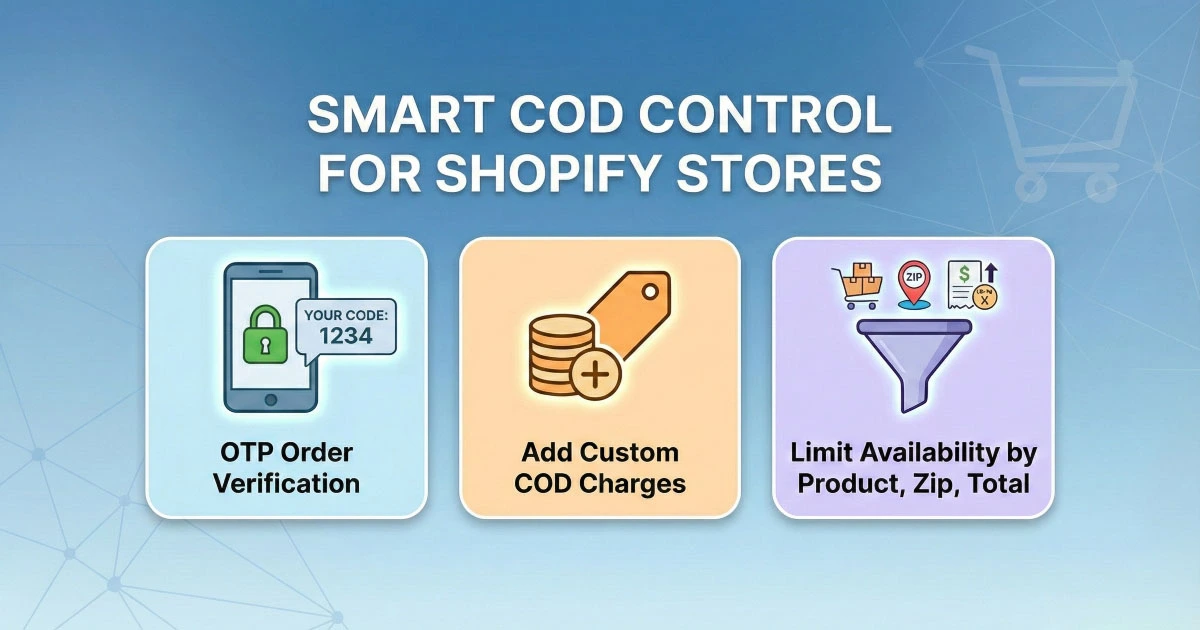
COD is the most important step for most brands.
-
Confirm orders by WhatsApp, SMS, or an automated call before dispatch
-
Ask customers to confirm address and delivery readiness
-
Cancel unconfirmed orders after a defined time
-
Offer a prepaid discount to shift customers to prepaid payment
-
Consider a small advance payment for high-value COD orders
Make it obvious that confirmation is expected.
Control 2: Limit COD Where Risk Is High
Consider data to identify where COD makes sense. Think about limiting COD to:
-
Pincodes with high past return rates
-
Very high-value baskets
-
New customers with suspicious patterns
-
Heavily discounted promotions
Any checkout customizations from Shopify, if your plan supports them, Functions for instance, can be used to block or rename payment methods under these rules. Test thoroughly, and watch for impact on real orders.
Control 3: Improve Address Quality
Bad address leads to undelivered packages and covers up fraud. Auto fill and validate pincode, demand a landmark, and report poor address data to be verified. Combine with serviceability validations on the product page.
Control 4: Use Payment and Risk Tools
Shopify comes with order risk analysis, and most Indian gateways have their own risk and fraud tools. Check your plan to see what is available. The card authentication requirements in India mean some card fraud is not possible, and for UPI, the consumer authenticates in their app. Your merchant provider will know how disputes are handled and whether chargebacks are possible.
Control 5: Rules, Holds, and Automation
Automations can flag and hold suspicious orders for human review:
-
Order tags from a duplicate phone number, email, or address.
-
Place hold orders with inconsistent billing and shipping information or odd quantities
-
Quantity limit per customer on limited drops
-
The thing that should come to his head is that the order is uncharacteristic.
Shopify Flow. If you must make manual cancellations, do it via tags and alerts first, so you're not preventing genuine buyers from buying.
Control 6: Protect Against Bots
You get card testing, scams, and hoarding of stocks through bots. Enable bot filtering in checkout, apply challenge tools on forms where needed, enable rate-limiting on actions that are rate-sensitive, and watch for traffic spikes. Scan your apps since unsecured forms invite spam.
Control 7: Prevent Promo Abuse
-
Single or limited-use codes, and one use per customer Use one time per customer if the tools allow for this.
-
Verify if re-used in emails, phone & addresses
-
Don't publish codes in open spaces that might be used by coupon sites
-
Maintain minimum order values for significant discounts
-
Check redemption reports on a weekly basis during major promotions
Control 8: Manage Returns and Refunds Fairly
Specify return conditions, examine returned items, get unboxing photos for high-cost items, and keep the evidence. Identify serial returners and use policy steps to respond, not accusations.
Control 9: Secure Your Accounts
Secure your store: Two-factor authentication, limiting staff permissions, deleting stale accounts, and educating your staff about phishing messages that are imitating Shopify, payment gateways, or couriers. Also check any apps installed and what permissions they have to access your store.
Use Blocklists Carefully
Don't get in the way of repeteurs: you can block repeat offenders on your phone or device, via email or the address, but be sensible:
-
Track the reason someone was blocked
-
Review regularly as entries pass hands
-
Enable real customers to appeal
-
Ensure you're complying with India's data rules in the way you store and use this information
A false block costs an actual sale and a real customer.
Balance Security and Conversion
All control introduces friction. Chart both: reduction in fraud and reduction in RTO and conversion rate and customer satisfaction. Target where additional friction begins to cost more than it's worth.
Technical Implementation
Fraud controls cross checkout rules, automation, integrations and monitoring. A shopify development agency in Delhi can enable COD verification flows, build checkout rules with Functions where available, link order tagging and alerting, integrate pincode and address validation and configure fraud and RTO dashboards.
An Illustrative Example
An apparel brand in Delhi faces high CTRs on COD orders in certain pincodes and groupings, and some repeat. It rolls out WhatsApp confirmation, restricts COD in highest-risk groupings and pincodes, and displays a prepaid discount.
An expert shopify development agency in Delhi creates the confirmation flow, the checkout rules, and a hold-and-review workflow. The team monitors RTO rate, confirmation rate, conversion, and prepaid share pre- and post-; reviews blocked orders weekly to learn about false positives.
Expert Tip: Review the Orders You Block
Go through the sample of orders your rule has on every week. If they look real, relax your rule. If the fraudsters are getting through, tighten your rule. But, the finest digital marketing agency in Delhi will tell you that you'll need to constantly tweak your fraud rules, because the fraudsters keep changing, as do your customers.
Where Marketing Bugs Fits
Fraud applies to ads, checkout, ops, and dev. We are a digital marketing as well as web development company, which means we can combine campaign quality, checkout policies, as well as reporting. When you compare Delhi's best digital marketing agency for ecommerce, including Marketing Bugs, the metrics around RTO, fake order, and profit from delivered order are the first things to see.
Freequently asked questions
1. How do I stop fake COD orders?
Double check orders before despatch, reduce COD in high risk situations, get better address quality and promote up front payment.
2. Is there fraud protection on Shopify?
Availability is limited to certain payment configurations on Shopify. You can find out what you're eligible for by reviewing your gateway and plan.
3. How do I prevent chargebacks?
Use good descriptors and policies, deliver accurately, retain proof of delivery, and respond quickly to customer disputes with your payment provider.
4. Is it possible to block a customer?
Yes, but keep records, review blocks regularly and manage in accordance with data protection legislation. Permit bona-fide customers to appeal.
5. How does the best digital marketing agency in Delhi help to reduce fake orders?
Benefits Traffic quality and reports are delivered higher, but order verification and checkout rules require operational and technical assistance.
6. What is the conclusion? What can shopify development services agencies in Delhi build to avoid fraud?
Verification flows, checkout rules, pincode validation, auto holds and notifications, monitoring dashboards.
Conclusion
India ecommerce fraud prevention works – baseline measurement, COD order verification, reduce risk where we have data, clean addresses, use payment and bot protection, controls on promos, tune rules continuously. Protect margin and not the real customer.
If you need assistance in creating the checkout rules and workflows, then a shopify development services agency in Delhi like Marketing Bugs can install the controls and the monitoring that make them work.
What's Your Reaction?
 Like
0
 Dislike
0
 Love
0
 Funny
0
 Angry
0
 Sad
0
 Wow
0