























Buying a Thermo Scientific Heracell CO₂ Incubator – Models and Selection Criteria
Looking to buy a Thermo Scientific Heracell CO₂ incubator? Discover the features, capacities, and selection criteria that matter for your laboratory.
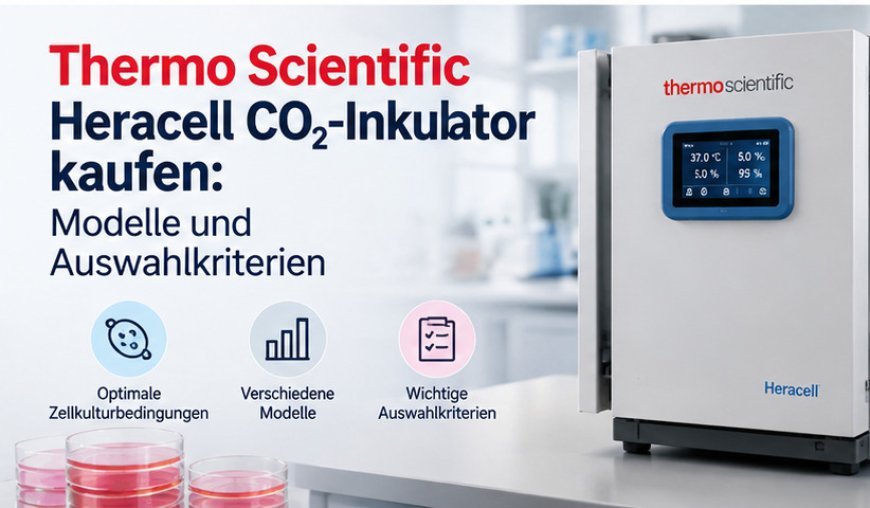
A CO₂ incubator helps maintain these conditions. However, choosing the right equipment involves more than selecting a well-known manufacturer. The key considerations include the types of cells you cultivate, the number of cultures that need to be accommodated simultaneously, and your laboratory's requirements for monitoring, cleaning, and documentation.
If you are planning to buy a Thermo Scientific Heracell CO₂ incubator, this guide will help you systematically compare the most important selection criteria.
What Is a CO₂ Incubator?
A CO₂ incubator is a laboratory device that provides defined environmental conditions for cultivating suitable biological samples. It is commonly used in cell biology, biomedical research, pharmaceutical development, and other fields requiring controlled incubation conditions.
Depending on the model, important parameters may include:
-
Temperature regulation
-
CO₂ concentration control
-
Humidity management
-
Recovery of set conditions after opening the door
-
Cleaning and decontamination capabilities
-
Alarm and monitoring functions
-
Data recording and process documentation
The availability of these features depends on the specific model range and configuration. Therefore, technical specifications should be carefully compared before placing an order.
What Applications Is a Heracell CO₂ Incubator Suitable For?
CO₂ incubators are primarily used for cell culture applications that require defined environmental conditions.
Typical applications may include:
-
Cultivation of suitable mammalian cells
-
Cell biology research
-
Working with cell lines
-
Biomedical research
-
Development and testing of biological processes
-
Research and quality control laboratories with specific incubation requirements
The equipment must be selected according to the biological processes involved. Not every cell culture requires the same conditions, and requirements may vary even within the same laboratory.
What Are the Most Important Criteria When Buying a CO₂ Incubator?
Temperature Stability
Temperature is a fundamental parameter in cell cultivation. A suitable incubator should reliably maintain the temperature required for the intended process.
Check the specified temperature accuracy, temperature distribution throughout the chamber, and recovery performance after opening the door. For sensitive cultures, these characteristics can make a significant difference.
CO₂ Regulation
CO₂ concentration influences the chemical equilibrium of the culture medium in suitable cell culture systems. Reliable CO₂ regulation is therefore important.
Compare the specified control range, accuracy, and monitoring method. Also consider whether your application has specific requirements for restoring CO₂ concentration after the incubator door has been opened.
Humidity Management
Humidity inside the incubator can influence evaporation from culture vessels. Appropriate humidity management helps maintain stable culture conditions, although the exact requirements depend on the equipment and cultivation process.
Consider how many vessels will be incubated simultaneously, how frequently the door will be opened, and how important evaporation control is for your cultures.
Internal Chamber and Capacity
The required capacity depends on the number and size of culture vessels, as well as the laboratory's expected future needs.
Consider the following:
-
Number of culture vessels that must be accommodated simultaneously
-
Size and shape of culture vessels
-
Arrangement of shelves
-
Frequency of sample changes
-
Available laboratory space
-
Accessibility for cleaning and maintenance
A larger incubator is not automatically the better choice. What matters is whether its capacity matches your current requirements and planned use.
Cleaning and Decontamination
Hygienic working conditions are particularly important in cell cultivation. Residues and contamination can compromise experiments and result in the loss of cultures.
Examine the internal chamber design, accessibility of relevant areas, and the cleaning or decontamination procedures specified for the model.
Ensure that the procedures and cleaning agents used are compatible with the manufacturer's instructions and the materials inside the incubator.
Monitoring, Alarms, and Documentation
In laboratories handling sensitive cultures, quickly identifying deviations from set parameters can be essential. Depending on the model, alarm functions, measurement displays, and data recording can support effective monitoring.
If your workflows require documentation, check which data the equipment can store, how long the information remains available, and whether additional software or interfaces are necessary.
Which Heracell Model Is Right for Your Laboratory?
Choosing a particular Heracell configuration should not depend solely on the model name. Start by defining your laboratory's requirements and then compare the available equipment.
Here is a simple guide:
-
Small or medium-scale culture requirements: Evaluate the necessary capacity and installation space without choosing unnecessarily large equipment.
-
Multiple cultures running simultaneously: Consider chamber space, shelf arrangement, accessibility, and the organisation of daily operations.
-
Sensitive or valuable cultures: Pay particular attention to temperature and CO₂ regulation, alarm functions, and recovery of incubation conditions.
-
Extensive documentation requirements: Examine data recording capabilities, interfaces, and options for integration into existing laboratory workflows.
-
Frequent cleaning requirements: Compare interior chamber design, accessibility, and approved decontamination procedures.
This guidance does not replace a technical comparison of specific model variants, but it helps narrow the selection to the most relevant criteria.
Common Mistakes When Buying a CO₂ Incubator
-
Comparing capacity alone: Temperature regulation, cleaning, and monitoring capabilities are equally important.
-
Failing to define cell culture requirements: Temperature and CO₂ concentration must match the intended application.
-
Overlooking documentation: Check whether the available data management functions meet your laboratory's workflow requirements.
-
Considering decontamination too late: The chosen decontamination procedure must comply with the manufacturer's specifications.
-
Ignoring future requirements: Plan capacity and installation space according to realistic usage expectations.
A structured requirements checklist can help laboratories compare suitable equipment configurations more efficiently.
Enquire About a Thermo Scientific Heracell CO₂ Incubator at häberle LABORTECHNIK
Selecting a CO₂ incubator should be based on the requirements of your cell cultures and the daily workflows of your laboratory.
Explore the range of laboratory equipment from Thermo Elect.LED GmbH (Kendro) at häberle LABORTECHNIK to find a suitable CO₂ incubator for your laboratory and submit an enquiry based on your specific requirements.
The following information is helpful when submitting an enquiry:
-
Type of cell culture and intended application
-
Required capacity
-
Temperature and CO₂ concentration requirements
-
Humidity management needs
-
Cleaning and decontamination requirements
-
Desired alarm and documentation functions
-
Available installation space and possible utility connections
With this information, the technical comparison can be carried out more effectively. Current model names, configurations, availability, and compatibility should be confirmed using the relevant product documentation before purchasing.
FAQ: Frequently Asked Questions About Heracell CO₂ Incubators
What Is a CO₂ Incubator Used For?
A CO₂ incubator is used to cultivate suitable biological samples under controlled environmental conditions. Common applications include cell biology and biomedical research.
What Are the Most Important Factors When Choosing a CO₂ Incubator?
Important factors include temperature regulation, CO₂ control, humidity management, internal chamber capacity, cleaning and decontamination capabilities, and alarm and documentation functions.
Why Is CO₂ Concentration Important?
In many cell culture systems, CO₂ helps maintain the pH balance of the culture medium. The required concentration depends on the medium used and the specific cultivation process.
What Size CO₂ Incubator Should I Choose?
Capacity should be determined by the number and size of culture vessels and the planned laboratory workflows. Accessibility for cleaning and sample handling is also important.
What Role Does Decontamination Play?
Decontamination helps control contamination risks. The appropriate procedure depends on the equipment, manufacturer's instructions, and laboratory requirements.
Conclusion: Choose a CO₂ Incubator That Matches Your Cell Culture Requirements
A CO₂ incubator should reliably maintain the required culture conditions while integrating smoothly into daily laboratory workflows. Temperature regulation, CO₂ control, humidity, capacity, and hygiene requirements are therefore essential purchasing considerations.
If you are planning to buy a Thermo Scientific Heracell CO₂ incubator, begin by defining your cell culture requirements and comparing the technical specifications of available models. This provides a solid foundation for choosing equipment suited to your laboratory's needs.
What's Your Reaction?
 Like
0
 Dislike
0
 Love
0
 Funny
0
 Angry
0
 Sad
0
 Wow
0