




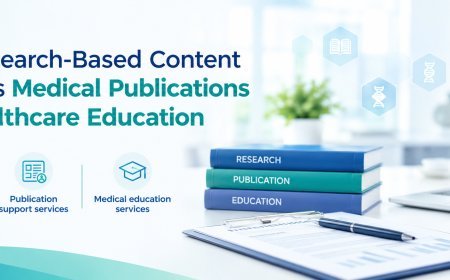




















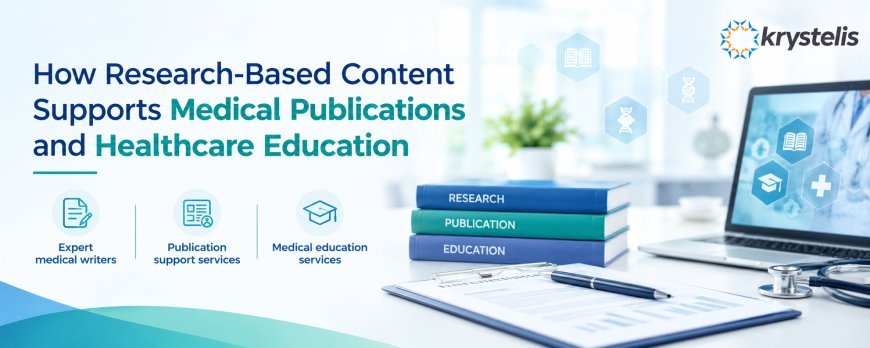
How Research-Based Content Supports Medical Publications and Healthcare Education

Scientific research plays a vital role in advancing healthcare, improving medical knowledge, and supporting evidence-based clinical decisions. However, research findings can only make a meaningful impact when they are communicated accurately, clearly, and effectively to the intended audience.
Pharmaceutical companies, biotechnology organisations, researchers, and healthcare professionals rely on high-quality scientific content to share discoveries, educate medical audiences, and communicate emerging evidence. From scientific manuscripts and journal articles to educational presentations and clinical learning materials, research-based content helps connect scientific evidence with practical healthcare knowledge.
This is where expert medical writing, publication support services, and medical education services become essential. These specialised services help transform complex scientific information into structured, accessible, and evidence-based content that supports research dissemination and healthcare education.
1. Why Research-Based Content Matters in Healthcare
Research-based content communicates scientific findings using reliable evidence, appropriate references, and clear explanations. It helps healthcare professionals understand new developments, evaluate available evidence, and stay informed about advances in medicine.
Without effective scientific communication, valuable research may be difficult to interpret or apply. Complex terminology, inconsistent reporting, and poorly structured documents can make it challenging for readers to identify the most important findings.
High-quality research-based content helps organisations:
-
Communicate scientific findings accurately.
-
Present research methods and results clearly.
-
Support evidence-based healthcare education.
-
Improve access to relevant scientific knowledge.
-
Maintain consistency across medical communication materials.
By prioritising accuracy, transparency, and readability, organisations can make scientific information more useful to researchers, healthcare professionals, and other relevant audiences.
2. The Role of Expert Medical Writers
Expert medical writers help translate complex scientific information into clear, accurate, and well-organised documents. Their work requires an understanding of medical terminology, scientific literature, research methodologies, and the communication needs of different audiences.
Medical writing involves more than presenting data. Writers must understand the purpose of a document, interpret scientific findings carefully, and ensure that the content reflects the available evidence without exaggerating conclusions.
Depending on project requirements, medical writing may include:
-
Scientific manuscripts and journal articles.
-
Clinical study reports and regulatory documents.
-
Abstracts, posters, and conference presentations.
-
Literature reviews and evidence summaries.
-
Patient information materials and plain-language summaries.
-
Medical education content and training resources.
Professional medical writers also support document organisation, reference management, consistency checks, and appropriate presentation of scientific results.
Their contribution helps research teams communicate findings more effectively while maintaining scientific integrity. Medical writers should work collaboratively with researchers and subject-matter experts, ensuring that authorship, disclosure, and publication ethics requirements are respected.
3. How Publication Support Services Improve Research Dissemination
Publishing scientific research enables researchers to share findings with the wider medical community. However, preparing a manuscript for publication can involve substantial work, including literature review, data presentation, reference verification, formatting, and journal submission preparation.
Publication support services help researchers and life sciences organisations manage these activities and prepare manuscripts that meet the relevant journal's requirements.
These services may include:
- Manuscript development: Scientific findings are organised into a logical manuscript structure, helping readers understand the research background, methodology, results, and conclusions.
- Abstract and poster preparation: Concise abstracts and conference posters communicate important findings to medical and scientific audiences, particularly during conferences and professional meetings.
- Reference and formatting support: Accurate references and compliance with journal-specific formatting instructions help improve document consistency and submission readiness.
- Publication planning: Publication planning helps organisations coordinate research communication activities, identify suitable publication opportunities, and manage timelines.
- Quality and consistency review: Scientific and editorial checks can help identify inconsistencies, unclear statements, missing references, and formatting issues before submission.
4. The Importance of Medical Education Services
Scientific discoveries are most useful when healthcare professionals can understand their relevance and apply appropriate knowledge in practice. Continuous medical education helps healthcare professionals remain informed about emerging evidence, evolving treatment approaches, and advances in disease management.
Medical education services support the development of educational materials that communicate scientific knowledge in a structured, engaging, and audience-focused manner.
These services may include:
-
Scientific slide decks and educational presentations.
-
Medical training modules and learning resources.
-
Disease awareness and clinical education materials.
-
Evidence-based educational content for healthcare professionals.
-
Scientific meeting and workshop materials.
-
Patient education resources.
Effective medical education begins with understanding the audience. Healthcare professionals may need detailed evidence, clinical context, and references, while other audiences may benefit from simpler explanations and practical examples.
Educational content should also distinguish established evidence from emerging research, communicate relevant limitations, and remain consistent with applicable regulatory and ethical requirements.
By combining scientific accuracy with effective learning design, medical education services can help make complex information easier to understand and support meaningful knowledge exchange.
5. Connecting Medical Publications with Healthcare Education
Medical publications and healthcare education serve different but complementary purposes. Publications communicate research findings, while educational resources help audiences understand scientific developments and their relevance.
Research-based content can connect these activities by translating published evidence into appropriate educational formats.
For example, findings from a clinical study may first be communicated through a scientific manuscript. Relevant evidence can then inform a medical education presentation, a scientific meeting discussion, or an educational resource for healthcare professionals.
This process requires careful adaptation. Educational materials should accurately represent the original findings and should not imply that research conclusions extend beyond the available evidence.
An integrated approach can help organisations:
-
Maintain consistency across scientific and educational content.
-
Translate research findings into useful learning resources.
-
Communicate evidence to different professional audiences.
-
Reduce avoidable inconsistencies between documents.
-
Support informed scientific discussion.
Collaboration between researchers, medical writers, publication specialists, and medical educators helps ensure that scientific evidence remains accurate as it moves across different communication formats.
6. Challenges in Developing Research-Based Medical Content
Although research-based content offers significant value, organisations may face several challenges when developing scientific and educational materials.
- Complex scientific information
Technical terminology and statistical findings can be difficult to communicate clearly. Writers must improve readability without changing the scientific meaning.
- Maintaining scientific accuracy
Every claim must be supported by appropriate evidence. Unsupported statements, selective reporting, and exaggerated conclusions can undermine credibility.
- Meeting publication requirements
Scientific journals may have specific requirements for formatting, references, authorship, disclosures, and reporting standards. Teams must review these requirements carefully before submission.
- Creating engaging educational content
Educational resources need to be informative without overwhelming the audience. Clear structure, relevant examples, and appropriate visual elements can improve comprehension.
- Managing changing evidence
New studies may update or challenge earlier findings. Organisations should ensure that their materials reflect the relevant evidence and are reviewed when updates are needed.
Addressing these challenges requires a structured content development process, scientific review, editorial quality checks, and collaboration with subject-matter experts.
7. How Krystelis Supports Medical Publications and Healthcare Education
Krystelis helps life sciences organisations communicate complex scientific information through professional medical writing, publication support, and medical education solutions.
With support from expert medical writers, organisations can develop scientific and medical content that prioritises accuracy, clarity, and the needs of the intended audience.
Through publication support services, teams can receive assistance with scientific manuscripts, abstracts, posters, references, and other publication-related activities. These services help improve document quality and support preparation in line with relevant journal requirements.
Krystelis also offers medical education services to help transform scientific evidence into structured educational materials for healthcare professionals and other appropriate audiences.
By bringing together scientific understanding, effective writing, and audience-focused communication, Krystelis helps organizations present research findings more clearly and support meaningful healthcare education.
Conclusion
Research-based content is an essential part of modern healthcare communication. It helps scientific findings reach medical audiences, supports the development of educational resources, and encourages the responsible exchange of medical knowledge.
Expert medical writers, publication support services, and medical education services each contribute to this process by improving the accuracy, structure, and accessibility of scientific information.
For life sciences organizations, investing in high-quality research communication can help strengthen scientific credibility, support professional learning, and make valuable research easier to understand.
Looking to communicate scientific research more effectively? Krystelis can support your organization with professional medical writing, publication support, and medical education solutions designed to turn complex science into clear, meaningful communication.
What's Your Reaction?
 Like
0
 Dislike
0
 Love
0
 Funny
0
 Angry
0
 Sad
0
 Wow
0