

























Does Exosome Hair Therapy Help Maintain Hair Density?
Learn whether exosome hair therapy can maintain hair density, how it works, its potential benefits, limitations, aftercare, and alternative hair loss treatments.
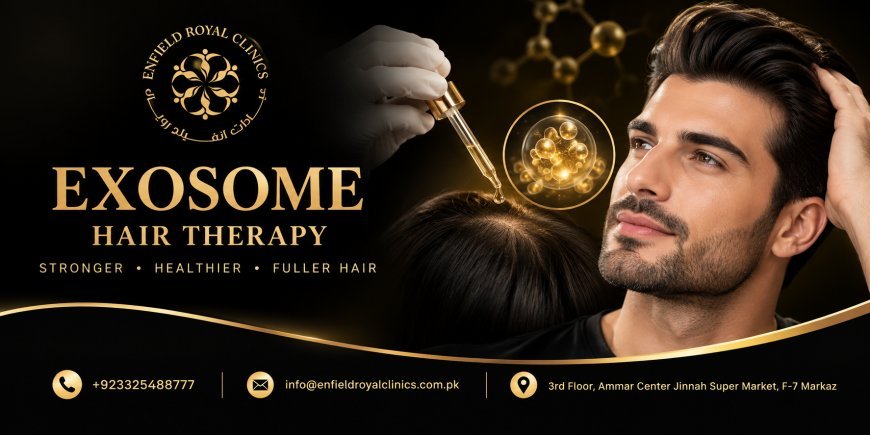
Hair density plays an important role in creating a fuller, healthier-looking appearance. However, factors such as genetics, hormonal changes, nutritional deficiencies, stress, and certain medical conditions can contribute to thinning hair over time. As a result, many people explore newer hair restoration options to help manage hair loss and maintain existing hair.
One treatment gaining attention is Exosome Hair Therapy in Islamabad. This approach involves the use of exosome-based preparations that are promoted for their potential role in cellular communication and tissue repair. Although the treatment has attracted interest in hair restoration, scientific evidence supporting its effectiveness for maintaining hair density remains limited.
Understanding how the therapy works, who may be suitable for it, and what results can realistically be expected can help individuals make informed decisions about their hair health.
What Is Exosome Hair Therapy and How Does It Work?
Exosomes are tiny, membrane-enclosed particles released by cells. They carry biological signals, including proteins, lipids, and other molecules, that can influence how cells communicate. Researchers are investigating whether these signals could support processes involved in tissue repair and hair follicle function.
In hair restoration, exosome-based preparations are promoted as a way to influence the scalp environment and potentially support the activity of hair follicles. Depending on the product and treatment protocol, the preparation may be applied or delivered to the scalp using a procedure selected by a qualified practitioner.
However, exosome products are not all the same. Their sources, composition, manufacturing standards, and handling can vary significantly. These differences make it difficult to predict whether a particular preparation will provide meaningful benefits.
Unlike established hair loss treatments with a larger body of clinical evidence, exosome therapy is still an emerging area of research. Its ability to increase hair density, slow shedding, or produce lasting improvements has not been established conclusively.
Can Exosome Hair Therapy Help Maintain Hair Density?
Hair density refers to the number of hairs growing within a particular area of the scalp. When hair follicles produce thinner strands or spend less time in the active growth phase, the scalp may begin to look less covered, even before substantial hair loss occurs.
Exosome therapy is being investigated for its potential to influence biological processes associated with hair growth. Some early research suggests that certain exosome preparations may affect cells involved in follicle activity. However, promising laboratory findings do not necessarily translate into reliable results in people.
For individuals considering Exosome Hair Therapy in Islamabad, several important points deserve attention:
-
Potential follicle support: Researchers are studying whether exosome-related signals may influence cells involved in hair follicle function.
-
Possible changes in hair appearance: Some treatments are marketed for improving thickness or fullness, but reliable clinical evidence is still limited.
-
Uncertain effects on shedding: It is not yet clear whether exosome therapy consistently reduces hair shedding or slows particular types of hair loss.
-
Long-term maintenance remains unclear: There is insufficient evidence to establish how long any potential improvement might last or whether repeat sessions are beneficial.
Therefore, exosome therapy should not be presented as a guaranteed way to preserve existing hair. A proper assessment of the underlying cause of thinning is essential before selecting any treatment.
Which Factors Affect Hair Density and Treatment Results?
Hair density can change for several reasons, and identifying the cause is one of the most important steps in managing hair loss. A treatment that may be considered for one type of thinning might be unsuitable for another.
Genetic hair loss is a common cause of gradual thinning in both men and women. It often follows a recognizable pattern and may progress over time without appropriate management.
Hormonal changes can also influence hair growth. Conditions affecting thyroid function or other hormonal processes may contribute to thinning, while changes after pregnancy or during menopause can alter the hair growth cycle.
Nutritional deficiencies may affect healthy hair production. Low iron stores, inadequate protein intake, and certain vitamin deficiencies can contribute to shedding in some individuals. Supplements are most useful when a genuine deficiency has been identified.
Stress and illness can trigger increased shedding, sometimes several months after the initial event. This type of hair loss may improve as the underlying trigger resolves, although recovery can take time.
Scalp conditions such as inflammation or certain forms of scarring alopecia may also affect hair density. Some conditions require prompt medical treatment to reduce the risk of permanent follicle damage.
Because these causes differ, a qualified healthcare professional may review the person's medical history, examine the scalp, and recommend blood tests or further investigations when appropriate. Treating an underlying cause may be more important than choosing a cosmetic hair restoration procedure.
Who May Consider Exosome Hair Therapy in Islamabad?
People experiencing early hair thinning often look for treatments that might help preserve their existing hair. However, the suitability of exosome therapy cannot be determined by hair density alone.
A consultation may help establish whether the thinning is related to genetic hair loss, temporary shedding, a nutritional issue, a scalp condition, or another medical concern.
During the assessment, the practitioner may consider:
-
The pattern, duration, and severity of hair loss.
-
Whether the scalp shows redness, scaling, inflammation, or scarring.
-
The presence of medical conditions or medications that may affect hair growth.
-
Previous hair loss treatments and the results they produced.
-
Whether better-established treatment options are appropriate.
People with sudden hair loss, distinct bald patches, scalp pain, or significant inflammation should receive a medical assessment rather than proceeding directly to a cosmetic procedure.
It is also important to discuss the exact exosome preparation being offered. Questions about its source, manufacturing quality, safety information, regulatory status, and supporting human studies can help clarify the potential risks and limitations.
Exosome-based treatments should not be assumed to be approved or proven simply because they are available at a treatment facility.
What Results and Aftercare Should Patients Expect?
Anyone considering a hair restoration procedure should understand that visible changes are not immediate. Hair grows in cycles, and changes in thickness or coverage can take time to become noticeable, even with treatments supported by stronger clinical evidence.
With exosome therapy, the timeline and extent of any benefit are uncertain because high-quality clinical studies remain limited. There is no reliable universal schedule for when increased density should appear, how much improvement can be expected, or how long it may last.
After a scalp procedure, temporary redness, tenderness, swelling, or bruising may occur. The severity depends on the method used and the individual's response. A practitioner should provide instructions tailored to the specific procedure and preparation.
General aftercare may include:
-
Following instructions about when to wash the hair and scalp.
-
Avoiding unnecessary rubbing, scratching, or pressure on the treated area.
-
Using only recommended scalp products during the initial recovery period.
-
Avoiding strenuous activity or other restrictions if advised by the treating professional.
-
Attending follow-up appointments to review scalp healing and treatment progress.
Increasing pain, spreading redness, pus, fever, or worsening swelling requires prompt medical attention.
Photographs taken under consistent lighting and from the same angles may help track changes over time. However, changes in hairstyle, lighting, and hair length can create the impression of greater or lower density without a genuine change in follicle activity.
Which Alternatives Can Help Maintain Hair Density?
Although exosome therapy is attracting interest, other options have more established roles in managing certain types of hair loss. The most appropriate choice depends on the diagnosis, medical history, and treatment goals.
Minoxidil is an established option for some forms of pattern hair loss. It can help maintain or improve hair growth in suitable individuals, but continued use is generally needed to preserve its benefits.
Finasteride may be prescribed for selected patients, particularly men with pattern hair loss. It is not suitable for everyone and requires discussion of possible side effects, contraindications, and pregnancy-related precautions.
Platelet-rich plasma (PRP) involves preparing a concentration of platelets from the patient's blood and injecting it into the scalp. Research suggests possible benefits for some people with pattern hair loss, but study quality, treatment protocols, and results vary.
Correction of underlying causes may be essential when hair loss is linked to iron deficiency, thyroid disorders, inadequate nutrition, medication effects, or scalp disease.
Hair transplantation may be an option for selected individuals with stable hair loss and adequate donor hair. It redistributes existing follicles rather than creating new ones, and ongoing hair loss in untreated areas may still require management.
A healthcare professional can explain which options have the strongest evidence for a particular diagnosis and whether combining treatments is appropriate. No treatment can guarantee permanent hair density for every individual.
Frequently Asked Questions
1. Does exosome hair therapy prevent further hair thinning?
Its ability to prevent further thinning has not been established conclusively. Early research is exploring possible effects on hair follicle activity, but there is not enough high-quality evidence to confirm that exosome therapy reliably slows hair loss. Identifying the underlying cause and considering established treatments may offer a more evidence-based approach.
2. How long does it take to see results from exosome hair therapy?
There is no scientifically established timeline for results from exosome therapy. Outcomes may vary depending on the preparation, the type of hair loss, and individual factors. Anyone considering treatment should be cautious of promises of rapid or guaranteed hair growth.
3. Is exosome hair therapy suitable for every type of hair loss?
No. Different types of hair loss require different approaches. Genetic thinning, temporary shedding, nutritional deficiencies, inflammatory scalp conditions, and scarring alopecia may need different treatments. A medical assessment can help determine the cause before any procedure is considered.
4. Can exosome hair therapy replace established hair loss treatments?
It should not automatically replace treatments with better-established evidence. Options such as minoxidil, selected prescription medicines, and treatment of underlying medical causes may be more appropriate for certain conditions. A qualified professional can discuss the benefits, risks, and limitations of each option.
What's Your Reaction?
 Like
0
 Dislike
0
 Love
0
 Funny
0
 Angry
0
 Sad
0
 Wow
0