






















How Platform Support Feeds Smarter Fund Decisions Fast
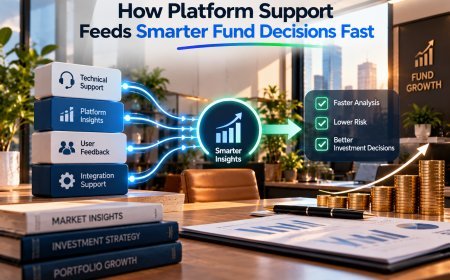
Platform teams hear early signals from portfolio founders. See how logging that support next to the financials helps VC partners make faster calls.

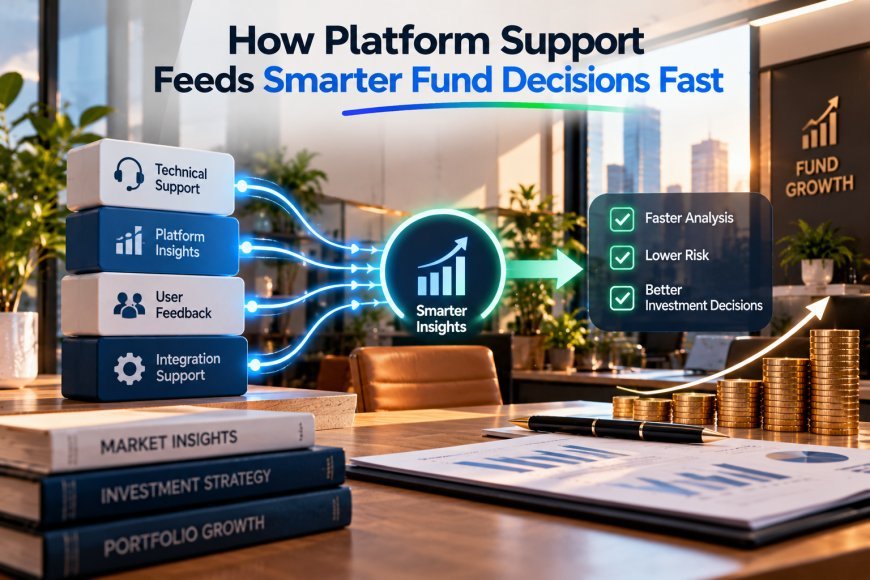
Most venture firms hold a partner meeting on Monday morning, and at a lot of them the platform team gets about ten minutes near the end. The head of platform runs through who needed help with hiring, which company asked for a pricing review and who is planning a launch next month. People nod. Then the meeting moves on to new deals and most of what was said doesn't come up again until next Monday. That always seemed like a waste to me. The platform team talks to more portfolio founders in a week than most partners do in a month, and a lot of what they hear is exactly the kind of thing partners need when they decide where to put follow-on money.
What the platform team picks up
Platform people get asked for help when something is going wrong or about to change. A founder asks for an intro to a VP of Sales candidate because the last two sales hires didn't work out. Another wants feedback on a new pricing page because deals have started to stall at the procurement step. A third asks for help with a launch that keeps getting pushed back. None of that shows up in a quarterly update for a while, and some of it never does. Founders tend to report the numbers. They don't always report that the sales team has turned over twice or that the launch is three months late. That leaves the platform team holding a lot of early signals. The question is whether anyone at the fund is set up to use them.
Why the signals get lost
Mostly the information lives in Slack threads, emails and the head of platform's memory, and none of that sits next to the financial data partners look at when they make decisions. A partner preparing for a follow-on discussion pulls up revenue, burn and runway. They might not know that the company asked for help hiring a new head of growth twice this year, or that it has used every GTM resource the fund offers and still missed its pipeline target. Put those two things together and the picture is different. Separately they are just two half stories. I've seen this go wrong in a pretty ordinary way. A fund put more money into a company that looked healthy on paper, and three months later the founder admitted the sales team had been rebuilt twice that year. The platform team had known for months. Nobody had asked them, and there wasn't a place where what they knew would have shown up.
Support that is built to produce data
Firms that offer structured Growth & GTM Support for VC Firms have an advantage here, because the support itself creates a record. When a portfolio company works through a defined program with intake, scoped work and some kind of check-in at the end, there is something to look at afterward. You can see which companies asked for help, with what and how often. It shows who used the support and then improved, and who used it and stayed flat. And you can see who never asked at all, which is sometimes the most interesting group. Brickell Digital, a studio with offices in Miami, New York and San Francisco, runs this kind of setup for venture firms through its Venture Network membership, where funds get on-call brand, web and go-to-market help for their portfolio. For a fund the useful part is that every request goes through one place and gets logged, so the platform team is not reconstructing what happened from old email threads.
Getting it in front of partners
The other half is making the information easy to read during an actual decision. A Slack export doesn't do that. Nobody reads forty pages of support notes before a partner meeting. Good Portfolio Insights for VC Firms tools pull this kind of operational data into the same view as the financials. So when a partner opens a company's page ahead of a follow-on vote, they see revenue and burn next to a short history of what the company asked the platform team for and what came of it. Brickell's Venture Portal is built for that. Funds use it to collect portfolio updates in one format, track company metrics over time and keep notes from platform work in the same record, so the person making the call has the context without having to chase it down.
A different Monday
Once both sets of information are in one place, the Monday meeting starts to sound different. The platform update moves out of the last ten minutes and into the deal discussion itself. Say a partner thinks a company looks fine on revenue, and the platform lead points out that the company has been through three heads of sales in eighteen months. Or the reverse happens. A company with a soft quarter turns out to have rebuilt its whole sales process with the fund's help and the early pipeline numbers look a lot better. I would argue the second case matters more. Funds often cut back on companies that look weak in one quarter, and sometimes those are the ones that just did the hard work to get better.
Speed matters here too
Follow-on decisions often come with a deadline. Another investor has made an offer, or the company needs bridge money before the end of the month. Partners don't have two weeks to go and interview the founders and the platform team. When the support history and the numbers are already together, a decision that used to take several meetings can take one. That is good for the fund and it is good for founders too, since they are not left waiting while the firm tries to figure out what it knows about them.
Starting without a big project
No fund needs new software on day one to start doing this. The simplest version is a shared sheet where every platform request gets logged with the company, the date, what was asked and what happened. Review it once a month with the partners. After a quarter or two the patterns start to show. Then it makes sense to move it into a proper portfolio tool with the data beside the financials, and nobody has to remember where the sheet is. Platform work tends to get treated as a cost line, when it's one of the better sources of early information a fund has, and most firms are only using a small part of it.
What's Your Reaction?
 Like
0
Like
0
 Dislike
0
Dislike
0
 Love
0
Love
0
 Funny
0
Funny
0
 Angry
0
Angry
0
 Sad
0
Sad
0
 Wow
0
Wow
0