





















Mechatronic Design: Improving Automation and Engineering Efficiency
Mechanical structures provide support, strength, and movement. Electronic circuits process signals and enable communication between different devices. Sensors measure variables such as position, temperature, pressure, and speed, depending on the application.
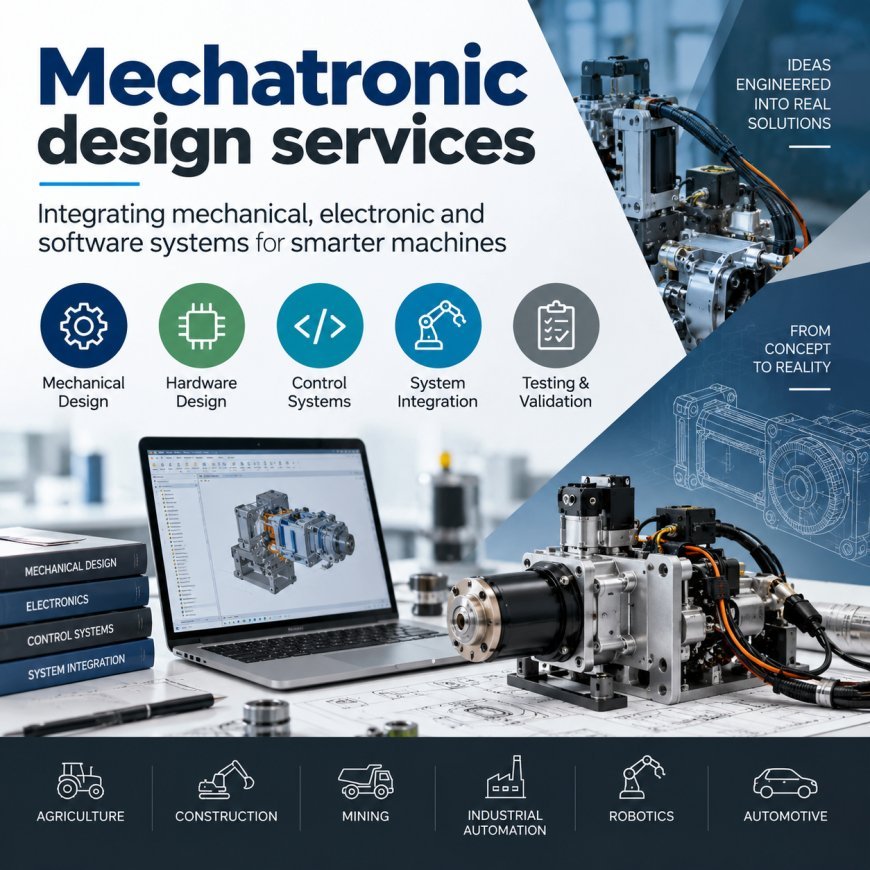
Industrial automation is changing how businesses manufacture products, manage equipment, and improve operational performance. Modern machines require mechanical components, electronic systems, and intelligent software to work together smoothly. Mechatronic Design makes this possible by integrating multiple engineering disciplines into a unified system that supports precision, reliability, and efficient operation.
Understanding the Connection Between Mechatronics and Automation
Mechatronics combines mechanical engineering, electronics, computer systems, and control technologies to develop intelligent machines. When applied to industrial automation, this approach allows equipment to perform tasks with greater consistency and reduced manual intervention.
For example, an automated packaging system may use sensors to detect products, motors to control movement, and software to coordinate different operations. Each component performs a specific function, but the overall system depends on their successful integration.
Through effective mechatronic design, engineers can develop automation equipment that responds to changing conditions and meets specific production requirements.
How Mechatronic Design Improves System Performance
An integrated engineering approach helps businesses improve the performance of machinery and automated equipment in several ways.
Greater Precision: Sensors, actuators, and control systems work together to maintain accurate movement and positioning during automated operations.
Improved Reliability: Coordinated component selection and system testing help identify potential compatibility issues before equipment is deployed.
Better Process Efficiency: Automated systems can perform repetitive tasks consistently, helping streamline workflows and reduce unnecessary delays.
Enhanced Monitoring: Electronic sensors can collect operational data, allowing control systems to identify changes in equipment behaviour.
Flexible Operation: Programmable control systems can often be adjusted to accommodate different production requirements without redesigning the entire machine.
These advantages make mechatronic engineering useful for businesses seeking to improve equipment functionality and operational efficiency.
Essential Components of an Effective Mechatronic System
Developing a reliable automated system requires several components to work together.
Actuators convert control signals into physical movement, while embedded software coordinates system behaviour. Control algorithms determine how the equipment responds to sensor information and operating conditions.
During the design process, engineers evaluate how these elements interact to ensure that the complete system performs as intended. Proper integration is essential for achieving accuracy, safety, and consistent operation.
Industrial Applications of Mechatronic Design
Mechatronic design supports automation across numerous industries.
In manufacturing, it helps develop assembly equipment, automated inspection systems, and precision production machinery. Warehouses use integrated mechanical and electronic systems for material handling and automated sorting.
The automotive sector applies mechatronic principles to vehicle control systems and automated manufacturing processes. Robotics companies use these technologies to develop machines capable of handling materials, performing repetitive movements, and completing specialised tasks.
Mechatronic principles are also used in smart agricultural equipment, medical instruments, and industrial monitoring devices. These applications demonstrate the versatility of integrated engineering solutions.
Challenges Engineers Must Consider
Although mechatronic design offers many benefits, successful implementation requires careful technical planning. Mechanical components must be compatible with electronic hardware, and software must communicate correctly with the control system.
Engineers also need to consider power consumption, operating temperatures, component durability, maintenance requirements, and safety standards. Poor coordination between engineering disciplines can lead to unexpected failures or expensive modifications.
Simulation, prototype development, and systematic testing help address these challenges. Evaluating the complete system before final deployment allows engineers to make informed improvements and verify performance against project requirements.
The Future of Integrated Engineering
As industrial technologies continue to develop, mechatronic design is becoming increasingly important for intelligent manufacturing and advanced automation. Modern systems can combine sensors, programmable controllers, embedded software, and data analysis to support more informed operational decisions.
Businesses that invest in well-planned engineering systems can improve their ability to adapt to changing production needs. Continued innovation in robotics, control technologies, and industrial equipment will create further opportunities for integrated mechatronic solutions.
Conclusion
Mechatronic Design provides a practical foundation for developing efficient and reliable automated systems. By combining mechanical engineering, electronics, sensors, and intelligent control software, businesses can improve equipment performance and address complex industrial challenges.
From manufacturing and robotics to material handling and smart machinery, integrated engineering helps transform individual components into coordinated systems. Careful planning, effective integration, and thorough testing remain essential for achieving reliable results and supporting long-term industrial growth.
What's Your Reaction?
 Like
0
 Dislike
0
 Love
0
 Funny
0
 Angry
0
 Sad
0
 Wow
0