



























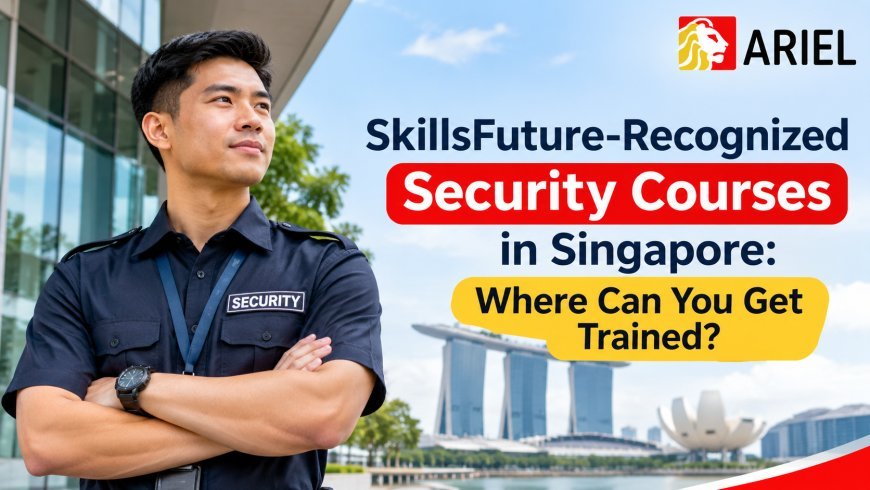
SkillsFuture-Recognized Security Courses in Singapore: Where Can You Get Trained?
Explore SkillsFuture-recognized security courses in Singapore and find the right training centre to develop essential security skills and prepare for a career in the security industry
Choosing the right security training centre is an important first step for anyone planning to enter Singapore's security industry or upgrade their existing skills. However, finding a course is not enough. You also need to understand whether the training provider is recognised, whether the course qualifies for funding and how to check your eligibility before registering.
If you are researching which training centres are recognized by SkillsFuture Singapore, start by checking the course and training provider through official SkillsFuture and relevant government resources. Not every security course automatically qualifies for SkillsFuture funding, even when it is offered by an established training organisation.
Singapore offers several security training pathways, including entry-level courses for new security officers and specialised training for people who want to develop additional industry skills. This guide explains how to identify suitable training centres, check course recognition, understand available subsidies and choose a training programme that matches your career goals.
Which Training Centres Are Recognized by SkillsFuture Singapore?
There are several training organisations in Singapore that provide security-related training under the industry's recognised training framework. However, it is important to distinguish between a Registered Training Partner (RTP) for private security training and a provider offering a course that is eligible for SkillsFuture funding.
The Singapore Police Force (SPF) publishes information about Registered Training Partners that conduct courses for the private security industry. Its published list includes organisations such as:
-
Ariel Security Academy Pte Ltd
-
Absolute Kinetics Consultancy Pte Ltd
-
Acestes Pte Ltd
-
APRO Training Centre Pte Ltd
-
Ascendo Consulting Pte Ltd
-
CCCS International Learning Institute
-
Etann Security Management Consultant Pte Ltd
-
Henderson Security Services Pte Ltd
-
KnowledgeTree Training Centre Pte Ltd
-
Leacov Singapore Pte Ltd
This is a selection from the published Registered Training Partners list, rather than a complete or independently verified current directory. Candidates should confirm the provider's current registration and the availability of their intended course before enrolling.
Singapore Police Force+1
Why Does Training Centre Recognition Matter?
Security training in Singapore is connected to specific licensing and professional competency requirements. A training provider must be able to deliver the relevant modules through the appropriate industry training arrangements.
Choosing an unsuitable provider can create unnecessary complications, particularly if you are taking a mandatory course to qualify for a security officer licence or meet an existing licensing requirement.
Before making a decision, check three things:
-
Provider registration: Is the organisation listed as a Registered Training Partner for the relevant security training?
-
Course suitability: Does the training centre offer the specific Workforce Skills Qualifications (WSQ) module you need?
-
Funding eligibility: Is the particular course approved for the government funding or SkillsFuture Credit you intend to use?
These checks help you avoid assuming that every course from a recognised training centre automatically qualifies for subsidies.
Understanding SkillsFuture Security Courses in Singapore
SkillsFuture supports lifelong learning and workforce development by helping eligible individuals access relevant training. In the security industry, training is particularly important because officers need practical knowledge to perform their duties safely and professionally.
A SkillsFuture security course may cover areas such as security operations, incident management, access control, threat observation and surveillance.
However, the training requirements depend on the position an individual holds or intends to pursue.
1. Training for New Security Officers
People entering the security industry must complete the applicable mandatory training before being deployed for security officer duties.
Under the enhanced training requirements introduced on 1 January 2024, new entrants at Security Officer grade must pass the following competencies:
-
Provide Guard and Patrol Services: Covers patrolling, guarding and carrying out basic security responsibilities.
-
Operate Basic Security Equipment: Develops knowledge of access control and the operation of basic security equipment.
-
Handle Security Incidents and Services: Prepares officers to respond appropriately to security incidents and service-related situations.
-
Recognise Terrorist Threats: Helps officers identify suspicious activities and potential security threats.
These competencies form the mandatory training requirements for new Security Officers under the Progressive Wage Model.
Singapore Police Force+1
For beginners, it is sensible to ask the training centre whether its programme covers the required modules and whether the course is suitable for someone who has not previously worked in security.
2. Training for Existing Security Officers
Training does not end after obtaining a security officer licence. Existing officers must also keep up with changes in industry requirements.
For example, existing Security Officers who have not completed the Operate Basic Security Equipment (OBSE) module must complete it by 31 December 2026 to remain deployable from 1 January 2027.
Similarly, existing Senior Security Officers must complete the Perform Remote Surveillance Function (PRSF) module by the same deadline.
These requirements make it important for working officers to review their training records and identify any outstanding competencies early.
Security Progressive Wage Model Requirements+1
3. Training for Career Progression
Security professionals who want to move into supervisory or management positions may need additional training and relevant work experience.
For instance, progression from Security Officer to Senior Security Officer involves additional competencies, including managing disorderly conduct and performing remote surveillance functions.
Moving into a Security Supervisor position requires further training in areas such as supervising security officers, inducting personnel and assessing security risks.
The appropriate course depends on the officer's existing grade, completed modules and experience. Therefore, it is better to discuss your career progression plans with a training provider before choosing a programme.
How to Check Whether a Security Course Is SkillsFuture-Eligible
One common mistake among applicants is assuming that a recognised training centre automatically offers SkillsFuture-funded courses.
Provider registration and course funding are separate matters. A training organisation may be authorised to deliver certain industry courses, but funding eligibility must still be checked for the specific programme and intake.
Here is a practical way to verify your options.
Step 1: Search the MySkillsFuture Course Directory
Start by searching for the course you want to attend in the official MySkillsFuture course directory.
You can search using terms such as:
-
WSQ security courses
-
Security incident management
-
Access control management
-
Security surveillance training
Check the course title carefully. Similar course names do not necessarily mean the programmes have identical content or funding arrangements.
Step 2: Check the Training Provider
Once you find a suitable programme, review the training organisation's details.
Confirm that the provider is listed for the relevant security training and that it is currently conducting the module you need.
You should also check the course's registration period, training location and upcoming intake dates.
Step 3: Review the Funding Information
Look for the funding details attached to the individual course.
Pay attention to:
-
Whether the course is eligible for SkillsFuture funding.
-
Whether it qualifies for SkillsFuture Credit.
-
Whether different funding rates apply to different applicant groups.
-
Whether the course is open to individual applicants or only company-sponsored participants.
-
Whether the displayed fee is before or after applicable subsidies.
Step 4: Confirm with the Training Centre
Before paying, contact the training provider and ask for a breakdown of the fees.
A useful question is:
"Is this particular security course eligible for SkillsFuture funding, and what will my final payable amount be after the applicable subsidies?"
Ask for the answer in writing if possible. This gives you a clearer understanding of your financial commitment.
SkillsFuture Subsidy for Security Courses: What Financial Support Can You Get?
Course fees are an important consideration, especially for individuals entering the security industry for the first time.
The good news is that eligible training programmes may receive government course fee support. However, the amount depends on the course category, funding arrangements and the applicant's eligibility.
Government Course Fee Subsidies
Under the Skills and Workforce Development Agency (SWDA) funding framework, eligible courses fall into different funding tiers.
The published funding framework provides:
|
Funding tier |
Baseline support |
Enhanced support |
|
Tier 1 |
Up to 70% |
Up to 90% |
|
Tier 2 |
Up to 50% |
Up to 70% |
Eligible WSQ courses supported by relevant government agencies, including certain regulatory and licensing courses for Progressive Wage Model sectors, can fall under Tier 2.
These are maximum funding rates, not guaranteed discounts for every security course. The applicable rate must be checked against the specific programme and individual eligibility.
Apply SSG Funding
SkillsFuture Credit
SkillsFuture Credit is another way eligible individuals can reduce their out-of-pocket training expenses.
Singapore Citizens aged 25 and above receive the opening SkillsFuture Credit of $500. Singapore Citizens aged 40 and above may also have access to an additional $4,000 Mid-Career SkillsFuture Credit, subject to the applicable course restrictions.
Importantly, SkillsFuture Credit is not the same as a course fee subsidy. It can be used to offset eligible remaining course fees, subject to the programme's conditions.
Before registering, check whether the specific security course qualifies for the credit you intend to use.
Education, Career and Personal Development+1
What About Subsidies for Security Officer Courses in Singapore?
People searching for a subsidy for security officer courses in Singapore should understand that financial support is not automatically available to everyone.
Your eligibility may depend on factors such as:
-
Citizenship or residency status.
-
Age and applicable funding category.
-
Whether you are self-sponsored or employer-sponsored.
-
Whether the selected course qualifies for funding.
-
Whether you meet the programme's registration requirements.
For example, a Singapore Citizen and a foreign applicant may receive different course fee arrangements for the same programme.
Do not rely only on an advertised discounted price. Ask the training provider to explain which subsidies apply to your situation and what amount you must pay yourself.
How to Check SkillsFuture Eligibility for Security Courses
If you are unsure how to check SkillsFuture eligibility for security courses, follow these practical steps before submitting your application.
1. Check your personal eligibility
Confirm whether you meet the requirements for the funding scheme you intend to use. Your citizenship, age and sponsorship arrangement may affect the support available.
2. Verify the course approval
Search for the exact course in the MySkillsFuture directory. Do not rely on a training centre's general claim that it offers SkillsFuture courses.
3. Check your SkillsFuture Credit balance
Eligible Singapore Citizens can log in to their SkillsFuture account to review their available credit and understand how it can be applied.
4. Ask about additional subsidies
Some courses may qualify for government course fee subsidies in addition to SkillsFuture Credit. Ask whether both can be applied and whether any restrictions affect your application.
5. Confirm the final payment
Request a clear breakdown showing the original course fee, applicable subsidy, available credit and remaining amount payable.
Taking these steps before enrolment can prevent unexpected expenses and help you choose a course that fits your budget.
How to Choose the Right Security Training Centre in Singapore
Finding a recognised training provider is important, but it should not be the only factor influencing your decision.
Two training centres may offer similar programmes, yet differ in their schedules, learning arrangements, administrative support and overall training experience.
Consider the following factors when comparing your options.
Check the Course Curriculum
Start by understanding what the course actually teaches.
If you are a beginner, look for a programme that covers the mandatory competencies required for your intended security officer grade.
If you are already employed, identify any missing modules needed to maintain your licence or progress to another grade.
A clear course outline helps you understand what you will learn and whether the programme meets your requirements.
Compare Training Schedules
Many security professionals work shifts, while beginners may have other personal or employment commitments.
Ask about available training dates, daily timings, course duration and assessment schedules.
A training centre that offers suitable class timings can make it easier to complete your studies without unnecessary disruption.
Understand the Assessment Process
Completing a course does not always mean receiving the required qualification.
Some programmes involve assessments that candidates must pass to demonstrate their competency.
Before enrolling, ask about assessment methods, attendance requirements, rescheduling arrangements and what happens if you need another assessment attempt.
Understanding these details helps you prepare properly.
Look Beyond the Advertised Course Fee
The cheapest course is not necessarily the most suitable option.
Compare the final payable amount after applicable funding, but also consider training quality, course relevance, convenience and administrative support.
A slightly different fee may be worthwhile if the training arrangements better suit your needs.
Ask About Enrolment Assistance
First-time applicants may have questions about documents, course requirements and funding applications.
A helpful training provider should be able to explain the enrolment process clearly and guide candidates through the necessary steps.
This is particularly useful for people who are unfamiliar with WSQ training or Singapore's security licensing requirements.
Why Consider Ariel Security Academy for Security Training?
When comparing security training centres in Singapore, Ariel Security Academy is one provider worth considering.
Ariel Security Academy Pte Ltd appears in the Singapore Police Force's published Registered Training Partners list for the private security industry. This provides a relevant starting point for candidates researching recognised security training providers. Applicants should still confirm its current registration and the availability and funding eligibility of their chosen course before enrolling.
Singapore Police Force
The academy provides a training option for individuals interested in developing their knowledge and competencies for the security industry.
Whether you are entering the profession or looking to complete additional training, choosing the right programme should begin with understanding your current qualifications and future requirements.
Before registering, consider discussing the following with the academy:
-
Which security training modules are currently available?
-
Which courses are suitable for new security officers?
-
What are the requirements for existing officers?
-
Are there upcoming training dates that fit your schedule?
-
What are the course fees and available funding arrangements?
-
What documents are required for enrolment?
These questions can help you identify a suitable training pathway instead of enrolling in a course that may not match your requirements.
Candidates can also contact Ariel Security Academy to clarify course details, assessment arrangements and the applicable registration process.
Common Mistakes to Avoid When Selecting a Security Course
Even after finding a recognised training provider, applicants can make mistakes that delay their training or create unnecessary expenses.
Here are some issues worth avoiding.
1. Assuming Every Course Qualifies for Subsidies
A recognised provider does not mean every course it offers receives government funding.
Always verify the individual course's eligibility and funding period before making payment.
2. Registering for the Wrong Training Module
Security training requirements differ according to your professional grade and experience.
For example, a new entrant may need to complete the mandatory entry-level competencies, while an existing officer may only need an outstanding module.
Check your training records first to avoid paying for training you have already completed.
3. Ignoring Updated Licensing Requirements
Security industry requirements can change over time.
The 2026 training deadlines for existing Security Officers and Senior Security Officers are important examples. Waiting until the final months may make it harder to secure a suitable training date.
Review official announcements and plan your training early.
4. Comparing Only Course Prices
A low advertised fee may not represent the final amount you need to pay.
Funding eligibility, assessment arrangements and other course conditions can affect your overall expenses.
Always compare the final payable fee rather than relying on promotional prices.
5. Not Checking Assessment Requirements
Candidates should understand attendance and assessment expectations before starting a course.
If you have concerns about language, learning pace or previous training experience, discuss them with the training provider beforehand.
Being prepared can make the learning process more manageable.
Frequently Asked Questions
1. Which training centres are recognized by SkillsFuture Singapore for security courses?
Singapore has several security training providers, including Ariel Security Academy, APRO Training Centre, Absolute Kinetics Consultancy and other organisations appearing in the Singapore Police Force's published Registered Training Partners list. Always confirm current registration and individual course eligibility before enrolling.
2. Is Ariel Security Academy a recognised security training provider?
Ariel Security Academy Pte Ltd appears in the SPF's published list of Registered Training Partners for private security industry training. Candidates should contact the academy to confirm current registration, available courses and applicable training requirements.
3. Can I use SkillsFuture Credit for a security officer course?
You may use SkillsFuture Credit if your selected course meets the relevant eligibility conditions. Singapore Citizens aged 25 and above receive the opening credit, while additional mid-career credit is available to eligible Singapore Citizens aged 40 and above. Always check the specific course before applying.
4. Are security courses subsidised in Singapore?
Certain eligible security courses receive government course fee subsidies. The amount depends on the course's funding category, the applicable funding arrangements and the applicant's eligibility. Not every security training programme automatically qualifies.
5. Can beginners enrol in security training courses?
Yes. Beginners can pursue the applicable entry-level training required for security officer licensing. They should select a programme that covers the mandatory competencies and confirm any additional licensing requirements before enrolling.
6. What training must existing security officers complete in 2026?
Existing Security Officers who have not completed Operate Basic Security Equipment must complete the module by 31 December 2026. Existing Senior Security Officers must also complete Perform Remote Surveillance Function by that deadline to remain deployable from 1 January 2027.
7. How can I check whether I qualify for a SkillsFuture subsidy?
Check the course's funding information through the official MySkillsFuture platform and confirm your personal eligibility with the training provider. Ask for a breakdown of the subsidy, available SkillsFuture Credit and remaining course fees.
Conclusion
Finding the right security training provider involves more than searching for an available course. You need to consider provider recognition, mandatory training requirements, assessment arrangements and financial support before making your decision.
If you are researching which training centres are recognized by SkillsFuture Singapore, start with the official Registered Training Partners information and verify the funding status of your chosen programme separately.
Ariel Security Academy is one of the training providers listed in the published SPF directory and is worth considering when exploring security training options in Singapore. By checking your requirements, comparing suitable programmes and understanding available subsidies, you can make a more informed decision about your professional development.
What's Your Reaction?
 Like
0
 Dislike
0
 Love
0
 Funny
0
 Angry
0
 Sad
0
 Wow
0