






















Surgical Instruments That Hospitals Actually Depend On
Learn what to check before buying surgical instruments: steel grades, certificates and defect terms. Jalandhar-based, ISO-certified since 1967. Get a quote.

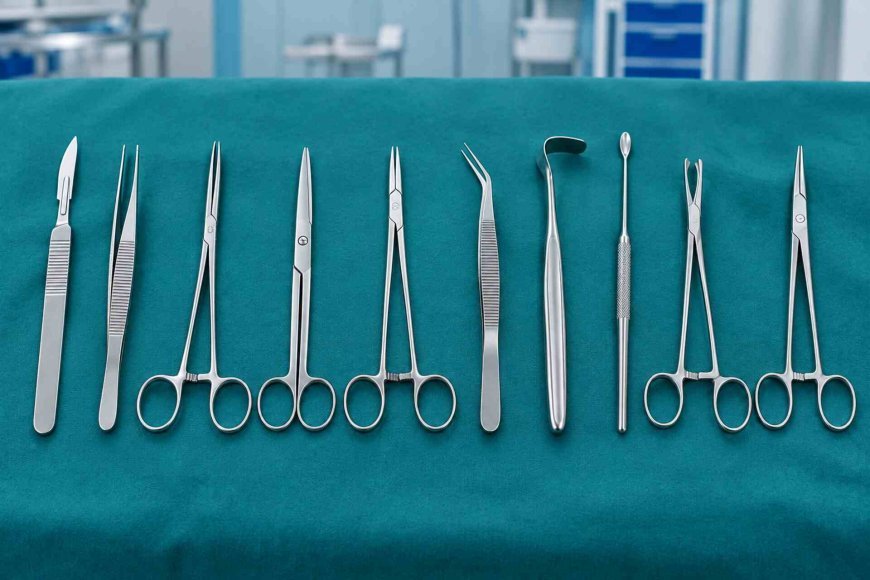
Forty needle holders land in Dubai. Three days later, the hospital's sterile processing team sends them back because the jaws no longer meet cleanly. The supplier replies with two words: "within tolerance." That's how most quarrels over surgical instruments begin, and the buyer who never asked for proof usually loses them.
Nobody mentions this early on, but the paperwork behind an instrument matters as much as the instrument.
What Separates Real Surgical Instruments from Lookalikes
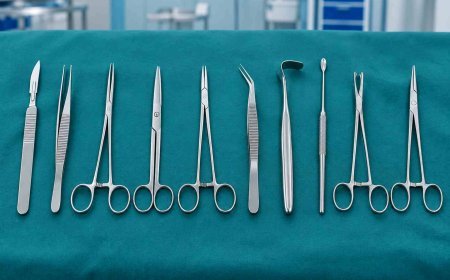
Let's start with the metal. Quality surgical equipments rely on stainless steel with at least 10.5% chromium, the threshold that lets the surface resist rust. Scissors, forceps and needle holders usually use hardenable martensitic grades such as AISI 420, while retractors and trays often use 304 or 316.
The Heat-Treatment Detail Most Buyers Skip
Here's the catch. Two forceps can both be stamped "420" and behave very differently, because hardening and tempering decide whether tips hold or chip. Ask for hardness readings per batch, not just a grade name.
Finish, Passivation and Hundreds of Autoclave Cycles
Steam sterilisation runs at 121°C or 134°C, again and again. Weak passivation shows up as pitting within months. ISO 13402 covers autoclave and corrosion resistance, so ask whether the factory tests against it.
Five Checks Before You Trust Anyone with Your Brand Name
Run every shortlist of surgical instruments manufacturers through these checks. A good answer is nice to have. A bad answer tells you far more.
-
Certificate. Ask for the ISO 13485 certificate and its expiry date. "We follow ISO norms" is a bad answer; following a standard and being certified are different claims.
-
Steel traceability. Ask for the mill test report. If you hear "good imported steel," the conversation is over.
-
Defect policy. Ask what happens when a batch fails inspection. "Send photos and we'll see" means no written replacement policy, and verbal promises rarely survive a change of sales manager.
-
Process control. Ask who forges, grinds and polishes. Vague talk of "partner units" means finish will drift between batches.
-
Private label terms. Ask for the exact MOQ. "It depends" isn't a number.
Where Your Margin Is Actually Protected
Well-made surgical instruments pay off in places a price sheet never shows.
-
Fewer returns: correctly hardened tips stay aligned, so fewer credit notes eat your margin.
-
Faster audits: batch records answer a hospital quality team in days, not weeks.
-
Tender eligibility: many public tenders ask for valid quality certification up front.
-
Stable reorder pricing: a maker who owns the process doesn't reprice whenever a subcontractor does.
-
Lower infection exposure: WHO notes up to one in three surgical patients in low- and middle-income countries develops a surgical site infection, and corroded instruments are harder to clean.
Why a Jalandhar Address Shortens Your Lead Time
Anyone searching for a surgical instruments supplier in India finds factories and traders mixed together. Jalandhar's forging and finishing cluster explains why so many real factories sit here: dies, grinding and polishing within a short drive, roughly 360 km from Delhi's air cargo terminals. Buying from surgical instruments manufacturers in India directly, rather than through surgical instruments dealers in India or a surgical instruments wholesaler in India, often removes one or two margin layers.
Harder than it looks: matching finish across repeat orders.
About Us
We've been making instruments in Jalandhar since 1967, and we're ISO-certified. As a surgical instruments supplier to exporters, wholesalers and brand owners, we know where problems start. Here's one most buyers never hear: rejections rarely begin at the cutting edge. They begin at the box joint of a forceps, where a rushed finishing step leaves a stiff lock, so we inspect that joint before packing.
The Next Order Is Won on Paperwork
Documentation demands from hospital quality teams are unlikely to loosen. Pick surgical instruments manufacturers who treat a mill report and a valid certificate as routine. The buyers who start asking now will still be supplying in five years.
Questions Buyers Ask Us Before a First Order
How do I verify surgical instruments manufacturers in India are genuine?
Ask for the ISO 13485 certificate, check its expiry, and request a recent batch test report. A genuine factory also allows a visit or live video tour. If they hesitate on all three, you're likely talking to a trader.
Is a trader really different from a factory?
A factory controls forging and finishing. A surgical instruments supplier that only trades buys from several units, so consistency depends on whoever they pick that month. Both can work if someone is accountable in writing for defects.
Can brand owners get private labelling?
On most standard patterns, yes. A brand owner or surgical instruments wholesaler can get logo marking and custom packing. New tooling takes longer and raises the MOQ.
Which certifications should I ask for?
ISO 13485 as the baseline. CE marking under EU MDR 2017/745 matters if you sell into Europe, and we'll tell you straight if an item isn't covered for your market.
Why is the cheapest quote so much lower?
Usually it's the steel grade or a skipped finishing step. We'd rather lose that order than match a price that forces us to cut either.
How long does a bulk order take?
Standard surgical equipments patterns ship faster than custom ones. We confirm a firm dispatch date in writing before you pay.
What's Your Reaction?
 Like
0
Like
0
 Dislike
0
Dislike
0
 Love
0
Love
0
 Funny
0
Funny
0
 Angry
0
Angry
0
 Sad
0
Sad
0
 Wow
0
Wow
0