





















Why Mold Keeps Coming Back on Drywall After Cleaning
Learn why mold keeps coming back on drywall after cleaning, what causes regrowth inside the wall, and how to stop it for good with proper repair and drying.

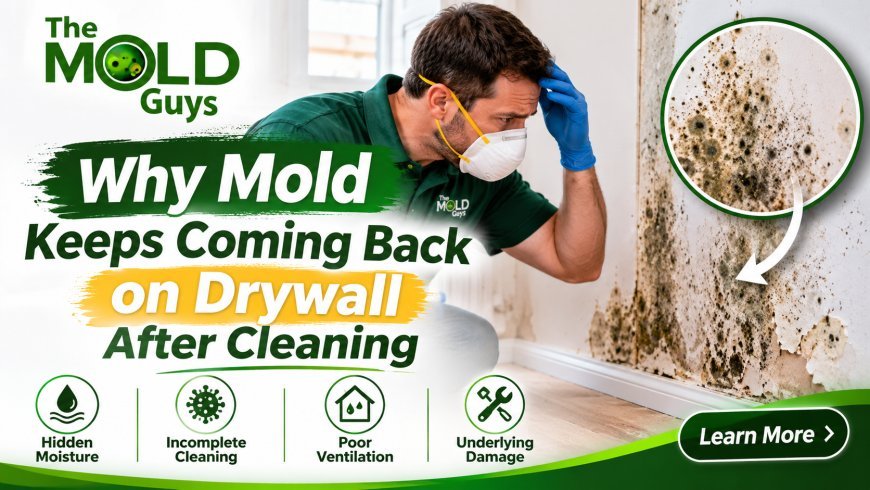
You scrub the wall, the dark spots disappear and the room looks normal again. A few weeks later the stain returns in the same spot, sometimes larger than before.This pattern is common, and it usually has a clear explanation. When mold and drywall are involved, the visible stain is often the smallest part of the problem.
This guide comes from the team at The Mold Guys, a Florida company with more than 25 years of experience in mold inspection, mold removal and water damage restoration. We have opened many walls where the surface looked clean and the back of the board told a different story.
Where we refer to outside guidance, it comes from the Environmental Protection Agency and the Centers for Disease Control and Prevention. Where a problem is too large for safe home treatment, we say so plainly.
How Drywall Is Built and Why It Matters
Drywall is a layer of gypsum plaster between two sheets of paper. The gypsum is porous and absorbs water easily. The paper is organic, which means mold can feed on it directly.
When the board gets damp and stays damp, spores that are always present in indoor air can settle and grow. This often starts on the back of the board or inside the wall cavity where no one can see it.
The relationship between mold and drywall explains most cases of regrowth. Mold does not sit on top of the board like dust. It grows into the paper and sometimes into the gypsum behind it.
That is why wiping the surface removes the color but not the colony. The roots stay in the material and the growth returns when conditions allow.
Reason One: The Moisture Source Was Never Fixed
This is the most common cause of recurring mold. Mold is a symptom of excess moisture, and cleaning does nothing to stop water from reaching the wall.
Common sources include a slow plumbing leak inside the wall, a roof leak that runs down into the cavity and a failed window seal. A clogged air conditioning drain line or condensation on a cold exterior wall can do the same.
A leak does not need to be large. A small drip can keep a section of board damp for months without leaving a visible puddle.
The EPA is direct on this point. Mold cannot be fully eliminated indoors, so the way to control it is to control moisture. Until the source is found and repaired, regrowth is only a matter of time.
Reason Two: The Growth Is Inside the Board
Surface cleaning only reaches the surface. If mold has grown through the paper facing and into the gypsum, a cloth and a spray cannot remove it.
Painted drywall can hide this for a long time. The paint may look intact while the board underneath is soft or stained.
The EPA notes that porous materials with significant mold growth often need to be removed and replaced. Drywall is one of those materials once the growth goes beyond a light surface film.
Pressing gently on the wall helps you judge the condition. A firm and dry board is a good sign. A soft, crumbling or spongy board means the damage is deeper than cleaning can fix.
Reason Three: Indoor Humidity Stays Too High
Even without a leak, a home can stay humid enough to support mold. In Florida this is especially common because outdoor air carries a great deal of moisture for most of the year.
Air conditioning that is set too warm or undersized for the space removes less moisture than it should. Closets and rooms with little airflow hold humid air against the walls.
A small hygrometer shows the real number. Readings above 60 percent for long periods create conditions where mold can grow on drywall again. Keeping the home below 50 percent is a sound target.
Reason Four: Hidden Growth Was Missed
The visible patch is often only part of what is there. Mold can grow behind baseboards, above ceilings and inside wall cavities on the other side of the room.
Spores from a hidden colony keep entering the air and landing on surfaces you have already cleaned. The wall looks like it is growing mold again when it is really being reseeded.
Signs of hidden growth include a musty smell with no visible source and paint that bubbles without an obvious reason. Stains that keep returning after cleaning are another strong clue.
Reason Five: The Wall Was Painted Over
Painting over a stain is tempting, and it is one of the most common reasons mold returns. Paint hides the color but does nothing to the growth or the moisture behind it.
It can also make things worse. Paint traps moisture inside the board and creates a sealed space where mold continues to grow.
The paint then bubbles or peels and the stain comes back through the new surface. Many homeowners repeat this cycle several times before finding the real cause.
Some paints are labeled mold resistant, and they can help in the right conditions. They are a protective layer and not a cure, and they only work on a clean, dry and sound wall.
Reason Six: The Wrong Cleaner Was Used
Not every cleaner suits drywall. Heavy scrubbing and soaking damage the board because it absorbs liquid so quickly.
Bleach is a common mistake. It can lighten the color of mold on hard surfaces such as tile, but it does not reach growth inside drywall. The extra water it adds can even help the mold return.
Never mix bleach with vinegar or ammonia. The combinations release hazardous fumes.
Reason Seven: Spores Spread During Cleaning
Disturbing mold releases large numbers of spores into the air. Without containment, they travel to other rooms and settle on walls, furniture and vents.
This is why mold sometimes appears in a new room a few weeks after the original spot was cleaned. The connection is easy to miss because the new growth shows up later and in a different place.
If the air conditioning runs during cleanup, it can pull spores into the ducts and spread them through the whole house. A system that is already contaminated can reseed walls long after the job is finished.
Signs That Cleaning Did Not Work
Some warning signs show up quickly. Others take a few weeks.
-
Dark spots return in the same area within days or weeks
-
The musty smell comes back after cleaning
-
Paint bubbles, cracks or peels
-
The wall feels soft, damp or cool to the touch
-
Stains spread past the area you cleaned
-
You notice new spots on nearby walls or ceilings
If you see several of these signs together, treat it as a moisture problem and not a cleaning problem. Repeating the same scrub will not change the outcome.
What Can Be Cleaned and What Must Be Replaced
Not every case needs a wall repair. The condition of the board is what decides it.
A small patch of light surface growth on firm and dry drywall can often be cleaned, as long as the moisture source has been fixed. The EPA suggests that areas larger than about ten square feet are generally best handled by a professional.
Replacement is the better choice when any of these apply:
-
The board is soft, crumbling or sagging
-
The stain goes through the paper to the gypsum
-
The wall was soaked by a leak or flood and stayed wet for more than a day or two
-
Mold returned after a careful cleaning
-
The growth covers a large area
Cutting out and replacing a damaged section removes the growth completely. It is a larger task than scrubbing, but it is the only way to remove mold that lives inside the material.
Cleaning Small Spots the Right Way
When the area is small and the board is firm, a careful approach can work. Start by fixing the moisture source and protecting yourself with an N95 respirator, gloves and eye protection.
Choosing the best mold remover for drywall is mostly about being gentle. Diluted white vinegar or a mild detergent solution, used sparingly and dried right away, is usually enough for light surface spots.
Wipe the area with a barely damp cloth and avoid soaking the board. Dry it quickly with a fan or dehumidifier and check it again over the next few days.
Painted walls call for a method that cleans without stripping the finish. The best mold remover for painted walls starts with warm water and mild dish soap on a soft cloth. Our guide on the best mold remover for painted walls explains how to remove stains without damaging the paint.
For stubborn spots, diluted vinegar or three percent hydrogen peroxide can help. Test a hidden area first because peroxide can lighten some paints.
A Safe Step by Step Approach for Small Areas
Follow these steps in order when the damage is limited to a small surface patch.
-
Find and stop the moisture source before you clean anything.
-
Wear an N95 respirator, gloves and eye protection and ventilate the room.
-
Close nearby doors and turn off the air conditioning for the room while you work.
-
Lightly wipe the area with a mild cleaner on a barely damp cloth.
-
Dry the wall right away with a fan or dehumidifier.
-
Check the area daily for a week for soft spots, odor or returning stains.
-
Repaint only when the wall is completely dry and sound.
If the stain returns during that week, stop cleaning. That outcome tells you the problem is inside the wall or tied to a moisture source you have not found.
When to Call a Professional
A small spot on a dry wall is a manageable project. Recurring mold is a different situation, and it often means the cause is out of sight.
Consider getting help when mold has returned after cleaning or when the wall is soft or crumbling. Get help when the area is larger than about ten square feet or when a leak or flood soaked the wall.
Also call if the smell persists with no visible source or if anyone in the home has asthma, allergies or a weakened immune system. The CDC notes that people with these conditions can react more strongly to mold exposure.
Qualified professional mold removal services begin with an assessment. They use moisture meters and thermal imaging to find wet areas behind the surface, and they may use air sampling to compare indoor spore levels with the outdoors.
The work area is sealed with plastic sheeting and negative air machines pull air through HEPA filters. Damaged drywall and insulation are cut out and bagged, and the framing is cleaned.
The structure is then dried with industrial equipment and checked with moisture meters. Air testing afterward confirms that the result is real before new drywall goes up.
How to Choose a Local Company
The company you choose has a large effect on whether the mold stays gone. When you search for mold removal services near me, look past price and compare process and credentials.
A local team understands the climate and the common building styles in your area. It can also respond quickly when a leak or storm creates a new problem.
Ask these questions before you agree to any work:
-
Do your technicians hold current IICRC certification and are you licensed and insured?
-
Will you inspect before giving a written estimate?
-
How will you contain the work area and protect the air conditioning system?
-
Will you find and address the moisture source?
-
Will you test the air after the work and share the results?
-
Do you offer a written guarantee?
Florida treats mold assessment and mold removal as separate licensed roles. The company that writes the assessment should not be the one that performs the removal on the same project.
Be cautious about anyone who quotes a price without seeing the wall or promises that one spray will solve the problem. Clear answers about containment, drying and testing are a good sign.
Preventing Mold From Returning to Drywall
Prevention comes down to controlling moisture, which is also the EPA's central advice. A few steady habits make a real difference.
Keep indoor humidity below 50 percent with air conditioning and a dehumidifier where needed. Service the air conditioning system every year and keep the drain line clear.
Run bathroom exhaust fans during every shower and for at least 20 minutes afterward. Use the kitchen vent while cooking.
Check under sinks and around appliances for slow drips every few months. Replace old supply hoses before they fail.
Keep gutters clean and make sure downspouts carry water away from the foundation. Have the roof checked after major storms.
Reseal window and door gaps when the caulk cracks. Dry any wet material within 24 to 48 hours after a spill or leak.
Leave closet doors open for part of each day and keep furniture a few inches from exterior walls so air can move. If you spend summers away from a Florida home, keep the air conditioning running at a moderate setting and ask someone to check the house regularly.
Look over your walls and ceilings every few months for new stains, bubbling paint or musty smells. Catching a problem early costs far less than repairing a wall full of growth.
Conclusion
Mold that keeps coming back on drywall is almost never a sign of poor cleaning. It is usually a sign that moisture is still reaching the wall or that the growth sits deeper than the surface.
Understanding how mold and drywall interact helps you choose the right response. Fix the water source first, clean only small and firm areas, and replace any board that is soft or stained through.
When the problem keeps returning or covers a large area, experienced professional mold removal services can find the cause and resolve it safely. The Mold Guys offer mold inspection and testing, mold removal and water damage restoration across Southwest and Central Florida, and we are glad to explain what we find and recommend only the work your home needs.
FAQs
Q: Why does mold come back on my drywall after I clean it?
A: Usually the moisture source was never fixed or the growth is inside the board. High humidity, hidden growth behind the wall and painting over stains are other common causes. Surface cleaning cannot remove roots in the paper or gypsum.
Q: What is the best mold remover for drywall?
A: For light surface spots on firm drywall, diluted white vinegar or a mild detergent solution works when used sparingly and dried quickly. Soft or stained through drywall cannot be saved by cleaning and should be cut out and replaced.
Q: What is the best mold remover for painted walls?
A: Warm water with mild dish soap on a soft cloth is the safest start. Diluted vinegar or three percent hydrogen peroxide can help with stubborn spots. Test a hidden area first and dry the wall completely.
Q: Can I paint over mold on drywall?
A: Painting over mold does not stop it. The growth and moisture stay trapped behind the paint, and the stain usually returns through the new surface. Fix the moisture source and remove damaged drywall before repainting a dry wall.
Q: How do I find reliable help for recurring wall mold?
A: Search for mold removal services near me and compare IICRC certification, written estimates and local reviews. Ask about moisture source repair, containment and air testing afterward. Reliable teams explain each step clearly.
What's Your Reaction?
 Like
0
 Dislike
0
 Love
0
 Funny
0
 Angry
0
 Sad
0
 Wow
0