




















2 Door Interlock System: Advanced Access Control for Safer and Smarter Security
This is where a 2 door interlock system becomes useful. It provides an additional layer of access security by controlling two connected doors through an intelligent access control arrangement.

Security is an important consideration for every organisation that manages restricted areas, sensitive information, valuable equipment, or controlled entry points. In places such as pharmaceutical companies, manufacturing facilities, research laboratories, data centres, and commercial buildings, controlling who enters a particular area is not always enough. Businesses may also need to control the sequence in which doors open and close.
This is where a 2 door interlock system becomes useful. It provides an additional layer of access security by controlling two connected doors through an intelligent access control arrangement. The system can be configured so that when one door is open, the other remains locked until the required conditions are met.
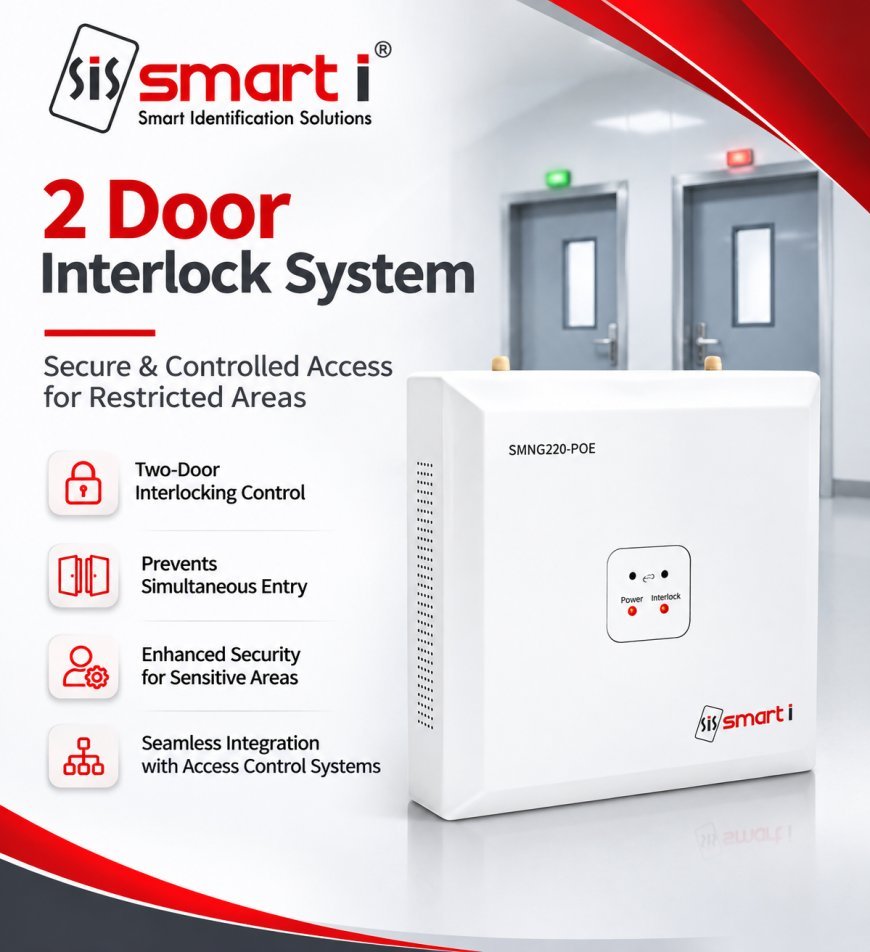
Smart-i Systems offers an advanced access control solution through its smartXS NG Plus 2 Door 2 Reader POE-based controller. Designed for organisations that need reliable entry management, the controller combines door interlocking, reader connectivity, network communication, and security integration in a compact system.
Whether you are securing a restricted office area, managing entry into a sensitive production zone, or creating a controlled passage between two rooms, choosing the right door interlocking solution can help improve security and make access management more organised.
What Is a 2 Door Interlock System?
A 2 door interlock system is an electronic security arrangement that connects two doors and controls their opening sequence. Its main purpose is to prevent both doors from remaining open simultaneously when the interlocking rule is active.
The arrangement is commonly used to create a controlled passage between two areas. A person must complete the required access procedure at the first door before being permitted to proceed through the second door.
For example, imagine a restricted room with an entrance lobby. A person presents an authorised access card at the first door. Once access is granted, the first door unlocks. After the person enters and the door closes, the controller checks the door status before allowing the second door to unlock.
This arrangement helps prevent unauthorised movement between secured areas.
A properly configured 2 door interlock system can also work with biometric readers, RFID cards, electromagnetic locks, door status sensors, exit switches, and other compatible security equipment.
Unlike a conventional access control arrangement that simply checks credentials, an interlocking setup also considers the physical status of connected doors.
How Does a 2 Door Interlock System Work?
The working principle is straightforward, although the exact operation depends on the configured access rules and hardware installation.
Step 1: User Authentication
The user approaches the first secured door and presents an authorised credential. Depending on the installation, this may be an RFID card, smart card, biometric credential, or another supported authentication method.
Step 2: Access Verification
The access controller checks the submitted credential against the configured access permissions. If the user is authorised, the system allows the corresponding door to unlock.
Step 3: Door Status Monitoring
Door status information is monitored through the connected door contacts. The controller determines whether the door is open or closed.
Step 4: Interlocking Control
While the first door remains open, the second door is kept locked according to the configured interlocking logic. This helps prevent simultaneous opening and reduces the possibility of unauthorised passage.
Step 5: Access to the Second Door
Once the first door has closed and the required conditions are satisfied, the controller can permit access through the second door.
This process creates a controlled entry sequence and provides better management of restricted areas.
The effectiveness of a 2 door interlock system depends on correct configuration, suitable locks, accurate door status monitoring, and appropriate emergency release arrangements.
Why Businesses Need a 2 Door Interlock System
Traditional locks and standalone access readers may not provide sufficient control for areas where two connected entry points must operate together.
A 2 door interlock system addresses this requirement through coordinated door operation.
1. Prevent Unauthorised Entry
One of the biggest security concerns in restricted areas is unauthorised entry through an already open doorway.
Interlocking logic helps prevent the second door from opening while the first door is still open. This adds another layer of protection beyond basic card or biometric authentication.
2. Improve Restricted Area Security
Certain environments require controlled movement between different security zones. Examples include laboratories, production areas, server rooms, and sensitive storage facilities.
A door interlock arrangement helps organisations establish a controlled passage and reduce opportunities for unauthorised access.
3. Reduce Tailgating Risks
Tailgating occurs when an unauthorised person follows an authorised individual through a secured entrance without presenting their own credentials.
Door interlocking can help reduce this risk by controlling the opening sequence. However, interlocking alone cannot guarantee that tailgating will be prevented. Organisations may also require anti-passback, CCTV, or additional detection systems.
4. Improve Access Monitoring
When connected to suitable access management software and CCTV equipment, a 2 door interlock system can support better monitoring of entry events.
Security personnel can review access records and investigate unusual activity according to the capabilities of the integrated system.
5. Create a More Organised Entry Process
In facilities where entry needs to follow a defined sequence, interlocking provides a structured approach to access management.
This is particularly useful when people move between clean areas, production zones, secure rooms, and other controlled environments.
Smart-i smartXS NG Plus 2 Door 2 Reader Controller
Smart-i Systems has developed the smartXS NG Plus 2 Door 2 Reader POE-based controller for organisations that need an intelligent and compact access control solution.
The controller is designed to manage two doors and two readers while supporting door interlocking and other access management functions.
One of its important advantages is its Power over Ethernet capability. This helps simplify installation by using a compatible network connection for power and communication, reducing the need for separate power infrastructure at the controller location.
The compact design also makes it suitable for installation near the controlled doors, depending on the site layout and installation requirements.
For businesses evaluating a 2 door interlock system, the smartXS NG Plus offers a combination of access control, network connectivity, and security integration features.
Key Features of SmartXS NG Plus
Power over Ethernet (POE)
Power over Ethernet allows compatible devices to receive power through an Ethernet connection.
The POE-based design of the smartXS NG Plus helps simplify controller installation and can reduce additional cabling requirements. It also makes use of existing network infrastructure where the installation supports the required POE standards and power capacity.
For organisations planning multiple access control points, this can help make installation more organised.
Two-Door and Two-Reader Configuration
The controller is designed for two doors and two readers, providing a practical arrangement for managing two connected access points.
The readers can be configured to authenticate users before granting access, subject to the supported reader interface and selected hardware.
This makes the controller suitable for controlled entry arrangements where access permissions and door status must work together.
32-Bit RISC Processor
The smartXS NG Plus uses a 32-bit RISC processor to handle access control operations.
Its processing architecture supports the controller's configured security functions, credential verification, and communication activities.
Multiple Communication Protocols
Modern security systems often need to communicate with other building and IT infrastructure.
The controller supports network communication and multiple protocols, helping facilitate integration with compatible third-party environments, building management systems, and IT administration infrastructure.
Available communication options should be confirmed against the selected model and installation requirements.
Wiegand and OSDP Reader Compatibility
Reader compatibility is an important consideration when selecting an access control controller.
SmartXS NG Plus supports compatible Wiegand and OSDP reader interfaces, allowing organisations to select suitable card or biometric readers based on their security requirements.
The specific reader interface and wiring arrangement should be checked before installation.
CCTV Integration
Security teams often need more than an electronic record of an access attempt.
Integration with compatible CCTV or IP camera systems can help associate access events with video information. This makes it easier to review incidents, investigate suspicious activity, and understand what happened at a controlled entrance.
Anti-Passback and Time-Based Access
Anti-passback is an access control feature that helps prevent users from reusing the same credential to enter or exit in an unauthorised sequence.
Time-based access permissions allow organisations to define when particular users can access restricted areas.
These features are useful in workplaces where different departments, employees, and visitors require different access permissions.
Emergency and Fire Integration
Security arrangements must also account for emergencies.
The controller supports fire integration and has dedicated input arrangements for relevant signals. Emergency behaviour must be designed and configured according to the building's fire safety requirements and applicable regulations.
A 2 door interlock system should never obstruct emergency evacuation. Fire alarm integration, emergency release mechanisms, and safe exit arrangements must be properly tested during commissioning.
Online Firmware Upgrades and Maintenance
The smartXS NG Plus supports online firmware upgrades and reader tamper detection.
These capabilities can help administrators maintain the controller and identify certain security-related events without relying entirely on physical inspection.
Where Is a 2 Door Interlock System Used?
Door interlocking is especially valuable in environments where access needs to be controlled between two connected spaces.
Pharmaceutical Companies
Pharmaceutical facilities often have different production and storage areas with specific access requirements.
A 2 door interlock system can help manage movement between controlled zones and support entry procedures designed to reduce unauthorised access.
Hospitals and Healthcare Facilities
Certain hospital areas, laboratories, medical storage rooms, and restricted departments require controlled access.
An interlocking arrangement can help manage entry into designated spaces while allowing authorised staff to move through the facility according to configured permissions.
Manufacturing Industries
Manufacturing facilities may contain production floors, equipment rooms, storage areas, and other restricted locations.
An access controller can help ensure that only authorised employees enter designated areas and that connected doors operate according to established security rules.
Research Laboratories
Research laboratories may contain valuable equipment, confidential information, and sensitive materials.
A controlled passage between two doors can provide an additional security layer and help manage access to restricted laboratory environments.
Data Centres and Server Rooms
Data centres require careful control over physical access because unauthorised entry can expose critical infrastructure.
A 2 door interlock system can help create a controlled entry arrangement for server rooms and other sensitive technical spaces.
Banks and Financial Institutions
Financial organisations manage confidential documents, cash-handling areas, and other restricted spaces.
Interlocking can support controlled entry procedures when integrated with a suitable access control and security management arrangement.
Important Factors to Consider Before Installation
Selecting the right controller is only one part of implementing an effective security system. Businesses should also evaluate the physical environment and operational requirements.
Door arrangement: Check whether the two doors are positioned appropriately for an interlocking configuration.
Lock compatibility: Confirm that the electromagnetic locks or other locking devices are compatible with the controller's output specifications.
Door status monitoring: Suitable door contacts are required to provide accurate information about whether each door is open or closed.
Reader selection: Choose compatible card, smart card, or biometric readers according to the required authentication method.
Emergency release: Ensure that fire alarm integration, emergency exit switches, and other safety mechanisms meet the applicable building and fire safety requirements.
Software integration: Check whether the controller can integrate with the required access management software and reporting platform.
Installation and testing: The interlocking sequence, access permissions, emergency operation, and door release behaviour should be tested before the system is put into regular use.
These considerations help ensure that the installed 2 door interlock system provides the intended level of security without creating unnecessary operational difficulties.
Why Choose Smart-i Systems for Door Access Control?
Smart-i Systems develops access control and security management solutions for commercial and industrial environments.
Its smartXS NG Plus 2 Door 2 Reader controller combines a compact design, POE-based connectivity, multiple reader interfaces, door interlocking, CCTV integration, and configurable security features.
The solution is designed for organisations that need more control over physical entry points than a conventional standalone access reader can provide.
Smart-i also offers compatible readers, accessories, and access management software to support a more integrated security arrangement.
When evaluating a solution, businesses should consider their number of doors, user capacity, reader requirements, network infrastructure, and emergency safety arrangements.
The right configuration can help create a more organised and reliable approach to physical access management.
Frequently Asked Questions About 2 Door Interlock System
1. What is a 2 door interlock system?
A 2 door interlock system is an electronic access control arrangement that connects two doors and controls their opening sequence. It is generally configured so that one door cannot open while the other is still open, helping secure controlled passages and restricted areas.
2. How does a two-door interlocking system improve security?
It helps prevent simultaneous opening of connected doors and creates a controlled entry sequence. When combined with authorised credentials, door status sensors, CCTV, and anti-passback features, it can provide additional protection against unauthorised access.
3. Can a 2 door interlock system work with biometric readers?
Yes. A compatible access controller can work with supported biometric readers, smart card readers, and proximity card readers. SmartXS NG Plus supports compatible Wiegand and OSDP reader interfaces, subject to the selected reader and configuration.
4. What is the difference between a normal access control system and a door interlock system?
A conventional access control system primarily verifies credentials and decides whether a door should unlock. A door interlock system adds coordinated control between connected doors, using their status and configured rules to determine when each door can open.
5. Where should a 2 door interlock system be installed?
It is commonly used in pharmaceutical facilities, laboratories, hospitals, manufacturing units, data centres, banks, and other restricted environments where movement between two connected areas needs to be controlled.
Conclusion
Physical security requires more than installing locks and issuing access cards. In many organisations, it is equally important to control how people move between connected rooms and restricted areas.
A 2 door interlock system provides this additional control by coordinating two doors and following a defined opening sequence. It helps reduce opportunities for unauthorised entry, supports controlled movement, and strengthens the overall access management arrangement.
Smart-i Systems' smartXS NG Plus 2 Door 2 Reader POE-based controller offers features such as door interlocking, network connectivity, reader compatibility, CCTV integration, anti-passback, and emergency integration support.
For businesses looking to improve restricted-area security, this type of access control solution is worth considering as part of a properly designed security infrastructure. Choosing compatible hardware, configuring the correct interlocking logic, and testing emergency release arrangements will help ensure a secure and practical installation.
What's Your Reaction?
 Like
0
 Dislike
0
 Love
0
 Funny
0
 Angry
0
 Sad
0
 Wow
0