






















How Can Manufacturers Maintain Consistent PVC Pipe Quality?
Learn how One Pack Pipe Stabilizers, proper temperature control, and quality testing help manufacturers improve PVC pipe quality and consistency.
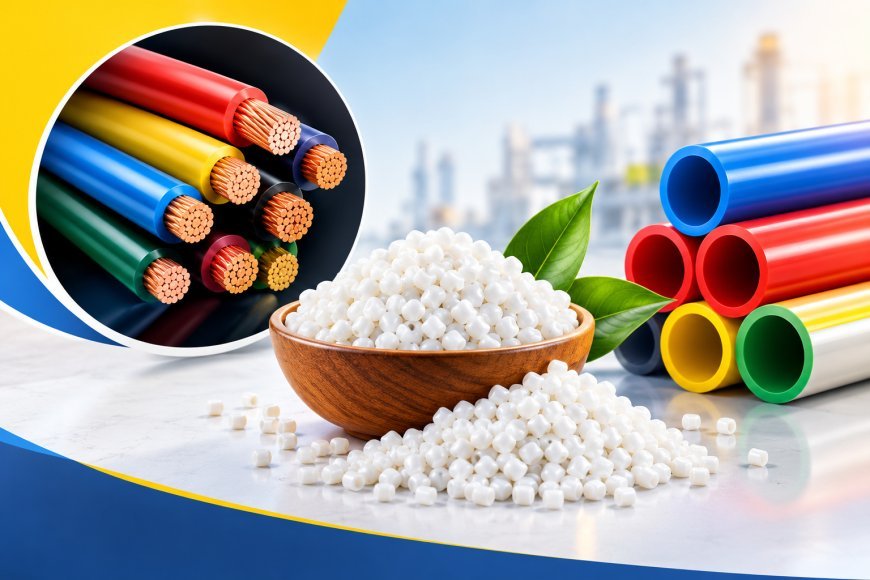
PVC pipes are widely used in plumbing, drainage systems, agriculture, irrigation, electrical installations, and infrastructure projects. Their durability, strength, and cost-effectiveness make them a preferred choice across various industries. However, maintaining consistent quality during PVC pipe manufacturing can be challenging. Issues such as uneven wall thickness, discoloration, poor surface finish, reduced impact strength, and dimensional variations can affect product performance. Manufacturers must focus on proper raw material selection, temperature control, formulation accuracy, and efficient processing methods to achieve reliable results.
One effective way to improve production consistency is by selecting the right One Pack Pipe Stabilizers for the manufacturing process. These stabilizers help protect PVC material from heat-related degradation during processing and support consistent product quality. By using a suitable stabilization system, manufacturers can reduce common production defects, improve processing performance, and maintain the desired physical properties of finished pipes. Understanding the factors that influence PVC pipe quality can help manufacturers identify problems early and implement practical solutions.
1. Select High-Quality Raw Materials
The quality of finished PVC pipes largely depends on the quality of the raw materials used in production. Variations in PVC resin, fillers, lubricants, pigments, and other additives can create inconsistencies in the final product.
For example, inconsistent resin quality may affect melt flow, fusion, and mechanical strength. Similarly, excessive or uneven filler content can influence pipe stiffness and impact resistance.
How to solve this problem:
-
Purchase raw materials from reliable suppliers.
-
Check the specifications and quality certificates of incoming materials.
-
Maintain consistent material grades across production batches.
-
Store raw materials in clean, dry, and controlled conditions.
-
Inspect materials before approving them for manufacturing.
A standardized raw material selection process helps minimize variations and creates a reliable foundation for consistent pipe production.
2. Maintain Proper Heat Stabilization
PVC is sensitive to excessive heat during processing. If the material experiences unsuitable temperatures or prolonged heat exposure, it can degrade and release hydrogen chloride, leading to discoloration and reduced material performance.
Selecting the right stabilizer is therefore essential for maintaining PVC pipe quality. A suitable stabilizer system helps protect the polymer during processing and supports the production of pipes with consistent appearance and performance.
Manufacturers should evaluate stabilizer compatibility with their PVC formulation, processing temperatures, machine configuration, and intended pipe application.
For businesses looking to improve processing consistency, One Pack Pipe Stabilizers can simplify additive handling by combining compatible stabilization and processing components in a pre-formulated package. The exact benefits depend on the product formulation and the manufacturer's processing conditions.
3. Control Processing Temperature Carefully
Temperature fluctuations are another common cause of inconsistent PVC pipe quality. Excessive heat may lead to thermal degradation, while insufficient heat can prevent proper material fusion. Both conditions may result in defects and reduced mechanical performance.
Manufacturers should establish suitable temperature settings for each processing zone of the extrusion line. These settings should be based on the PVC formulation, equipment design, production speed, and stabilizer system.
Practical solutions include:
-
Monitor barrel and die temperatures regularly.
-
Calibrate temperature sensors at scheduled intervals.
-
Avoid sudden changes in processing settings.
-
Check for overheating caused by excessive friction or material buildup.
-
Record temperature data for each production batch.
Consistent temperature management helps maintain material stability, improve surface appearance, and reduce avoidable production waste.
4. Maintain Consistent Mixing and Formulation
Even high-quality raw materials may produce inconsistent results if the formulation or mixing process changes between batches. Uneven additive distribution can create variations in color, lubrication, fusion, and thermal stability.
To address this issue, manufacturers should follow a standardized formulation and mixing procedure. Each ingredient should be measured accurately, and the mixing sequence should remain consistent.
Regularly inspect mixing equipment and verify that the temperature and mixing time remain within the established operating range. Automated weighing systems can also reduce manual measurement errors.
A controlled mixing process ensures that additives are distributed more uniformly, helping manufacturers achieve predictable processing behavior and finished pipe properties.
5. Monitor Extrusion Speed and Equipment Performance
Extrusion speed affects the amount of time PVC material spends inside the processing equipment. Changes in screw speed, feed rate, or material output can influence fusion, dimensional accuracy, and surface finish.
If the production line operates too quickly for the selected formulation, the material may not receive sufficient processing time. Conversely, unsuitable operating conditions may expose the material to excessive heat.
Manufacturers should regularly inspect screws, barrels, dies, cooling systems, and haul-off units. Worn components can contribute to inconsistent output and dimensional variations.
Establishing preventive maintenance schedules and monitoring production parameters can help reduce unexpected interruptions and maintain stable extrusion performance.
6. Ensure Accurate Pipe Dimensions and Effective Cooling
PVC pipes must meet the required diameter, wall thickness, roundness, and length specifications. Dimensional inconsistencies can affect installation, joint compatibility, and overall product reliability.
Manufacturers should use calibrated measuring instruments and inspect pipe dimensions at regular intervals during production.
Cooling is equally important. Uneven cooling may cause deformation, residual stress, or changes in pipe dimensions. Properly maintained vacuum calibration tanks, cooling tanks, and haul-off systems help maintain dimensional stability.
By monitoring both calibration and cooling, manufacturers can reduce rejected products and improve production efficiency.
7. Implement Regular Quality Testing
Quality control should take place throughout the manufacturing process rather than only after production is complete. Routine inspections help identify problems before large quantities of defective pipes are produced.
Depending on the pipe type and applicable standards, manufacturers should evaluate:
-
External appearance and surface finish
-
Outer diameter and wall thickness
-
Impact resistance
-
Hydrostatic pressure performance
-
Vicat softening temperature, where applicable
-
Relevant dimensional and material requirements
Testing procedures should follow the applicable product specifications and standards. Maintaining batch records allows manufacturers to trace defects back to raw materials, formulations, or processing conditions.
Conclusion
Maintaining consistent PVC pipe quality requires a systematic approach to raw material selection, heat stabilization, temperature control, mixing, extrusion, cooling, and quality testing. Manufacturers who monitor these factors can reduce production defects, minimize material waste, and improve product reliability.
Choosing an appropriate stabilizer system is particularly important because thermal degradation can affect both the appearance and performance of PVC pipes. By combining suitable stabilization technology with standardized operating procedures and preventive maintenance, manufacturers can achieve more consistent production results and meet customer expectations more effectively.
What's Your Reaction?
 Like
0
 Dislike
0
 Love
0
 Funny
0
 Angry
0
 Sad
0
 Wow
0