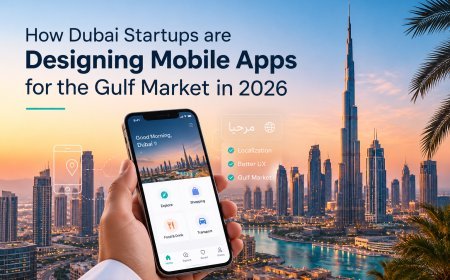


















How Dubai startups are designing mobile apps for the Gulf market in 2026
Discover how Dubai startups are designing mobile apps for the Gulf market in 2026 with localized UX, Arabic support, and user-focused features.
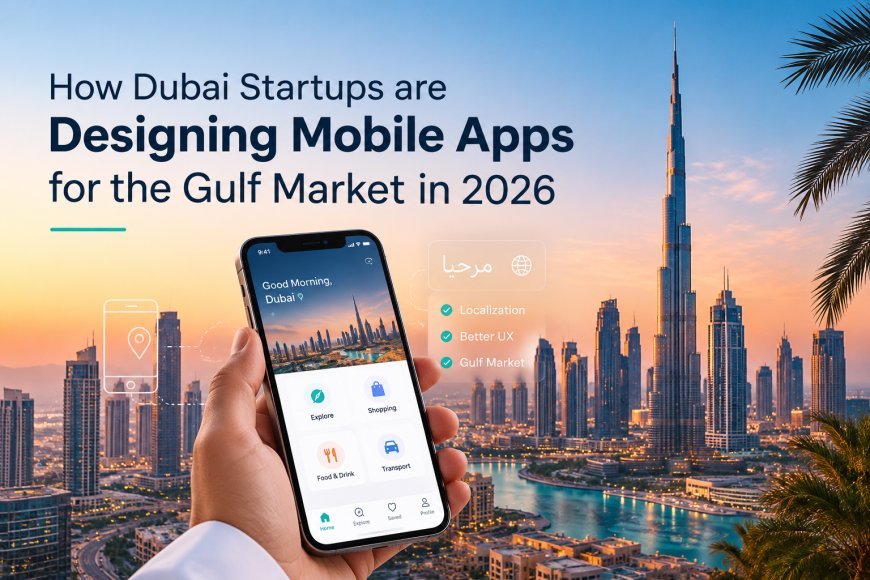
Dubai is one of the hardest places to launch a mobile app, and one of the best. Teams at Wavespace, a UI/UX design agency that has shipped 550+ products for startups and enterprises, see the same pattern on every Gulf project.
The apps that win here are designed for the region from the first screen, not translated at the end.
This guide covers what Dubai founders are doing differently in 2026, where most apps lose users, and what to check before you hire a design team.
Key takeaways:
-
Arabic and English need to be designed together from day one. Adding Arabic after launch usually means a rebuild.
-
Trust screens (ID checks, consent, payments) decide whether users finish signing up.
-
UAE users expect local payment options, AED pricing with VAT shown, and fast onboarding.
-
Test with real UAE users in both languages, not just your internal team.
-
Most Dubai app design projects cost between AED 15,000 and AED 250,000, depending on scope.
Why Dubai is a mobile-first market
In the UAE, the phone is where life happens. People bank, order food, book rides, pay bills, and use government services on their phones. For a lot of your users, your app is the first place they meet your brand, and your website comes second, if at all. The user base is also unusually mixed. In one week, the same app might serve an Emirati family, an Indian accountant, a Filipino nurse, and a British consultant. They read differently, pay differently, and trust different signals. A single "default user" doesn't exist here. That's why copying a US or European app and adding an Arabic toggle rarely works. The founders got traction designing for this mix from the start.
6 things Dubai startups design differently
1. Arabic and English from the first screen
Right-to-left (RTL) is not just flipping the layout. Navigation, back arrows, progress bars, and swipe directions flip. Logos, media controls, and some number formats don't. Arabic text also needs more line height and a proper Arabic typeface, or it looks cramped and cheap.
The biggest mistake is designing in English and handing Arabic to a translator after launch. Buttons break, labels overflow, and you pay to redesign screens you already paid for.
That's why more founders now work with a UI/UX design agency in Dubai that designs RTL and LTR screens side by side, so both versions ship on the same day.
2. Trust before the first transaction
UAE users drop off the moment an app asks for an Emirates ID, IBAN, or selfie without context. Good apps explain why they need it, show how many steps are left, and let users save and come back later.
If you handle personal data, consent and data handling under the UAE's data protection law (PDPL) should shape the flow from the start. Fixing it after a compliance review costs weeks.
3. Onboarding that gets to value fast
Long sign-up forms kill apps here, the same as everywhere. Let people browse before they register. Use phone number and OTP login, since that's what most UAE users expect. Ask for preferences later, once they've seen why the app is worth it.
4. Local payments and clear pricing
Show prices in AED with VAT included or clearly marked. Support Apple Pay, Google Pay, and cards at minimum. For e-commerce, buy-now-pay-later options like Tabby and Tamara are now standard, and cash on delivery still matters for some segments.
5. One-handed, on-the-move use
Most people use apps one-handed, in a taxi, in a mall, or between meetings. Keep main actions in the thumb zone at the bottom of the screen. Make tap targets big enough to hit while walking. Design for short sessions, not long ones.
6. Testing with real UAE users
An Emirati user, an Arab expat, and a South Asian expat can react very differently to the same screen. Test both language versions with real people from your target segments. Five users per segment often show the biggest problems in a single afternoon.
What good design changes in real numbers
Design gets treated as a cost line, but in a mobile-first market it's where most of your revenue leaks or holds. Two examples from Wavespace's app work show the size of the gap:
-
Nawa Health: a full redesign of the iOS app's onboarding, dashboard, and health records led to a 200% increase in subscriptions.
-
Quicky: a fintech app for sending money, splitting bills, and tracking expenses reached $3.2M in monthly transaction growth after its design overhaul.
Neither result came from a prettier colour palette. They came from fewer steps, clearer screens, and flows that answered users' doubts before they turned into drop-offs. That's what mobile app design is supposed to do: get more people through the flow that pays the bills.
What to check before you hire a design team
Ask for these before you sign anything:
-
Arabic work samples. Real RTL screens, not English designs with Arabic pasted in.
-
Bilingual prototypes. Can you click through both language versions before development starts?
-
User testing plan. Who will they test with, and in which languages?
-
Gulf working hours. The UAE works Monday to Friday, so overlap with your team matters more than the office address.
-
Dev-ready handoff. Design files, a design system, and specs your developers can build from without guessing.
-
Fixed scope and price. A clear quote up front beats a low number that grows with change requests.
If a team can't show Arabic work on the first call, that tells you how Arabic will be treated on your project.
Final takeaway
Dubai rewards apps that feel local. That means Arabic and English built together, trust screens that explain themselves, payments people already use, and onboarding that respects their time.
None of this is extra polish. In a market this mobile-heavy, it's the difference between an app people keep and one they delete after the first sign-up screen. Get the design right before development starts, and every dirham you spend on marketing after launch works harder.
What's Your Reaction?
 Like
0
 Dislike
0
 Love
0
 Funny
0
 Angry
0
 Sad
0
 Wow
0