
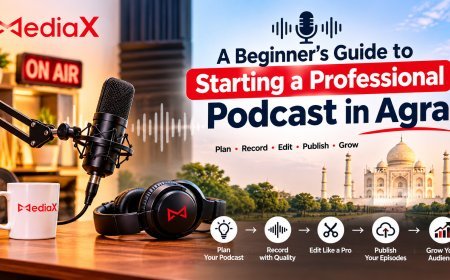
















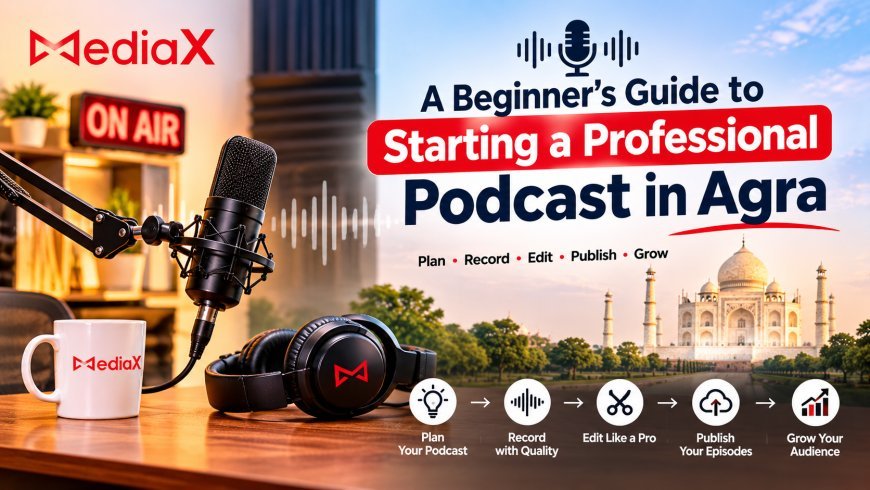
A Beginner’s Guide to Starting a Professional Podcast in Agra
Learn how to start a professional podcast in Agra, from choosing a podcast studio and recording equipment to editing, publishing, and promoting your episodes.

Podcasting has become an increasingly popular way to share knowledge, tell stories, build communities, and connect with audiences. From entrepreneurs and educators to creators and business owners, people are using podcasts to discuss their ideas, share experiences, and establish their presence in the digital world.
For individuals and businesses in Agra, starting a podcast can be an interesting opportunity to reach new audiences and create meaningful content. Whether you want to discuss business, entertainment, education, local culture, or industry trends, a well-planned podcast can help you communicate your message in a more personal way.
However, launching a professional podcast involves more than purchasing a microphone and recording a conversation. You need to plan your concept, choose suitable equipment, prepare your recording environment, and understand the production and editing process. This beginner-friendly guide explains how to get started with podcast production in Agra and create a podcast that listeners will want to follow.
1. Understand What You Want to Achieve With Your Podcast
Before investing in equipment or booking a recording space, start by identifying the purpose of your podcast. A clear objective helps you decide what topics to cover, who your audience will be, and what kind of content you should create.
For example, a business owner may want to share entrepreneurial experiences, while a teacher may create educational episodes for students. A local creator might interview interesting people from Agra, discuss cultural topics, or explore stories from the city.
Popular podcast topics to consider
- Business and entrepreneurship: Discuss business ideas, startup journeys, leadership, and professional experiences.
- Education: Share learning resources, career advice, study tips, and expert discussions.
- Health and lifestyle: Explore fitness, daily routines, personal development, and wellness topics.
- Entertainment: Discuss films, music, popular culture, and creative industries.
- Local stories: Interview Agra-based entrepreneurs, artists, professionals, and community members.
- Industry insights: Invite experts to discuss developments, challenges, and opportunities in their fields.
Choose a topic that interests you and offers enough scope for multiple episodes. A podcast becomes easier to maintain when you genuinely enjoy discussing its subject.
2. Identify Your Target Audience
A successful podcast is created for a specific audience rather than trying to appeal to everyone. Understanding your listeners helps you develop relevant topics, choose the right presentation style, and decide how to promote each episode.
Think about the people you want to reach. Are they students, business owners, working professionals, entrepreneurs, creators, or general listeners interested in local stories?
Consider these questions while defining your audience:
- What subjects are they interested in?
- What challenges or questions do they have?
- Do they prefer short discussions or detailed conversations?
- Are they likely to listen in Hindi, English, or another language?
- Which platforms do they commonly use to discover content?
For a podcast based in Agra, you could also consider local language preferences and topics relevant to the city's business, education, tourism, and creative communities.
3. Choose the Right Podcast Format
Your podcast format determines how each episode is structured and presented. Choosing a suitable format early makes planning and recording easier.
Solo podcast
A solo podcast features one host discussing a particular topic. It is suitable for educational content, personal experiences, opinions, tutorials, and industry insights. You have complete control over the conversation, but preparation is important to keep the episode engaging.
Interview podcast
An interview podcast features a host speaking with guests. You can invite business owners, industry professionals, educators, artists, and other interesting personalities. This format introduces different perspectives and gives listeners access to experiences they may not hear elsewhere.
Co-hosted podcast
A co-hosted podcast involves two or more regular presenters discussing topics together. It can create a natural conversational atmosphere and works well when hosts have different viewpoints or complementary knowledge.
Panel discussion
A panel podcast brings multiple guests together to discuss a shared subject. It is useful for industry conversations, expert discussions, and debates, although it requires more careful coordination and audio management.
Start with a format that matches your experience, available resources, and content goals. You can experiment with other formats as your podcast develops.
4. Prepare a Podcast Plan and Episode Structure
Good planning helps you avoid unstructured conversations and makes your recording sessions more productive. You do not necessarily need a complete script for every episode, but having a clear outline is useful.
A simple episode structure could include:
- Introduction: Welcome listeners and introduce the podcast topic.
- Host introduction: Briefly introduce yourself and any guests.
- Main discussion: Cover the central subject using prepared questions or talking points.
- Key takeaways: Summarize the most useful ideas from the conversation.
- Closing: Thank the audience and mention where they can find future episodes.
It is also helpful to prepare a list of possible episode topics in advance. Planning several episodes before launching can make it easier to maintain a consistent publishing schedule.
5. Choose a Suitable Podcast Studio in Agra
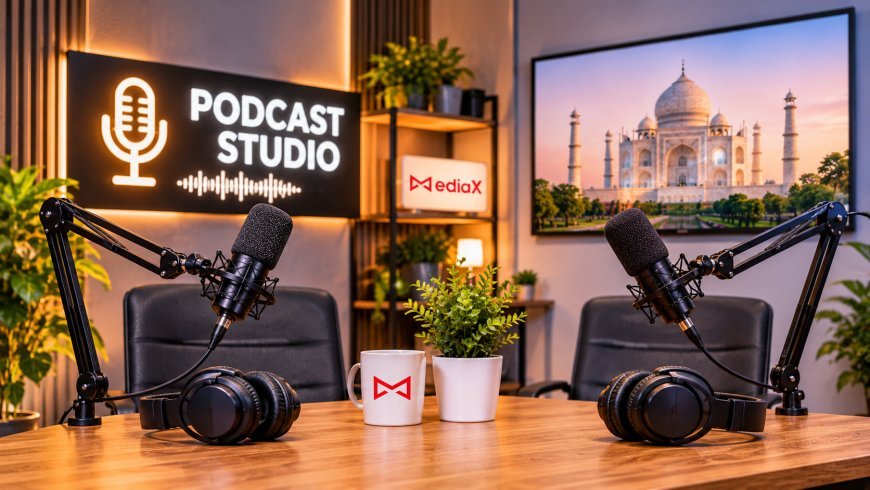
Your recording environment has a major influence on the quality of your podcast. Background noise, echo, poor microphone placement, and interruptions can make an otherwise interesting conversation difficult to listen to.
If you are new to podcasting, using a professional podcast studio in Agra can make the production process more convenient. A suitable recording space may provide microphones, headphones, audio interfaces, acoustic treatment, cameras, lighting, and technical assistance, depending on the studio's facilities.
What to check before selecting a studio
- Acoustic treatment: Check whether the room is designed to reduce echo and unwanted sound reflections.
- Microphone quality: Ask about the microphones available and whether they are suitable for spoken-word recording.
- Headphones and monitoring: Make sure presenters can monitor their audio during the session.
- Recording equipment: Check the availability of audio interfaces, mixers, and recording systems.
- Video facilities: If you want a video podcast, ask about cameras, lighting, framing, and multiple camera angles.
- Seating and layout: Ensure the space comfortably accommodates the host and guests.
- Technical support: Find out whether someone can assist with equipment setup and recording.
- Pricing and booking: Understand the rental charges, session duration, and additional production costs.
Before booking, ask to see sample recordings or visit the studio if possible. The right environment should suit your podcast format and provide a comfortable experience for everyone involved.
6. Invest in the Right Podcast Recording Equipment
Audio quality is one of the most important elements of podcast production. Listeners may tolerate simple visuals, but unclear voices, inconsistent volume, and distracting background noise can make them stop listening.
Whether you record independently or use a professional studio, understanding the basic equipment will help you make better production decisions.
Essential podcast equipment
- Microphones: Capture the host's and guests' voices clearly. Choose microphones suitable for your recording environment.
- Headphones: Allow presenters to monitor sound and identify unwanted noise during recording.
- Audio interface or mixer: Connects microphones to the recording system and helps manage audio levels.
- Recording software: Captures and manages the audio recording.
- Microphone stands: Keep microphones positioned consistently and reduce handling noise.
- Pop filters: Help reduce strong bursts of air from certain speech sounds.
- Acoustic treatment: Helps control room reflections and improve recording conditions.
You do not need to purchase every piece of equipment immediately. If you are testing a podcast concept, renting a studio can help you understand your requirements before making larger investments.
7. Decide Whether You Want an Audio or Video Podcast
Podcasting originally became popular through audio content, but video podcasts have created additional opportunities for creators to reach audiences. The right choice depends on your content, budget, production capabilities, and distribution strategy.
Audio podcast
An audio podcast focuses on voice and conversation. It is useful for interviews, storytelling, educational discussions, and topics that do not require visual demonstrations. It can also be more straightforward to produce because you do not need cameras or video editing.
Video podcast
A video podcast includes visual elements such as hosts, guests, studio settings, and on-screen demonstrations. Video recordings can be published as full episodes and repurposed into shorter clips for social media.
For businesses and creators in Agra, video podcasting can provide additional opportunities to introduce guests, showcase conversations, and create promotional content. However, it requires suitable cameras, lighting, framing, and video editing.
8. Focus on Professional Podcast Recording Techniques
Having good equipment is only part of the process. How you use it also affects the final result. A few basic recording practices can help beginners achieve more consistent audio quality.
- Position the microphone at a comfortable and consistent distance from the speaker.
- Set appropriate recording levels to avoid distorted or excessively quiet audio.
- Ask participants to avoid unnecessary movement and microphone handling.
- Turn off nearby fans, notifications, and other avoidable noise sources.
- Use headphones to monitor the recording.
- Record a short test before beginning the actual discussion.
- Keep water available and allow guests to take breaks when necessary.
- Record a few seconds of room tone to help with editing when needed.
If you are recording interviews, share the topic and general questions with guests beforehand. This helps them prepare and makes the conversation more comfortable.
9. Understand the Importance of Podcast Editing Services
Recording is only one stage of podcast production. Most episodes require editing before they are ready for publication. Editing helps improve the listening experience by removing unnecessary interruptions, managing sound levels, and creating a more organized conversation.
Professional podcast editing services may include several tasks depending on the project requirements.
Common podcast editing tasks
- Removing unwanted sections: Cutting unnecessary pauses, repeated sentences, mistakes, and irrelevant discussions.
- Audio cleanup: Reducing distracting background noise where possible.
- Volume balancing: Making host and guest voices sound more consistent.
- Sound enhancement: Applying appropriate equalization and audio processing.
- Intro and outro: Adding branded opening and closing segments.
- Music and sound effects: Adding suitable audio elements where they support the content.
- Video editing: Cutting footage, switching camera angles, adding titles, and preparing visual content for video platforms.
- Exporting: Preparing the final episode in suitable formats for distribution.
Editing should improve the flow without removing the natural character of the conversation. Avoid adding unnecessary effects that distract listeners from the actual discussion.
10. Create a Consistent Podcast Brand Identity
Your podcast needs a recognizable identity so that listeners can identify it across different platforms. Branding also makes your content appear more organized and professional.
Start by choosing a memorable podcast name that reflects your subject and audience. Then develop a consistent visual style for your cover artwork, episode thumbnails, social media posts, and video graphics.
Important podcast branding elements
- Podcast name: Choose a clear and memorable name related to your content.
- Cover artwork: Create a readable design that works at small sizes.
- Intro and outro: Use consistent opening and closing elements.
- Visual templates: Maintain a recognizable style across episode thumbnails and promotional graphics.
- Host presentation: Develop a consistent communication style and introduction.
- Social media identity: Use consistent branding when sharing episode announcements and clips.
A recognizable identity can help your podcast look consistent and make it easier for listeners to recognize new episodes.
11. Choose Platforms to Publish Your Podcast
After recording and editing your episode, the next step is distribution. Your podcast should be available on platforms where your intended audience can discover and listen to it.
Depending on your format and distribution setup, you can consider:
- YouTube: Useful for video podcasts, full-length conversations, and short clips.
- Spotify: A popular destination for discovering and listening to podcasts.
- Apple Podcasts: An option for distributing audio podcast episodes to Apple podcast listeners.
- Social media: Instagram, Facebook, and LinkedIn can help promote episodes through short clips and announcements.
- Your website: A dedicated podcast page can organize episodes, descriptions, guest information, and related resources.
Before publishing, prepare a clear episode title, description, relevant links, and suitable artwork. If you publish on multiple platforms, check their current upload requirements and supported formats.
12. Promote Your Podcast and Build an Audience
Publishing an episode does not automatically guarantee listeners. Promotion is an important part of podcast growth, especially when you are starting from zero.
Use a combination of organic content, guest networks, and relevant promotional activities to help people discover your podcast.
Practical podcast promotion ideas
- Share short video clips: Turn interesting moments from each episode into short-form content for social media.
- Promote guest appearances: Encourage guests to share their episodes with their own audiences.
- Publish episode highlights: Create short posts summarizing useful insights from each discussion.
- Use relevant keywords: Write descriptive episode titles and descriptions that explain the topic clearly.
- Build a website presence: Publish episode pages with summaries, guest details, and useful links.
- Maintain a schedule: Publish consistently so listeners know when to expect new episodes.
- Engage with listeners: Respond to comments, collect suggestions, and consider audience questions for future episodes.
For a locally focused podcast, you can also collaborate with Agra-based creators, entrepreneurs, organizations, and professionals. Relevant local partnerships can introduce your content to new audiences.
13. Understand the Budget for Starting a Podcast in Agra
The cost of starting a podcast depends on your format, recording frequency, equipment requirements, studio selection, and editing needs. There is no single budget that works for every creator.
For beginners, it is useful to compare the costs of recording independently with the option of using a professional studio.
| Expense | What to Consider |
|---|---|
| Studio rental | Session duration, recording facilities, equipment, and technical assistance. |
| Recording equipment | Microphones, headphones, stands, audio interfaces, and accessories. |
| Podcast editing | Audio cleanup, editing time, sound enhancement, and final exports. |
| Video production | Cameras, lighting, video editing, and additional recording requirements. |
| Branding and design | Cover artwork, thumbnails, templates, and promotional graphics. |
| Marketing and promotion | Social media content, advertising, collaborations, and website updates. |
Ask studios and production providers for a detailed quotation before booking. Check whether editing, equipment, additional camera angles, and final file delivery are included or charged separately.
14. Common Mistakes Beginners Should Avoid
Starting a podcast can involve a learning curve, but avoiding a few common mistakes can save time and help you improve faster.
- Starting without a clear concept: A podcast without a defined subject or audience can become difficult to manage.
- Ignoring audio quality: Poor sound can affect the listener experience even when the discussion is interesting.
- Overcomplicating the setup: Beginners sometimes spend too much on equipment before understanding their actual needs.
- Skipping episode preparation: Going into a recording session without a topic outline can lead to an unfocused conversation.
- Publishing inconsistently: Long and unpredictable gaps can make it difficult to build a regular audience.
- Ignoring editing: Unnecessary pauses, distracting noise, and uneven volume can reduce the quality of an episode.
- Not promoting episodes: Even useful content needs distribution and promotion to reach listeners.
- Expecting instant results: Building an audience takes time, consistency, and an understanding of what listeners value.
Focus on producing useful content and improving one episode at a time. Consistency and audience feedback can help you develop a stronger podcast over the long term.
15. How MediaX Can Support Your Creative and Digital Marketing Journey
A podcast can become an important part of your content and brand communication strategy. Along with producing episodes, creators and businesses need to think about how their content is presented, promoted, and connected with their wider digital presence.
MediaX Click Agra is a brand to explore for creative and digital marketing-related solutions. Connecting podcast content with branding, social media communication, and digital marketing can help businesses maintain a more consistent presence across their online channels.
If you are planning to launch a podcast, define your objectives and production requirements first. Consider your content format, audience, recording environment, editing needs, and promotional strategy before moving ahead.
Conclusion
Starting a professional podcast in Agra does not have to be complicated. With a clear concept, a defined audience, suitable recording equipment, and a consistent production process, beginners can turn their ideas into engaging podcast episodes.
Focus on choosing the right format, preparing useful discussions, maintaining good audio quality, and investing in editing where necessary. A suitable podcast studio in Agra can also make recording easier, particularly when you need professional equipment and a controlled recording environment.
Most importantly, remember that a successful podcast develops over time. Keep learning from your recordings, listen to audience feedback, and publish content that offers genuine value.
If you are exploring ways to strengthen your brand's creative and digital presence, Visit MediaX Click Agra to explore creative and digital marketing-related solutions.
What's Your Reaction?
 Like
0
 Dislike
0
 Love
0
 Funny
0
 Angry
0
 Sad
0
 Wow
0