



















Choosing the Right Packaging for Your Business: Corrugated Boxes, Folding Boxes, and Pizza Boxes
Explore corrugated boxes, folding boxes, and pizza boxes. Learn their uses, benefits, and how to choose suitable packaging for your business.
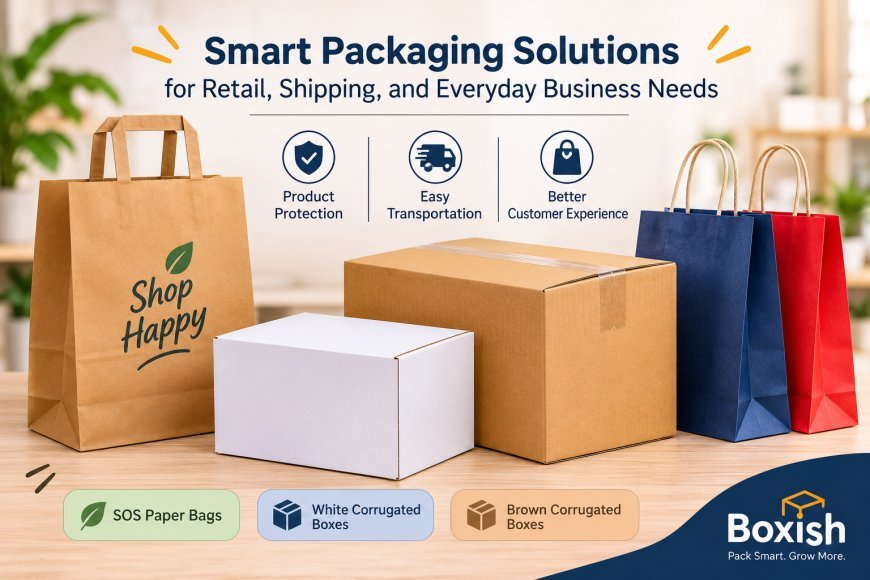
Packaging plays an important role in how businesses store, protect, transport, and present their products. Whether you operate an online store, retail shop, manufacturing unit, or food business, selecting a suitable packaging format can make everyday operations more organised. The right packaging should match the product, support convenient handling, and create a suitable presentation for customers.
Among the many packaging options available, corrugated boxes, folding boxes, and pizza boxes serve different purposes. Each format has its own structure and applications, making it important to understand their features before choosing one. Businesses looking for versatile packaging can explore corrugated boxes for product storage, shipping, and handling requirements.
1. Understanding Corrugated Boxes for Shipping and Storage
Corrugated boxes are widely used across e-commerce, retail, manufacturing, and distribution industries. Their construction generally includes a fluted paper layer placed between flat liner sheets. This structure provides rigidity and can offer cushioning, depending on the board specification and box design.
Businesses use corrugated packaging to organise products, prepare customer orders, and move goods between warehouses, stores, and delivery locations.
Key Features of Corrugated Boxes
Structured construction: The combination of liner sheets and a fluted layer creates a packaging material suitable for different applications.
Different size options: Boxes can be selected according to product dimensions and available packaging requirements.
Useful for transportation: Properly specified corrugated boxes can help enclose products during handling and delivery.
Storage convenience: They provide a practical way to group and organise products in warehouses, offices, and retail spaces.
Where Are Corrugated Boxes Commonly Used?
Corrugated boxes are suitable for many business applications, such as:
-
Packing products for e-commerce orders
-
Organising inventory in warehouses
-
Transporting goods between business locations
-
Packaging household and retail products
-
Preparing wholesale and bulk shipments
When choosing a corrugated box, businesses should consider product weight, dimensions, fragility, board quality, and transportation conditions. The correct specification matters because box performance depends on more than its appearance or size.
2. Folding Boxes for Retail and Product Presentation
Folding boxes are another useful packaging format, particularly for businesses that want an organised way to package and display products. These boxes are generally made from paperboard or similar folding carton materials and are supplied in a form that can be assembled when required.
Their format makes them relevant to retail businesses, product manufacturers, gift sellers, and other companies that need packaging for individual items.
Benefits of Folding Boxes
Convenient storage: Many folding box designs can be stored flat before assembly, helping businesses manage packaging inventory.
Neat presentation: Their structured shape provides a defined space for displaying and enclosing products.
Branding opportunities: Depending on the material and printing options, businesses may use colours, labels, logos, and product information to support brand identity.
Product organisation: Folding cartons can help keep individual products grouped and presented in an orderly manner.
Businesses interested in this format can explore folding boxes to review packaging options for different requirements.
Common Applications of Folding Boxes
Folding boxes can be used for:
-
Retail merchandise
-
Gift and promotional products
-
Small consumer goods
-
Personal care and lifestyle products
-
Product sets and accessories
Before selecting a folding box, check its dimensions, board material, closure style, and suitability for the product. If the contents are heavy or fragile, additional support or protective packaging may be necessary.
3. Pizza Boxes Designed for Food Packaging
Food businesses have specific packaging requirements because containers must suit the product, serving process, and delivery conditions. Pizza boxes are designed to hold pizzas during takeaway, collection, and delivery.
Their shape provides space for the pizza while making the order easier to carry and handle. Restaurants, pizzerias, cloud kitchens, and food delivery businesses commonly use this packaging format.
Important Considerations When Choosing Pizza Boxes
Suitable dimensions: Select a box size that accommodates the pizza without excessive movement or unnecessary empty space.
Material quality: Check the material and construction to ensure the box is appropriate for the intended use.
Ventilation and closure: The box design can influence how the food is held during transit. Consider the product and delivery requirements when selecting a format.
Food-contact suitability: Businesses should verify that the packaging material is suitable for its intended food-contact application.
Brand presentation: A suitable printed design, label, or logo can help restaurants maintain a consistent presentation across customer orders.
For businesses searching for food packaging, the pizza boxes collection provides a starting point for exploring available options.
Why Appropriate Pizza Packaging Matters
Pizza packaging is part of the overall takeaway and delivery experience. A suitable box can help keep an order enclosed, make carrying more convenient, and support organised food handling.
Restaurants should consider pizza size, toppings, moisture, delivery distance, and handling conditions before choosing a box. Packaging should also be stored in clean and dry conditions to maintain its quality.
4. Corrugated Boxes vs Folding Boxes vs Pizza Boxes
Although all three formats are used for packaging, their structures and purposes are different. Understanding these differences can help businesses select the right option.
| Packaging type | Common applications | Main consideration |
|---|---|---|
| Corrugated boxes | Shipping, storage, and distribution | Board specification and product protection |
| Folding boxes | Retail products and product presentation | Material, dimensions, and folding design |
| Pizza boxes | Takeaway and pizza delivery | Food-contact suitability, size, and handling |
Corrugated boxes are commonly selected for enclosing and transporting a variety of goods. Folding boxes are useful when businesses need structured packaging for individual products. Pizza boxes are designed around the specific requirements of pizza takeaway and delivery.
Choosing between them depends on what is being packed and how the package will be used.
5. How to Select the Right Packaging for Your Business
A packaging decision should be based on practical requirements rather than appearance alone. The following points can help businesses make a suitable choice.
Measure the Product Carefully
Start by checking the length, width, and height of the product. Packaging should provide enough space for the item and any protective material required. An unsuitable size can make packing difficult or allow products to move unnecessarily.
Consider Product Weight
The weight of the product affects the type of packaging needed. Check the board quality, construction, and product specifications before choosing a box. Heavy products may require a different specification from lightweight retail items.
Identify the Packaging Purpose
Think about whether the package will be used for retail presentation, warehouse storage, transportation, or food delivery. A packaging format that works well for one purpose may not be suitable for another.
Review Handling and Transportation Conditions
Packages may be moved, stacked, stored, or transported over different distances. Consider the handling conditions and the level of protection the product requires. Fragile items may need additional cushioning or internal support.
Keep Branding Consistent
Packaging is also an opportunity to communicate a business identity. Suitable colours, labels, printed information, and logos can help create a consistent appearance across products and customer orders.
Check Storage Requirements
Packaging materials should be stored in clean, dry conditions and handled carefully. Proper storage helps businesses maintain packaging quality and keep supplies ready for daily operations.
6. Packaging Choices for Different Industries
Different industries have different packaging needs. Understanding how each format is used can make the selection process easier.
E-Commerce Businesses
Online sellers often need packaging that supports order preparation, storage, and transportation. Corrugated boxes are commonly considered for shipping products, with the appropriate specification selected according to the contents.
Retail Stores
Retail businesses may use folding boxes to package individual products and create a neat presentation. The selected size and design should suit the product and the store's packaging process.
Restaurants and Food Outlets
Pizzerias and food delivery businesses need packaging designed for takeaway operations. Pizza boxes should be selected according to the food item, dimensions, and applicable food-contact requirements.
Manufacturers and Distributors
Manufacturers and distributors may use different packaging formats throughout their operations. Corrugated boxes can support storage and distribution, while folding cartons may be used for individual product packaging.
7. Common Packaging Mistakes Businesses Should Avoid
Selecting unsuitable packaging can create difficulties during packing, storage, and delivery. Businesses can avoid common problems by paying attention to a few important details.
-
Choosing the wrong size: Measure products before ordering packaging materials.
-
Ignoring material specifications: Check board quality and construction according to the intended application.
-
Selecting only by appearance: Packaging should meet practical requirements as well as presentation preferences.
-
Using one format for every product: Corrugated boxes, folding boxes, and pizza boxes serve different purposes.
-
Overlooking food-contact requirements: Food businesses should verify that packaging is suitable for direct or indirect food contact as applicable.
-
Ignoring storage conditions: Keep packaging supplies away from excessive moisture and damaging conditions.
-
Forgetting additional protection: Fragile products may require cushioning, inserts, or other protective materials.
Taking time to assess these factors can help businesses make more informed packaging decisions.
8. Explore Packaging Options at Boxish
Businesses often need multiple packaging formats to manage different activities. An e-commerce seller may require corrugated boxes for dispatching orders, while a retail brand may use folding boxes for individual products. Restaurants and pizzerias, meanwhile, need packaging suited to takeaway and delivery operations.
Boxish offers collections covering different packaging categories. Businesses can explore the corrugated box collection, folding box collection, and pizza box collection to review options for their requirements.
Before making a purchase, compare the available dimensions, material details, construction, and intended applications. Selecting packaging according to actual product and handling needs can support a more organised business process.
Frequently Asked Questions
1. What are corrugated boxes commonly used for?
Corrugated boxes are commonly used for product packaging, e-commerce shipping, warehouse storage, and the transportation of goods. The appropriate box specification depends on the product and handling conditions.
2. What is the purpose of folding boxes?
Folding boxes are used to package and present individual products. They are commonly found in retail and other industries where structured product packaging is required.
3. Are pizza boxes suitable for takeaway and delivery?
Pizza boxes are designed for pizza takeaway and delivery. Businesses should select suitable dimensions and verify that the packaging material meets applicable food-contact requirements.
4. How do corrugated boxes differ from folding boxes?
Corrugated boxes generally use a fluted paper layer between liner sheets, while folding boxes are commonly made from paperboard designed to fold into a carton. Their applications and material specifications differ.
5. How should businesses choose the correct box size?
Measure the product and consider any protective material that will be placed inside. The selected packaging should accommodate the contents without excessive movement.
6. Can businesses use packaging for branding?
Yes. Depending on the packaging material and available options, businesses may use printing, labels, logos, and other design elements to communicate their brand identity.
7. Where can businesses explore these packaging options?
Businesses can visit Boxish to explore corrugated boxes, folding boxes, and pizza boxes for different packaging applications.
Final Thoughts
Packaging is an important part of business operations, from preparing products for shipment to presenting retail items and managing food deliveries. Corrugated boxes, folding boxes, and pizza boxes each serve a different purpose, so the right choice depends on the product, packaging process, and handling requirements.
By considering product dimensions, weight, material specifications, storage conditions, and presentation needs, businesses can select packaging that suits their operations. Exploring the available collections at Boxish can help businesses compare different formats and identify options for their everyday packaging requirements.
What's Your Reaction?
 Like
0
 Dislike
0
 Love
0
 Funny
0
 Angry
0
 Sad
0
 Wow
0