























Dental Implants in Surat: A Step-by-Step Guide
Learn how dental implants in Surat work, from dental assessment and implant placement to healing, crown fitting, and long-term care.

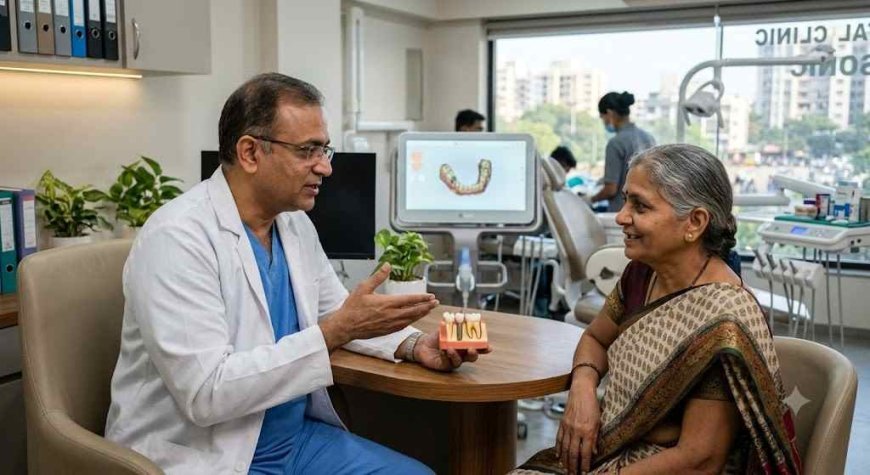
A missing tooth can make ordinary things feel different. You might avoid certain foods, become more conscious when speaking or smiling, or simply feel that something is missing from your appearance. Fortunately, modern dentistry offers several ways to replace missing teeth.
For people exploring dental implants in Surat, understanding how the treatment works can make the process less confusing. An implant is designed to replace the root portion of a missing tooth, while a crown or other restoration replaces the visible portion.
The Process Begins With a Dental Assessment
Before an implant is placed, your dentist needs to understand the condition of your mouth.
The examination may include checking your gums, neighbouring teeth, bite, and the area where the tooth is missing. Dental imaging can also help the dentist evaluate the jawbone and surrounding structures.
This initial assessment is important because implant treatment needs to be planned around your individual anatomy rather than following a standard template.
Planning the Replacement
Once your dental condition has been assessed, the dentist can discuss the available treatment options.
If an implant is considered appropriate, the treatment plan may address the number of missing teeth, their location, the type of restoration required, and whether any additional dental procedures are needed.
For example, a person replacing one missing tooth may have a very different plan from someone who has several missing teeth.
Implant Placement
The implant is placed into the jawbone in the area of the missing tooth root.
The exact procedure depends on the patient's dental condition and the planned treatment. Local anaesthesia may be used during the procedure, while your dentist will explain what to expect before treatment begins.
After placement, the implant needs time to heal and integrate with the surrounding bone.
Why Healing Cannot Be Rushed
The healing period is an important part of dental implants in Surat treatment.
During this stage, the implant is becoming integrated with the jawbone. The duration can vary according to the individual, implant location, and whether additional procedures are involved.
Your dentist will provide specific instructions about eating, cleaning, and caring for the treatment area while it heals.
Adding the Final Tooth
Once the implant has healed appropriately, the restorative stage can begin.
A dental crown is commonly used when replacing a single missing tooth. The restoration is designed according to the surrounding teeth, bite, and appearance.
The goal is to create a replacement that fits naturally into the existing dental arrangement.
Life After the Restoration
Having an implant does not mean your regular oral-care routine becomes unnecessary.
Continue brushing your teeth and cleaning between them as recommended by your dentist. Regular dental visits also allow the condition of the restoration, gums, bite, and surrounding teeth to be monitored.
Good maintenance is an ongoing part of caring for an implant-supported restoration.
Take Time Before Making Your Decision
There is no need to choose an implant simply because it is a familiar treatment option. Your dentist can explain whether it is suitable for you and discuss alternatives if appropriate. If you are researching dental implants in Surat, begin with a detailed consultation rather than relying only on general information found online.
For those considering tooth replacement, White Nest Dental can be contacted to discuss your dental concerns and explore appropriate treatment options.
What's Your Reaction?
 Like
0
Like
0
 Dislike
0
Dislike
0
 Love
0
Love
0
 Funny
0
Funny
0
 Angry
0
Angry
0
 Sad
0
Sad
0
 Wow
0
Wow
0