






















Global Hospital Beds Market: Industry Size, Regional Share & Revenue Outlook 2026-2034
Global hospital beds market size was valued at USD 4.11 Billion in 2025 and is projected to reach USD 5.42 Billion by 2034, exhibiting a CAGR of 3.12% during 2026-2034

Market Overview:
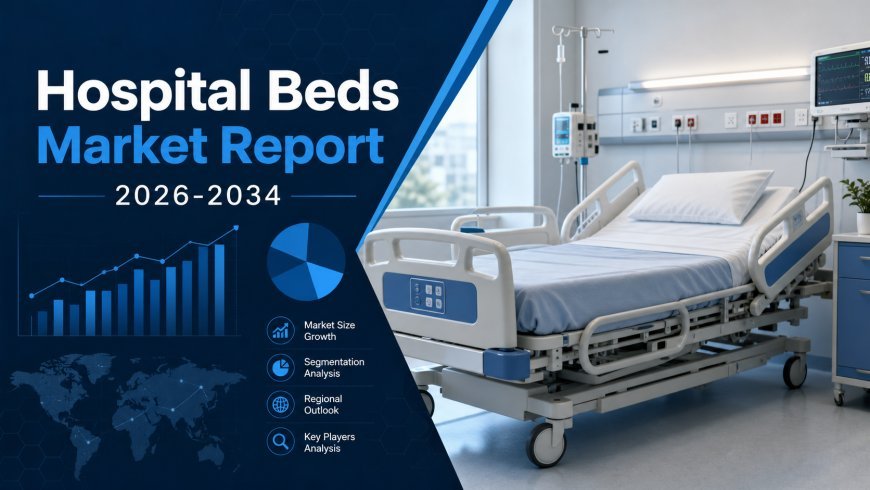
According to IMARC Group’s latest research publication, “Hospital Beds Market Size, Share, Trends and Forecast by Technology, Bed Type, Usage, End User, and Region”, the global hospital beds market size was valued at USD 4.11 Billion in 2025 and is projected to reach USD 5.42 Billion by 2034, exhibiting a CAGR of 3.12% during 2026-2034, as the industry continues to expand steadily, supported by hospital modernization and rising senior care needs.
This detailed analysis primarily encompasses industry size, business trends, market share, key growth factors, and regional forecasts. The report offers a comprehensive overview and integrates research findings, market assessments, and data from different sources. It also includes pivotal market dynamics like drivers and challenges, while also highlighting growth opportunities, financial insights, technological improvements, emerging trends, and innovations. Besides this, the report provides regional market evaluation, along with a competitive landscape analysis.
How AI is Reshaping the Future of Global Hospital Beds Market
- AI-enabled beds are entering critical care. Platforms with AI fall detection, automatic repositioning, and real-time vital-sign monitoring are gaining adoption in ICUs, with Stryker, Hill-Rom, and Getinge actively investing in this category.
- IoT sensors are changing nursing workflows. Hill-Rom’s Centrella Smart+ Bed and Stryker’s ProCuity RC use built-in sensors for weight, heart rate, and patient movement to reduce falls and ease nurse workloads.
- Electronic health record integration is becoming standard. Modern beds connect wirelessly to hospital records, enabling bed-exit alarms and continuous patient monitoring across ICUs and acute care wards.
- Corporate focus is shifting toward connected care. Baxter announced the sale of its Kidney Care unit (Vantive) to Carlyle for USD 3.8 Billion, sharpening its emphasis on medical devices such as hospital beds and connected care platforms.
- Wireless architecture is future-proofing equipment. Stryker’s ProCuity RC offers a fully wireless design that streamlines maintenance and enables future software updates.
Grab a sample copy of this report: https://www.imarcgroup.com/hospital-beds-market/requestsample
Key Trends in the Global Hospital Beds Market
- Smart Bed and IoT Integration: Hospitals are rapidly upgrading to beds with integrated sensors, bed-exit alarms, and record connectivity. Hill-Rom’s Centrella and Stryker’s ProCuity platforms are accelerating replacement cycles across US and European hospital networks.
- Pressure Ulcer Prevention Technology: Advanced pressure redistribution and lateral rotation systems are increasingly used in critical and long-term care beds, helping lower pressure ulcer risk and improve patient outcomes.
- Home Healthcare Bed Expansion: More chronic and post-acute care is shifting out of hospitals, lifting demand for home-use electric beds. Invacare and Drive DeVilbiss lead home-care bed distribution across North America.
- Infection-Resistant and Modular Designs: Antimicrobial coatings, copper-alloy surfaces, and seamless, easy-clean designs are gaining ground to support infection prevention protocols. Electric beds now offer up to five adjustment axes for better ergonomics and comfort.
- Bariatric and Specialty Beds: Rising obesity prevalence in North America and Europe is increasing demand for higher weight capacity beds, with companies such as Stryker expanding specialty portfolios.
Growth Factors in the Global Hospital Beds Market
- Rising Geriatric Population: The United Nations projects that people aged 65 and above will make up about 16% of the global population in the coming decades, creating sustained demand for long-term care beds and pressure-relief systems.
- Growing Chronic Disease Burden: The World Health Organization reports that noncommunicable diseases cause about 74% of global deaths. Cardiovascular disease, diabetes, cancer, and respiratory disorders keep hospital admissions high, supporting ICU, acute, and rehabilitation bed demand.
- Government Healthcare Programs: India’s Ayushman Bharat initiative is expanding hospital infrastructure and bed capacity, with India adding more than 100,000 hospital beds annually across public and private systems. Saudi Arabia’s national healthcare investments and GCC medical tourism programs are driving hospital construction in the Middle East.
- Strong Healthcare Spending in Mature Markets: North America benefits from per-capita healthcare spending above USD 14,000 and a large Medicare reimbursement base. The United States alone operates more than 900,000 staffed hospital beds with steady replacement activity.
- Hospital Modernization and Replacement: Stricter patient-safety regulations are pushing hospitals to move from older manual beds toward electric and semi-electric platforms, while strong demand lifted Stryker’s annual revenue to USD 25.1 Billion, with its MedSurg and Neurotechnology segment, which includes beds, leading growth.
Leading Companies Operating in the Global Hospital Beds Industry:
- Baxter (Hill-Rom)
- Stryker Corporation
- Paramount Bed Co. Ltd.
- Invacare Corporation
Global Hospital Beds Market Report Segmentation:
Breakup By Technology:
- Electric Beds
- Semi-Electric Beds
- Manual Beds
Manual beds account for the majority of shares at 43.9% on account of affordability, durability, and strong adoption in public hospitals, long-term care facilities, and emerging markets. Electric beds hold 34.6%, while semi-electric beds hold 21.5%.
Breakup By Bed Type:
- Regular Beds
- Pediatrics Beds
- Respiratory Beds
- ICU Beds
- Bariatric Beds
- Birthing Beds
- Pressure Relief Beds
- Others
Breakup By Usage:
- Critical Care
- Acute Care
- Long-Term Care
Long-term care leads with a 34.7% share, supported by aging populations, rising dementia and rehabilitation demand, and senior living expansion across the United States, Japan, Germany, and the United Kingdom. Acute care follows at 33.7%, and critical care holds 31.6%.
Breakup By End User:
- Hospitals and Clinics
- Ambulatory Surgery Centers (ASCs)
- Others
Hospitals and clinics dominate the market with a 52.2% share due to inpatient admissions, ICU capacity, and ongoing replacement cycles.
Breakup By Region:
- North America (United States, Canada)
- Europe (Germany, France, United Kingdom, Italy, Spain, Russia, Others)
- Asia Pacific (China, Japan, India, South Korea, Australia, Indonesia, Others)
- Latin America (Brazil, Mexico, Others)
- Middle East and Africa
North America enjoys the leading position with a 43.8% share owing to mature hospital networks, high Medicare reimbursement, and technology-led bed modernization. Europe follows at 24.6%, while Asia Pacific, at 20.7%, is the fastest-growing region.
Recent News and Developments in Global Hospital Beds Market
- January: Stryker reported strong full-year revenue of USD 25.1 Billion, with growth in its MedSurg and Neurotechnology segment, which includes hospital beds, supported by product innovation and rising hospital demand.
- Recently: Baxter announced the sale of its Kidney Care unit (Vantive) to Carlyle for USD 3.8 Billion, to reduce debt and sharpen its focus on medical devices, including hospital beds and connected care.
- Recently: Paramount Bed continued to promote its A5 Series and Qualitas beds, focusing on patient safety, ergonomics, and smart monitoring for hospital and eldercare needs across Asia.
- Recently: Baxter’s Hillrom portfolio, including Centrella, Progressa, and VersaCare, is being expanded with connected care platforms such as Voalte for clinical communication and digital patient management.
If you require specific details, data, or insights that are not currently included in the scope of this report, we are happy to accommodate your request. As part of our customization service, we will gather and provide the additional information you need, tailored to your specific requirements. Please let us know your exact needs, and we will ensure the report is updated accordingly to meet your expectations.
About Us:
IMARC Group is a global management consulting firm that helps the world’s most ambitious changemakers to create a lasting impact. The company provide a comprehensive suite of market entry and expansion services. IMARC offerings include thorough market assessment, feasibility studies, company incorporation assistance, factory setup support, regulatory approvals and licensing navigation, branding, marketing and sales strategies, competitive landscape and benchmarking analyses, pricing and cost research, and procurement research.
Contact Us:
IMARC Group
134 N 4th St. Brooklyn, NY 11249, USA
Email: sales@imarcgroup.com
Tel No:(D) +91 120 433 0800
United States: +1-201971-6302
What's Your Reaction?
 Like
0
 Dislike
0
 Love
0
 Funny
0
 Angry
0
 Sad
0
 Wow
0