




















How a Home Health Monitoring App Can Simplify Everyday Health Management
Learn how a home health monitoring app helps organize vital signs, track blood pressure, manage medication schedules, and support family caregivers.

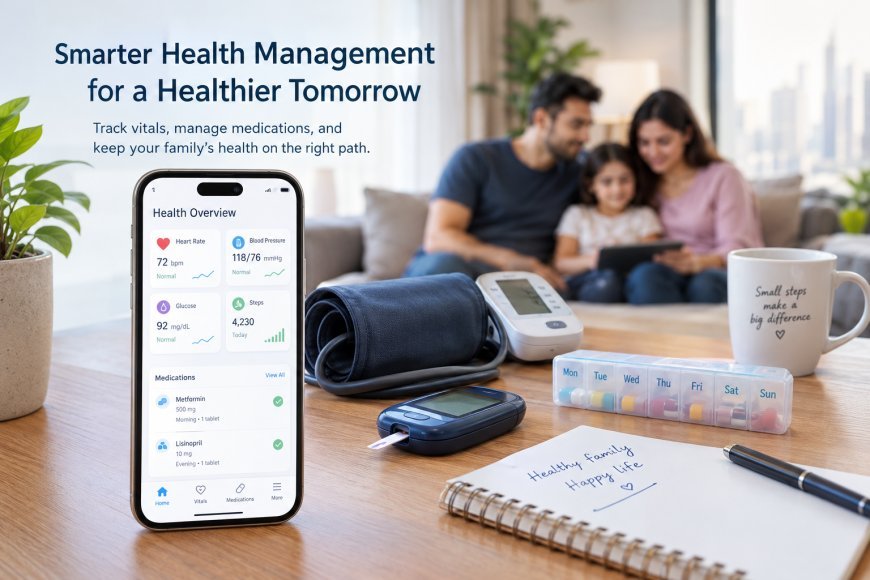
Keeping track of your health can become difficult when everyday life gets busy. Between work, family responsibilities, medical appointments, and regular medication, it is easy to forget small but important details. You might remember checking your blood pressure last week but struggle to recall the exact reading. Or perhaps you are helping a parent manage medication and need a better way to keep everything organized.
This is where digital health tools can make a real difference. A home health monitoring app helps people record important health information, notice changes over time, and manage daily routines from one place. Instead of relying on loose papers or memory, users can build a simple record of their health using a smartphone.
The goal is not to replace doctors or turn every reading into a medical concern. It is to make everyday health management more organized and help people have more informed conversations with their healthcare providers.
Why Home Health Monitoring Is Becoming More Important
Healthcare does not begin and end at a doctor's office. Many people need to monitor ongoing conditions, follow treatment plans, or support family members between appointments. Having access to personal health records can make these responsibilities easier to manage.
For example, someone monitoring high blood pressure may need to record readings regularly. A person living with diabetes might need to keep track of glucose levels alongside other health information. Families caring for older relatives may also need to manage prescriptions and appointment details.
A digital record helps bring these details together. When readings are recorded consistently, it becomes easier to review previous measurements and share useful information during medical visits.
Keeping Health Information in One Place
Paper notebooks can work well, but they are not always convenient when information needs to be reviewed quickly. A digital health record offers a practical alternative, particularly for people who monitor several health measurements.
A well-designed app can help users organize daily readings, review previous entries, and maintain a clearer picture of their routines. It also reduces the need to search through different notebooks, messages, or phone notes whenever a healthcare professional asks about recent measurements.
Making Blood Pressure Tracking Part of Your Routine
Blood pressure monitoring is a common part of managing cardiovascular health. However, taking a measurement is only one part of the process. Recording it properly and maintaining a consistent routine are equally important.
A blood pressure tracker app allows users to save readings with dates and times, making it easier to review their records later. Some people may also add notes about their routine or circumstances surrounding a measurement, which can help provide context when discussing results with a healthcare professional.
For more useful records, measurements should be taken according to the instructions provided by a healthcare professional or the device manufacturer. Using a validated blood pressure monitor and following the correct technique can help improve consistency.
Why Consistent Records Matter
A single blood pressure reading does not always tell the whole story. Readings can vary depending on activity, stress, caffeine, medication, and other factors.
Keeping a regular log makes it easier to see how measurements change over time. If readings are repeatedly outside the range recommended by a healthcare professional, users can share their records and ask what steps to take.
An app should support this process rather than encourage people to diagnose themselves. It is a convenient way to organize information, not a substitute for professional medical advice.
Tracking More Than One Health Measurement
Many people need to monitor several aspects of their health rather than focusing on one number. Depending on their needs, they may record blood pressure, blood glucose, pulse, weight, or other measurements recommended by their healthcare provider.
A health vitals log app can help organize these records in a consistent format. When information is spread across several notebooks or applications, reviewing it can take extra time. Keeping relevant entries together makes the process more manageable.
A useful track vital signs app should make recording information straightforward. If entering a reading takes too many steps, users may find it harder to maintain the habit. Simple forms, clear labels, and easy access to previous entries can make daily tracking less frustrating.
Understanding Glucose and Blood Pressure Together
For people who have been advised to monitor both blood glucose and blood pressure, a glucose and blood pressure tracker can help keep these measurements organized in one place.
These readings provide different information about the body, and each should be interpreted in the appropriate medical context. Recording both can help users prepare for appointments and explain their monitoring routine more clearly.
It is important not to assume that one reading directly explains another. A healthcare professional can help interpret the records alongside symptoms, medication, medical history, and other relevant factors.
Making Medication Management Less Stressful
Health management is not limited to measuring vital signs. Remembering when to take medication, checking supplies, and arranging refills can also become challenging, particularly when several prescriptions are involved.
A medication schedule app can help users keep track of medication timings and maintain a more organized routine. Instead of relying entirely on memory, they can refer to a schedule and set reminders that fit their prescribed instructions.
This can be particularly helpful for people who take medication at different times of the day or need to follow a routine that changes according to medical advice.
How Medication Reminders Help
A pill reminder app for family can be useful when relatives help an older parent, partner, or another family member manage daily medication. Reminders may reduce the chance of forgetting a scheduled dose, although they cannot guarantee that medication is taken correctly.
A practical system should allow users to review their schedules easily and update them when a healthcare professional changes a prescription. People should always follow the current prescription instructions rather than relying on an old reminder.
It is also worth checking whether an app records a dose as scheduled, acknowledged, or taken. These details are not necessarily the same, so users should understand what each status means.
Avoiding Last-Minute Prescription Refills
Running out of essential medication can create unnecessary stress. A refill reminder app helps users keep an eye on their remaining supply and plan ahead when a prescription needs renewing.
Refill reminders are particularly useful for people who take long-term medication or manage several prescriptions with different refill dates. They can provide a prompt to contact a pharmacy or healthcare provider before supplies run low.
However, an app cannot guarantee that a prescription will be renewed or that a medicine will be available. Users should allow enough time for pharmacy processing and any required medical review.
Supporting Family Caregivers With Better Organization
Helping someone manage their health often involves more than one responsibility. A family caregiver might need to remember appointments, review blood pressure readings, organize medication schedules, and keep track of questions for the next doctor's visit.
Trying to remember everything can become exhausting, especially when balancing caregiving with work and personal responsibilities.
Tools that help people track medications for multiple people can make shared responsibilities easier to organize, provided the app supports separate profiles and suitable privacy controls. Keeping each person's information separate is essential because medication schedules and health records should never be confused.
Building a Routine That Works for Everyone
The most useful system is one that fits naturally into daily life. A caregiver might review a family member's medication schedule in the morning, check whether a refill is needed during the week, and help record health measurements when required.
It is also important to respect the person's independence and privacy. Whenever possible, family members should agree on who can view or manage their information and how reminders will be handled.
For households managing several health routines, a home health monitoring app can provide a convenient starting point for better organization without making daily care feel more complicated.
Choosing a Health App You Can Use Comfortably
Not every health app offers the same features, and the most suitable option depends on what a person needs to manage.
Before choosing one, consider whether it supports the measurements you want to record, offers useful medication reminders, and makes previous entries easy to review. If family caregiving is part of the routine, check whether multiple profiles are available and how access to personal information is controlled.
Privacy deserves particular attention. Review the app's privacy policy, understand how health information is stored and shared, and check which permissions are required. Health information is personal, so it is worth choosing a tool whose data practices you understand.
Ease of use matters, too. An app with many features may still be inconvenient if the basic tasks are difficult to find. Clear navigation and simple recordkeeping can make it easier to maintain healthy habits over time.
Bringing Everyday Health Records Together With MedKeep
Managing health information becomes easier when recording measurements and organizing daily routines are part of a consistent process. Rather than trying to remember every reading or medication detail, users can develop a routine for keeping their information up to date.
MedKeep, available at https://medkeep.app, is a relevant option for people exploring digital tools for personal health organization. Before relying on any particular feature, users should check the current app details to confirm that it supports their individual monitoring and medication-management needs.
The value of a digital tool comes from how well it fits into real life. A simple record that is maintained consistently may be more useful than a complicated system that is rarely updated.
Conclusion: Small Habits Can Make Health Management Easier
Looking after your health does not always require a major lifestyle change. Sometimes, it starts with recording a blood pressure reading, checking a medication schedule, or planning a prescription refill before supplies run low.
A home health monitoring app can help bring these everyday tasks into a more organized routine. With consistent records, practical reminders, and sensible privacy habits, people can make it easier to manage their health information and prepare for conversations with healthcare professionals.
Technology cannot replace medical care, and an app should never be treated as a diagnosis or an emergency service. Used appropriately, however, it can support better organization and help individuals and families feel more prepared to manage the details of everyday health.
What's Your Reaction?
 Like
0
 Dislike
0
 Love
0
 Funny
0
 Angry
0
 Sad
0
 Wow
0