





















What Should Businesses Consider When Buying Barcode Labels and Ribbons?

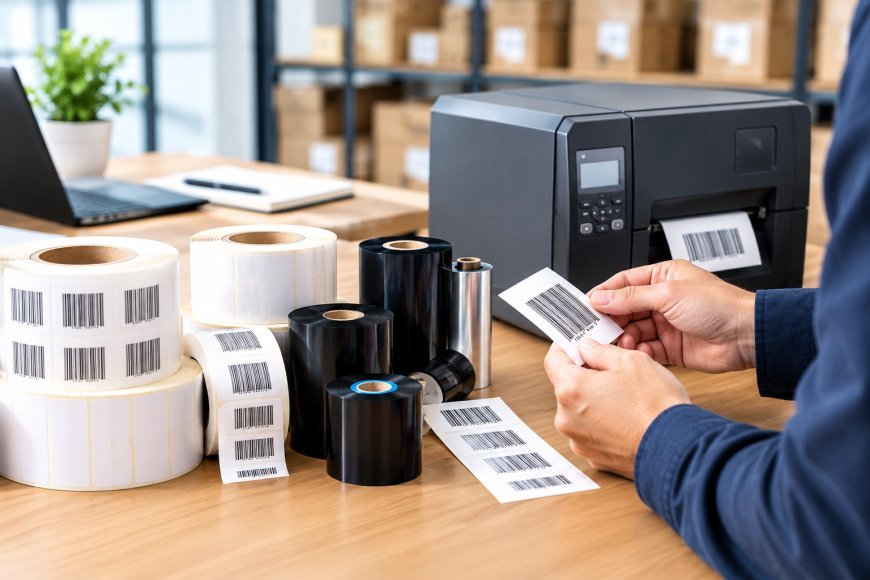
Barcode labels and ribbons play an important role in inventory management, product identification, shipping, and supply chain operations. Choosing the right combination helps businesses produce clear, durable, and easily scannable barcodes while reducing printing errors and unnecessary expenses.
However, not all labels and ribbons are suitable for every application. Factors such as label material, adhesive type, printing technology, environmental conditions, and barcode printer compatibility can affect printing performance.
For businesses looking to buy barcode labels and ribbons kuwait, understanding these factors can help ensure they select supplies that meet their operational requirements. Pointus Solutions helps businesses explore barcode printing and identification solutions, while companies comparing equipment costs may also research id card printer price in kuwait when planning their broader identification system requirements.
This guide explains the key considerations businesses should evaluate before purchasing barcode labels and ribbons.
Table of Contents
-
Why Choosing the Right Barcode Labels and Ribbons Matters
-
Understand Your Label Material Requirements
-
Choose the Right Barcode Ribbon Type
-
Check Printer Compatibility
-
Consider Label Adhesive and Durability
-
Evaluate Printing Quality and Volume
-
Compare Total Printing Costs
-
Best Practices for Buying Barcode Supplies
-
Frequently Asked Questions
-
Conclusion and Call to Action
1. Why Choosing the Right Barcode Labels and Ribbons Matters
Barcode labels are used across industries such as retail, logistics, manufacturing, healthcare, and warehousing. They help businesses identify products, track stock, manage shipments, and maintain accurate records.
Poor-quality labels or incompatible ribbons can result in faded prints, unreadable barcodes, adhesive failure, and wasted supplies. These issues may interrupt workflows and increase operating costs.
Selecting suitable printing supplies can help businesses:
-
Improve barcode scanning accuracy.
-
Reduce label waste and reprinting.
-
Maintain consistent print quality.
-
Improve product traceability.
-
Support efficient inventory management.
-
Produce labels suited to specific environments.
2. Understand Your Label Material Requirements
The label material should match the product, surface, and environment where the label will be used.
Paper Labels
Paper labels are commonly used for shipping labels, retail products, cartons, and general inventory identification. They can be a practical choice for applications where labels do not require extensive resistance to moisture, chemicals, or abrasion.
Synthetic Labels
Synthetic materials, such as polypropylene and polyester, are often used when labels need greater durability. Depending on the material and construction, they may provide improved resistance to moisture, tearing, or abrasion.
These labels can be suitable for industrial equipment, outdoor applications, and products exposed to demanding conditions.
Consider the Operating Environment
Before purchasing labels, determine whether they will be exposed to:
-
Heat or cold.
-
Moisture or condensation.
-
Dust and friction.
-
Chemicals or cleaning agents.
-
Sunlight or outdoor conditions.
Matching the label material to the environment helps maintain readability throughout the label's intended lifespan.
3. Choose the Right Barcode Ribbon Type
Thermal transfer printers use ribbons to transfer ink onto labels. The correct ribbon depends on the label material, printer specifications, and required print durability.
Wax Ribbons
Wax ribbons are generally suitable for paper labels used in everyday applications, such as shipping, retail, and warehouse labeling. They are often an economical option for standard indoor use.
Wax-Resin Ribbons
Wax-resin ribbons can provide greater resistance to smudging and abrasion than many standard wax ribbons. They are commonly considered for coated paper and certain synthetic label materials.
Resin Ribbons
Resin ribbons are typically used with compatible synthetic labels when high resistance to abrasion, chemicals, or environmental exposure is required. They are often suitable for demanding industrial applications.
Important: Always check the printer manufacturer's specifications and the ribbon supplier's compatibility guidance before selecting a ribbon.
4. Check Printer Compatibility
Not every label or ribbon works with every barcode printer. Before ordering, verify the following:
-
Printer model and supported media.
-
Direct thermal or thermal transfer technology.
-
Maximum label width and roll dimensions.
-
Ribbon width, length, and core size.
-
Ribbon winding direction.
-
Print resolution and required barcode dimensions.
Direct thermal printers create images on specially coated labels without using a ribbon. Thermal transfer printers use a ribbon, so businesses must choose compatible labels and ribbons for this printing method.
Confirming compatibility before purchasing helps prevent installation problems, printing defects, and unnecessary supply costs.
5. Consider Label Adhesive and Durability
The adhesive determines how well a label stays attached to a surface. A suitable adhesive for cardboard may not perform equally well on plastic, glass, metal, or textured packaging.
Consider whether the label must adhere to:
-
Corrugated cartons.
-
Smooth plastic packaging.
-
Metal equipment.
-
Refrigerated products.
-
Curved or uneven surfaces.
Also evaluate the surface condition, application temperature, and expected storage conditions. For example, cold-storage applications may require an adhesive designed for low-temperature use.
Testing sample labels on the actual surface is a practical way to assess adhesion before placing a large order.
6. Evaluate Printing Quality and Volume
Businesses should select supplies that support their printing workload and barcode quality requirements.
For high-volume operations, consistent label dimensions and reliable supply availability can help reduce interruptions. For small businesses, a more basic label solution may be sufficient if it meets scanning and durability requirements.
Before purchasing, test sample labels to confirm that:
-
Barcodes scan reliably with the intended devices.
-
Text and numbers are easy to read.
-
Prints resist expected handling and exposure.
-
Labels feed smoothly through the printer.
-
Adhesive performs correctly on the intended surface.
Clear barcodes are especially important in warehouses, distribution centers, and production facilities where scanning errors can slow operations.
7. Compare Total Printing Costs
The lowest purchase price does not always represent the best value. Businesses should consider the overall cost of producing usable labels.
Factors affecting total cost include:
-
Price per label and ribbon.
-
Number of labels printed per roll.
-
Ribbon consumption.
-
Printhead wear and maintenance.
-
Waste caused by misprints.
-
Replacement frequency.
-
Downtime from incompatible supplies.
For businesses planning wider identification investments, comparing id card printer price in kuwait may also help with budgeting for employee badges, visitor cards, and access identification. However, ID card printers use different supplies from standard barcode label printers, so their consumables should be evaluated separately.
8. Best Practices for Buying Barcode Supplies
Follow these practical steps before placing an order:
-
Identify the application: Determine what the labels will identify and where they will be used.
-
Check printer specifications: Confirm the supported label and ribbon dimensions.
-
Match the ribbon to the label: Choose supplies designed to work together.
-
Test samples: Check print quality, scan reliability, and adhesion.
-
Estimate usage: Calculate your typical daily or monthly printing volume.
-
Review supplier reliability: Consider product consistency, availability, and technical support.
-
Plan inventory: Maintain enough supplies to prevent unexpected stock shortages.
Businesses seeking to buy barcode labels and ribbons kuwait should prioritize compatibility, dependable quality, and suitability for their operating environment rather than price alone.
Frequently Asked Questions
1. What should businesses check before buying barcode labels?
Check label size, material, adhesive, printing technology, environmental conditions, and compatibility with the barcode printer.
2. Which barcode ribbon is best for paper labels?
Wax ribbons are often suitable for standard paper labels used in shipping, retail, and general warehouse applications. The final choice depends on the label coating and durability requirements.
3. Can businesses use any ribbon with a thermal transfer printer?
No. Ribbon dimensions, winding direction, material, and printer specifications must be compatible.
4. Do direct thermal printers require ribbons?
No. Direct thermal printers use specially coated labels and do not require ribbons. Thermal transfer printers use ribbons to create the printed image.
5. How can businesses reduce barcode printing costs?
Choose compatible supplies, test print quality, minimize waste, maintain printers, and select label materials suited to the required lifespan.
6. What affects id card printer price in kuwait?
The price can vary depending on the printer model, printing speed, single-sided or dual-sided capability, encoding features, security options, and included software or accessories.
Conclusion and Call to Action
Choosing the right barcode labels and ribbons requires careful consideration of material, adhesive, ribbon type, printer compatibility, durability, and total operating costs. The right combination helps businesses maintain readable barcodes, reduce waste, and improve daily inventory and tracking operations.
Before ordering, assess your application, verify printer specifications, and test sample supplies under real working conditions.
Pointus Solutions can help businesses explore barcode printing and identification products suited to their operational needs. If you plan to buy barcode labels and ribbons kuwait, choose supplies that deliver reliable performance and long-term value. You can also compare id card printer price in kuwait when budgeting for employee and visitor identification systems.
Ready to improve your business's printing and identification processes? Contact Pointus Solutions to discuss your requirements and find a suitable solution for your business.
What's Your Reaction?
 Like
0
 Dislike
0
 Love
0
 Funny
0
 Angry
0
 Sad
0
 Wow
0