


















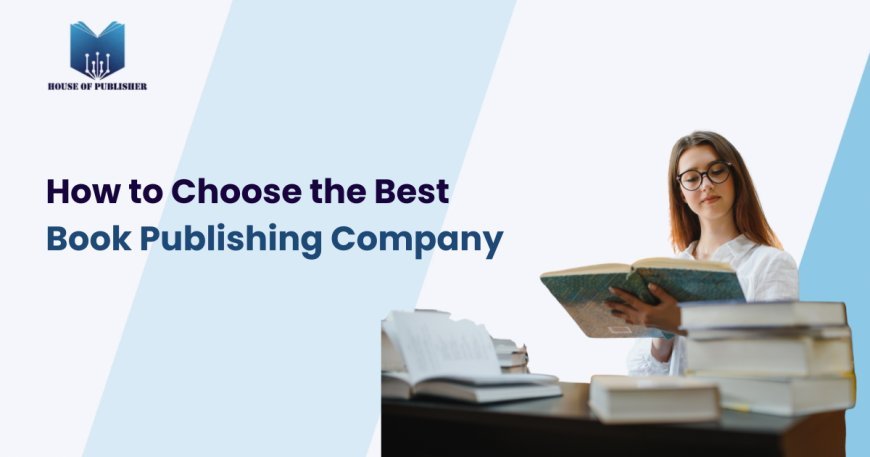
How to Choose the Best Book Publishing Company
Choosing the right book publishing company helps authors publish their books professionally. Before selecting a publisher, compare publishing options, editing services, book cover design, formatting, distribution, pricing, and marketing support. Always review the company's experience, contract terms, copyright ownership, and royalties before signing an agreement.
Publishing a book is an important milestone for any author. Whether you have written a novel, memoir, business guide, or educational book, choosing the right publishing partner can make the process more manageable. A reliable book publishing company can help you prepare your manuscript, improve its presentation, and make it available to your intended readers.
However, not every publishing company offers the same services, pricing, or level of support. Some authors prefer traditional publishing, while others choose self-publishing or hybrid publishing services. Understanding these options can help you make a decision that suits your goals, budget, and expectations.
In this guide, you will learn how to compare publishing companies, evaluate their services, understand publishing costs, and select a suitable option for your first book.
1. Understand Your Book Publishing Goals
Before contacting a publishing company, identify what you want to achieve. Your goals will influence the type of publishing arrangement and professional support you need.
For example, a first-time novelist may need manuscript editing, cover design, and guidance with distribution. A business author may prioritize professional formatting, print and ebook availability, and a polished presentation for clients.
Consider the following questions:
-
Do you want to publish a print book, an ebook, or both?
-
Do you prefer traditional publishing or self-publishing?
-
Do you need help with editing and proofreading?
-
Will you manage marketing yourself or seek promotional support?
-
What is your publishing budget?
-
How much control do you want over your manuscript and publishing decisions?
Writing down your priorities makes it easier to compare providers and avoid paying for services you do not need.
2. Compare Different Publishing Options
Understanding the main publishing models is one of the first steps toward choosing the right provider.
Traditional publishing generally involves a publishing house selecting manuscripts for publication. Depending on the agreement, the publisher may cover production expenses and provide distribution and marketing support. However, acceptance is competitive, and the publisher usually has a significant role in publication decisions.
Self-publishing gives authors more control over the process. Authors typically arrange or purchase the services they need and manage their publishing accounts, pricing, and promotional activities.
Hybrid publishing combines elements of traditional and author-funded publishing. Its business model and author responsibilities vary, so it is important to review the contract and evaluate the company's services carefully.
|
Publishing option |
Main advantage |
Important consideration |
Suitable for |
|
Traditional publishing |
Potential publisher-funded production and distribution |
Competitive acceptance and contractual terms |
Authors seeking a traditional publishing relationship |
|
Self-publishing |
Greater control over decisions and publishing schedule |
Authors manage costs and coordinate services |
Independent authors and first-time publishers |
|
Hybrid publishing |
May provide coordinated professional services |
Costs, rights, and responsibilities vary |
Authors seeking support while retaining agreed rights |
|
Full-service publishing package |
Multiple services coordinated through one provider |
Confirm exactly what the package includes |
Authors who want assistance with several production stages |
There is no single best option for every author. The right choice depends on your manuscript, available budget, preferred level of involvement, and long-term goals.
3. Check the Publishing Services Offered
A publishing company may offer only selected services or manage several stages of the publishing process. Before choosing a provider, review the exact services available.
Manuscript Editing and Proofreading
Editing helps improve the structure, clarity, consistency, and readability of a manuscript. Depending on the manuscript, you may need developmental editing, line editing, copyediting, or proofreading.
Professional book editing services can help authors prepare a more polished manuscript before publication.
Ask the provider which type of editing is included, whether revisions are available, and whether proofreading is performed after formatting.
Book Cover Design
A book cover communicates the subject, genre, and tone of your work. A professional design should be suitable for your intended audience and the format in which the book will appear.
Explore book cover design services if you need help developing a cover for your manuscript.
Before approving a design, confirm the number of included revisions, the final file formats, and whether print and ebook covers are both included.
Book Formatting and Layout
Formatting prepares your manuscript for publication. Print books require appropriate margins, page numbers, typography, and page layouts. Ebooks require compatible digital formatting and clear navigation.
If you plan to publish through Amazon Kindle Direct Publishing, review the current platform requirements before uploading your files.
Publishing and Distribution
Ask where the company can make your book available. Some providers assist with Amazon KDP publishing, while others offer support for additional retailers or distribution channels.
Clarify whether distribution is included in the quoted price and whether you retain control over your publishing account, book files, and royalties.
Marketing and Promotion
Publishing a book does not automatically generate sales. Marketing may involve an author website, email outreach, social media, advertising, media coverage, or other promotional activities.
Ask providers to explain their marketing services, deliverables, expected costs, and reporting process. Be cautious of anyone who guarantees bestseller status or a specific number of sales without a credible basis.
4. Compare Publishing Costs and Packages
The cost of publishing varies depending on the manuscript's condition, book length, design requirements, and services selected. Some authors need only formatting and cover design, while others require extensive editing and production assistance.
Rather than choosing a company solely because its initial quote is low, compare the complete scope of work.
|
Service |
What to check |
Questions to ask |
|
Editing |
Type of editing and manuscript length |
Is proofreading included separately? |
|
Cover design |
Original design, revisions, and file delivery |
Are ebook and print covers included? |
|
Formatting |
Print layout and ebook preparation |
Will the files meet the chosen platform's requirements? |
|
Publishing setup |
Uploading and listing details |
Will I retain access to my publishing account? |
|
Distribution |
Retailers and distribution terms |
Which platforms are included? |
|
Marketing |
Specific deliverables and duration |
What work will actually be completed? |
Request an itemized quote and make sure you understand any additional charges. A clearly written agreement is more useful than a vague promise of a complete publishing package.
If you are looking for affordable book publishing services, compare the quality and scope of the services rather than price alone.
5. Evaluate the Company's Experience and Reputation
Before signing an agreement, research the company's background. Review its website, service descriptions, published projects, and examples of work.
Useful checks include:
-
Portfolio: Examine completed books and the quality of their design and formatting.
-
Relevant experience: Find out whether the company has worked with books similar to yours.
-
Client feedback: Look for detailed reviews across independent sources.
-
Communication: Assess whether the company answers questions clearly.
-
Written terms: Review pricing, deadlines, revision limits, and responsibilities.
-
Ownership and rights: Understand who controls the manuscript, cover files, ISBN arrangements, and publishing accounts.
A professional website alone does not prove that a company is reliable. Request evidence of relevant experience and review the agreement before making a payment.
6. Understand Author Rights and Publishing Contracts
The publishing contract is one of the most important documents in the process. Read it carefully before agreeing to any services.
Depending on the publishing model, the contract may address copyright, licensing, royalties, distribution, exclusivity, termination, and ownership of production files.
Ask these questions before signing:
-
Will I retain copyright in my manuscript?
-
Who controls the publishing account?
-
How are royalties calculated and paid?
-
Are there any exclusive publishing or distribution requirements?
-
What happens if I decide to end the agreement?
-
Who owns the cover design and formatted files?
-
Are there recurring fees or additional charges?
Do not assume that paying for publishing services automatically transfers ownership of every deliverable to you. Confirm the terms in writing. If a contract includes complicated rights provisions or a long-term commitment, consider obtaining independent legal advice.
7. Decide Whether You Need Full-Service Publishing
Some authors prefer to coordinate editors, designers, and formatting specialists individually. Others prefer a single provider to manage several stages.
Full service book publishing packages may include editing, formatting, cover design, publishing setup, and selected distribution or marketing services. However, package contents vary considerably between providers.
A package may be useful if you want one point of contact and a coordinated workflow. On the other hand, buying individual services may offer more flexibility if you already have a completed manuscript and only need help with specific tasks.
Before choosing a package, request a written list of deliverables, deadlines, revision policies, and exclusions. Confirm that every service you expect is explicitly included.
8. Prepare Your Manuscript Before Approaching Publishers
A well-prepared manuscript can make the publishing process more efficient. You do not necessarily need to complete every production task yourself, but you should have a clear understanding of your project.
Start with these steps:
-
Complete the manuscript and review its structure.
-
Check that chapters are organized consistently.
-
Identify your intended readers and book category.
-
Prepare a short book summary.
-
Gather a brief author biography.
-
Research comparable titles.
-
Make a list of the services you need.
-
Establish a realistic budget and timeline.
Authors who need help developing their manuscript can explore professional book writing services. If you are still preparing your book, discuss your needs with a provider before paying for a complete publishing package.
9. Choose a Publishing Company That Fits Your Needs
The best publishing company is not necessarily the biggest or the cheapest. It is the provider whose services, experience, contract terms, and communication match your project.
For a first-time author, clear guidance and transparent pricing may be especially important. An experienced author with a finished manuscript may need only a few specialist services.
Create a shortlist of providers and compare their proposals using the same criteria. Ask each company to explain what it will deliver, how long the work will take, and what you will need to do yourself.
Take your time before making a commitment. A careful comparison can help you choose a publishing arrangement that supports your book without creating unexpected costs or restrictions.
Frequently Asked Questions (FAQs)
1. How do I choose the best book publishing company?
Start by identifying your publishing goals and required services. Compare companies based on their experience, portfolio, pricing, communication, contract terms, and distribution options. Review the agreement before paying for services.
2. What is the best company to publish my first book?
The best choice depends on your book and priorities. Some authors prefer traditional publishers, while others choose self-publishing platforms or professional service providers. Compare the level of support, costs, rights, and responsibilities before deciding.
3. How much does it cost to publish a book?
There is no universal price. Costs depend on manuscript length, editing requirements, cover design, formatting, publishing arrangements, and marketing. Request an itemized quote that clearly identifies what is included and what costs extra.
4. What are full-service book publishing packages?
These packages combine several publishing services, which may include editing, formatting, cover design, publishing setup, and selected marketing support. Always confirm the exact deliverables and exclusions because packages differ between providers.
5. Is self-publishing better than traditional publishing?
Neither option is automatically better. Self-publishing usually provides greater control but requires authors to manage services and costs. Traditional publishing may provide publisher-funded production and distribution, but acceptance is competitive and contractual control may be more limited.
6. Can I publish my book through Amazon KDP?
Yes. Amazon Kindle Direct Publishing allows eligible authors to publish ebooks and print books through its platform. Authors should review current requirements, prepare suitable files, and understand the platform's terms before publishing.
7. Should I pay a publishing company upfront?
Payment arrangements vary by publishing model and service agreement. Some professional service providers charge for work in advance or in stages, while traditional publishing generally follows a different financial arrangement. Evaluate the contract, deliverables, refund terms, and company reputation before paying.
8. Will a publishing company guarantee book sales?
Be cautious of guaranteed sales or bestseller claims. A publishing company may provide marketing services, but actual results depend on many factors, including the book, audience, competition, pricing, and promotional execution.
Conclusion
Choosing the right book publishing company requires more than comparing prices. Authors should evaluate the publishing model, editing and design services, distribution options, professional experience, and contract terms before making a decision.
Whether you choose traditional publishing, self-publishing, or a professional service provider, make sure you understand the costs, responsibilities, and rights involved. Request written proposals, compare the actual deliverables, and avoid making decisions based on unsupported promises.
With careful research and a clear publishing plan, you can choose a suitable path for your manuscript and move toward publication with greater confidence.
What's Your Reaction?
 Like
0
 Dislike
0
 Love
0
 Funny
0
 Angry
0
 Sad
0
 Wow
0