























How Can a Door Access Control System in Dubai Improve Workplace Security?
Discover how a door access control system in Dubai can manage entry, protect restricted areas, support employee management, and integrate with CCTV systems.
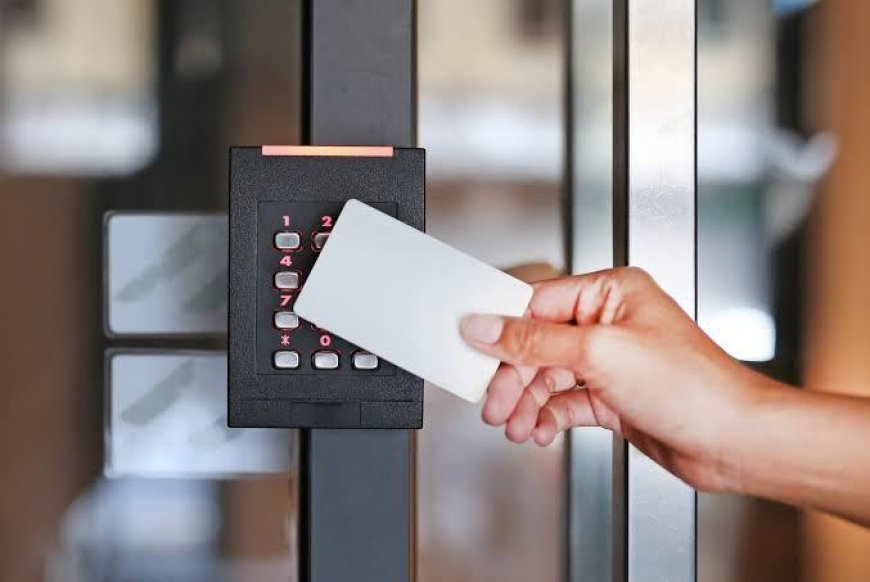
Managing who can enter a building is an important part of physical security. Offices, warehouses, residential buildings, schools, hotels, healthcare facilities, and other properties often contain areas that should not be accessible to everyone. Simply locking a door may not provide enough control when a business has employees, visitors, contractors, and service providers moving through the premises every day.
A modern access control system gives organizations a more structured way to manage entry. Instead of relying entirely on traditional keys, businesses can use cards, PINs, biometric identification, mobile credentials, or other technologies to determine who is permitted to access specific areas.
For organizations in Dubai, this approach can be particularly useful as workplaces and commercial properties become larger and more technology-driven.
Why Is Controlling Door Access Important?
Not every person inside a building needs access to every room. A receptionist may need access to the main office but not the server room. Cleaning staff may require access to particular areas during specific hours, while visitors may only need access to reception or meeting rooms.
Traditional keys can make this difficult to manage. Keys can be lost, copied, shared, or forgotten. When an employee leaves the organization, changing physical locks can also be inconvenient if that person had access to several areas.
Electronic access control provides a more flexible alternative. Access permissions can be assigned according to employees, departments, locations, or schedules.
How Does a Door Access Control System Work?
The basic principle is straightforward. A person presents an authorized credential to a reader, and the system checks whether that credential has permission to open the door.
Depending on the installation, the credential may be a proximity card, RFID card, PIN, fingerprint, facial recognition profile, or mobile device.
If access is approved, the electronic locking mechanism releases the door. If the credential is not authorized, access is denied.
Many systems also maintain records of access events. This allows authorized administrators to review information about when particular credentials were used and at which access points.
The exact setup depends on the property's requirements and the type of security system being implemented.
Can Access Control Protect Different Areas Differently?
One of the major advantages of electronic access control is that permissions can be customized.
A business might allow all employees to enter the main office while restricting access to finance departments, server rooms, storage areas, or executive offices. Management can assign different permissions without issuing a separate physical key for every door.
This becomes increasingly useful as organizations grow. Instead of treating the entire building as one access zone, businesses can create different security levels based on job responsibilities.
Temporary access can also be useful for contractors, visitors, or maintenance teams. Rather than giving someone permanent access, administrators can issue credentials that work only during a specified period.
How Can Access Control Improve Employee Management?
Access control can also contribute to better workplace administration.
When an employee uses an access credential to enter a building, the system can record the event. Depending on the configuration, access information can be reviewed alongside attendance records and other workplace systems.
For businesses using time attendance solutions, integrating access control with attendance management can create a more connected approach to monitoring employee entry and working schedules.
However, access records should be used appropriately and managed according to the organization's policies and applicable requirements.
Can It Be Integrated With CCTV?
Access control and CCTV can complement each other effectively.
An access control system determines whether someone is permitted to enter, while a camera can provide visual information about activity around the entrance. When these systems are integrated, security teams can have both access records and video footage available when investigating an incident.
For example, if an unauthorized access attempt occurs, administrators may be able to review the relevant access event and camera footage from the same period.
This combination can be particularly useful for offices, warehouses, data rooms, and other properties where restricted access is important.
What Should Businesses Consider Before Installation?
Choosing an access control system should begin with the property's actual requirements.
The number of doors, number of employees, security level, operating hours, visitor traffic, and existing infrastructure can all influence the system design.
The type of authentication is another consideration. Card-based systems can be convenient for many workplaces, while biometric systems may be appropriate where stronger identity verification is required. Mobile credentials can also be considered in environments where employees already rely heavily on smartphones.
Businesses should also think about what happens during a power or network failure. Backup power, emergency exit requirements, and appropriate fail-safe or fail-secure configurations should be addressed during system planning.
Why Is Professional Installation Important?
An access control system combines electronic locks, readers, controllers, software, power supplies, networking, and sometimes biometric devices or CCTV.
Incorrect installation can result in unreliable access, communication problems, or security gaps. Professional installation helps ensure that components are configured correctly and that the system works with the property's existing infrastructure.
The physical doors themselves also matter. The locking hardware needs to be compatible with the door type and expected usage.
After installation, administrators should also receive appropriate training so they know how to add users, remove credentials, change permissions, review access events, and handle common system issues.
How Can Businesses in Dubai Choose the Right Solution?
When looking for a door access control system Dubai solution, businesses should avoid choosing equipment based solely on brand or price.
The right system should match the property's size, security requirements, employee numbers, access points, and future plans. A small office may need a relatively simple setup, while a large commercial building could require centralized management across multiple floors or locations.
It is also worth considering maintenance and technical support. Access control is part of the property's security infrastructure, so problems with readers, locks, controllers, or software need to be addressed promptly.
Conclusion
Controlling access to a building is about more than keeping doors locked. Businesses need to know who can enter specific areas, when they can enter, and how access can be managed when circumstances change.
A properly designed door access control system Dubai solution can give businesses greater control over entry while reducing their dependence on traditional keys. When combined with CCTV, attendance systems, and other security technologies, access control can become an important part of a broader physical security strategy.
The best system is not necessarily the most complicated one. It is the system that fits the property's requirements, remains manageable for administrators, and provides reliable access control as the organization grows.
What's Your Reaction?
 Like
0
Like
0
 Dislike
0
Dislike
0
 Love
0
Love
0
 Funny
0
Funny
0
 Angry
0
Angry
0
 Sad
0
Sad
0
 Wow
0
Wow
0