


























How Do Paid-Up Additions Work in Participating Whole Life Insurance?
Paid-up additions allow participating whole life insurance policyholders to use eligible dividends to purchase additional permanent coverage, increasing the policy's death benefit and cash value over time. Although this can support long-term financial planning, future dividends are not guaranteed. einsured.ca helps Canadians understand life insurance options and find coverage suited to their financial goals.
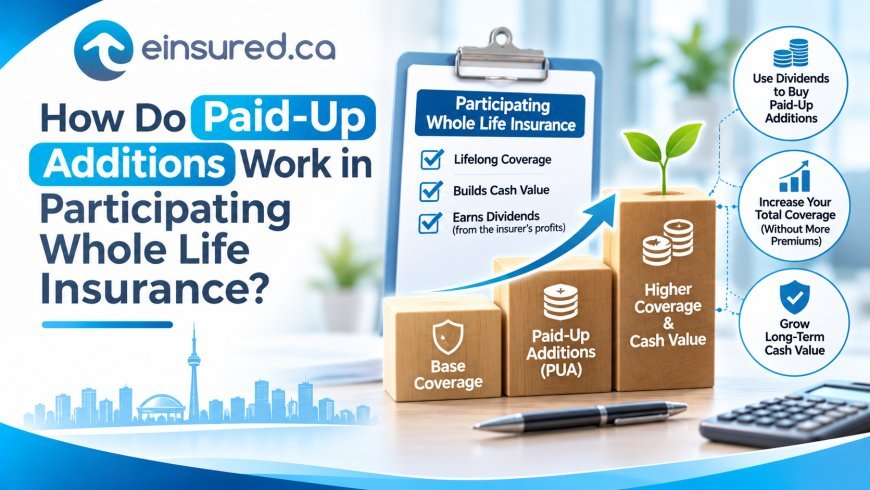
How Do Paid-Up Additions Work in Participating Whole Life Insurance?
Participating whole life insurance is a type of permanent life insurance that may provide lifelong coverage, cash value accumulation, and the opportunity to receive policy dividends.
One feature that often attracts attention is paid-up additions. These allow policyholders to use eligible dividends to purchase additional life insurance coverage without paying separate ongoing premiums for that added coverage.
For Canadians considering long-term insurance and estate planning, understanding how paid-up additions work can help clarify the potential benefits and limitations of participating life insurance.
However, it is important to remember that dividends are not guaranteed, and the results depend on the insurer's participating account and policy conditions.
What Is Participating Life Insurance?
Participating life insurance is generally a form of whole life insurance that allows policyholders to participate in the financial experience of an insurer's participating account.
The insurer may declare dividends based on factors such as:
-
Investment performance.
-
Mortality experience.
-
Operating expenses.
-
Claims experience.
-
Other financial factors affecting the participating account.
These dividends may be distributed to eligible policyholders according to the insurer's dividend scale.
The dividend amount can change over time and is not guaranteed.
Participating whole life insurance generally includes a guaranteed death benefit and guaranteed cash value components, subject to the contract.
What Are Paid-Up Additions?
Paid-up additions are additional amounts of life insurance purchased using policy dividends or other permitted payments, depending on the contract.
Unlike the original base policy, these additions generally do not require separate ongoing premium payments.
When a policyholder selects the paid-up additions dividend option, eligible dividends are used to purchase additional permanent insurance.
This additional coverage can increase the policy's total death benefit and may also add cash value.
Over time, the additions may themselves become eligible to generate dividends, depending on the policy and insurer's rules.
How Do Paid-Up Additions Work?
Consider a simplified example.
A Canadian policyholder owns a participating whole life insurance policy with an initial death benefit of $300,000.
After the insurer declares a dividend, the policyholder chooses to use that dividend to purchase paid-up additions.
The additions increase the total insurance coverage beyond the original amount.
In future years, those additions may also participate in dividend distributions.
This can create a compounding effect over time.
However, the actual increase depends on the policy's dividend scale, the amount of dividends declared, the insured person's age, and the cost of additional insurance.
It is not a guaranteed investment return.
What Are the Main Benefits of Paid-Up Additions?
1. Additional Life Insurance Coverage
Paid-up additions can increase the policy's total death benefit.
This may be useful for individuals who want their permanent coverage to grow over time.
2. Potential Cash Value Growth
Paid-up additions generally have their own cash value.
As more additions are purchased, the policy's total cash value may increase.
The guaranteed and non-guaranteed portions should be examined separately when reviewing policy illustrations.
3. No Separate Ongoing Premium for Added Coverage
Once purchased, paid-up additions generally do not require separate ongoing premiums.
This is one reason policyholders may prefer this dividend option over receiving dividends in cash.
4. Potential Long-Term Compounding
Paid-up additions may themselves participate in future dividends.
This can contribute to long-term growth, although future dividends remain dependent on the insurer's experience and are not guaranteed.
Paid-Up Additions vs. Other Dividend Options
Participating life insurance policies may offer several ways to receive dividends.
|
Dividend option |
How it works |
|
Paid-up additions |
Purchases additional permanent insurance |
|
Cash payment |
Pays dividends directly to the policyholder |
|
Premium reduction |
Applies dividends toward future premiums |
|
Dividends on deposit |
Holds dividends in an account that may earn interest |
|
Enhanced insurance |
Combines paid-up additions with term insurance |
The available options vary by insurer.
A policyholder should review the terms before selecting one because dividend choices can affect future cash value and death benefits.
How Do Paid-Up Additions Affect the Death Benefit?
The original policy provides a base death benefit.
Paid-up additions increase the overall amount of insurance coverage.
The actual amount is determined by the insurer and policy contract.
Some policies may also include other adjustments, such as outstanding policy loans, which can reduce the amount payable to beneficiaries.
Can You Access the Cash Value of Paid-Up Additions?
Paid-up additions generally contribute to the policy's total cash value.
Depending on the policy, the policyholder may be able to:
-
Surrender some additions.
-
Access cash value through a policy loan.
-
Use certain non-forfeiture options.
-
Make other permitted policy changes.
However, accessing cash value may reduce the death benefit and could have tax implications.
Policy loans may also accumulate interest.
Before withdrawing or borrowing against a policy, review the financial and tax consequences.
Are Paid-Up Additions Suitable for Everyone?
Not necessarily.
Participating whole life insurance canada is generally a long-term financial commitment. Premiums may be higher than those associated with term life insurance.
Paid-up additions may be worth considering for individuals who:
-
Want lifelong life insurance protection.
-
Have a long-term financial planning horizon.
-
Value the possibility of additional coverage.
-
Can comfortably manage ongoing premiums.
-
Understand the difference between guaranteed and non-guaranteed values.
They may be less suitable for people who primarily need affordable temporary coverage or may struggle with long-term premium commitments.
What Should Canadians Check Before Purchasing a Participating Policy?
Before making a decision, review the following:
-
Guaranteed death benefit.
-
Guaranteed cash value schedule.
-
Current dividend scale.
-
Historical dividend information, without assuming future performance.
-
Paid-up additions provisions.
-
Policy loan interest and conditions.
-
Surrender charges and tax implications.
-
Premium payment duration.
Ask the insurer or advisor to explain how the policy performs under different dividend assumptions.
This helps you understand which values are guaranteed and which depend on future experience.
Frequently Asked Questions
1. Are paid-up additions guaranteed?
The additional insurance purchased after a dividend is declared is generally paid-up. However, future dividends and future additions are not guaranteed.
2. Do paid-up additions increase cash value?
Yes, they generally contribute additional cash value to a participating whole life policy, according to the contract.
3. Can I withdraw paid-up additions?
Some policies permit partial surrender or other access options. These transactions may reduce the death benefit and have tax consequences.
4. Are paid-up additions available with term life insurance?
Paid-up additions are generally associated with participating whole life insurance, rather than conventional term life insurance.
Conclusion
Paid-up additions can be an important feature of participating life insurance because they allow dividends to purchase additional permanent coverage. They may increase both the total death benefit and policy cash value over time, but future dividends are not guaranteed.
Canadians comparing permanent life insurance options should review the policy's guaranteed values, dividend assumptions, and long-term costs before making a decision. einsured.ca helps individuals explore insurance solutions and understand coverage options that support their financial planning needs.
What's Your Reaction?
 Like
0
 Dislike
0
 Love
0
 Funny
0
 Angry
0
 Sad
0
 Wow
0