























How to Choose the Right Solid Carbide End Mill for CNC Milling Applications

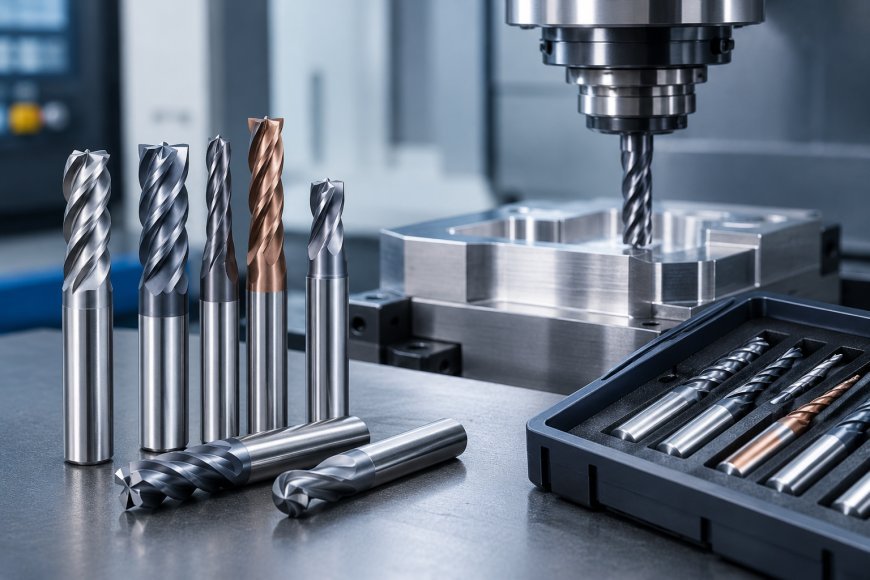
Choosing the right solid carbide end mill is essential for achieving accurate machining, improving productivity, and extending tool life. The wrong cutter can cause excessive wear, poor surface finishes, vibration, and unnecessary production costs. Selecting the correct tool depends on the workpiece material, machining operation, flute count, coating, and machine capability.
For workshops seeking dependable industrial tooling, Khokhawala Trading LLC understands the importance of matching cutting tools to specific machining requirements. Whether you are searching for solid carbide end mills for sale dubai or looking to buy lathe machine cutting tools uae, understanding tool selection helps you make informed purchasing decisions.
Table of Contents
-
What Is a Solid Carbide End Mill?
-
Consider the Workpiece Material
-
Choose the Correct Number of Flutes
-
Select the Right End Mill Geometry
-
Understand Coatings and Tool Grades
-
Check Tool Size and Machine Compatibility
-
How to Choose Cost-Effective End Mills
-
Frequently Asked Questions
-
Conclusion and Call to Action
1. What Is a Solid Carbide End Mill?
A solid carbide end mill is a rotary cutting tool manufactured with a carbide cutting body. It is commonly used in CNC milling to cut slots, pockets, profiles, shoulders, and other features in metal components.
Solid carbide tools offer high hardness, wear resistance, and rigidity for precision machining when used with suitable equipment and cutting conditions.
Common types include:
-
Square end mills: Used for slots, flat surfaces, and square shoulders.
-
Ball nose end mills: Suitable for curved surfaces, moulds, and 3D contouring.
-
Corner-radius end mills: Feature a rounded cutting corner that can help reduce edge chipping.
-
Roughing end mills: Designed to remove material efficiently.
-
Finishing end mills: Used to achieve the required surface quality and dimensional accuracy.
2. Consider the Workpiece Material
The material being machined should be your first consideration because different metals create different cutting forces, heat levels, and chip characteristics.
-
Aluminum: Often benefits from sharp cutting edges, polished flutes, and efficient chip evacuation.
-
Mild steel: Commonly uses carbide end mills with suitable wear resistance and strong cutting edges.
-
Stainless steel: May require specialized geometry and coatings to manage heat and work-hardening.
-
Hardened steel: Usually requires a suitable carbide grade, appropriate coating, and carefully controlled cutting conditions.
Always consult the manufacturer's recommendations for the specific material and hardness. A tool designed for aluminum may not perform well in hardened steel, even when the diameter is identical.
3. Choose the Correct Number of Flutes
Flutes are the cutting channels running along an end mill. Their number affects chip space, tool strength, feed capability, and surface finish.
| Flute count | Common applications | Main consideration |
|---|---|---|
| 2 flutes | Aluminum and slotting | Greater chip clearance |
| 3 flutes | Aluminum and general milling | Balance of chip space and strength |
| 4 flutes | Steel and general-purpose milling | Good balance of rigidity and cutting performance |
| 5 or more flutes | Certain finishing and high-efficiency operations | More cutting edges but less chip space |
These are general starting points rather than fixed rules. The correct flute count also depends on the depth of cut, tool engagement, material, and chip evacuation requirements.
4. Select the Right End Mill Geometry
Tool geometry influences how the cutter enters the material, removes chips, and produces the finished surface.
Consider the following factors:
-
Diameter: Choose the largest diameter that fits the part geometry and machine requirements, as a larger tool is generally more rigid.
-
Cutting length: Use enough flute length to machine the feature without unnecessary overhang.
-
Helix angle: A suitable helix can improve cutting smoothness and chip formation.
-
Corner design: Square corners suit sharp shoulders, while corner-radius designs can improve cutting-edge strength.
-
Ball nose profile: Useful for curved surfaces and three-dimensional machining.
For deep pockets or narrow features, ensure the tool has sufficient reach without creating excessive deflection or vibration.
5. Understand Coatings and Tool Grades
Coatings can improve wear resistance, reduce friction, and help tools withstand demanding cutting conditions. However, the correct coating depends on the workpiece material and application.
For example, certain aluminum applications use uncoated or specialized low-adhesion coatings to reduce material buildup. Steel and hardened-steel applications may benefit from heat-resistant coatings selected for the cutting conditions.
Carbide grades also differ in toughness and wear resistance. A grade designed for one operation may not be suitable for another.
Follow the tool manufacturer's guidance instead of selecting a coating or grade based on appearance or price alone.
6. Check Tool Size and Machine Compatibility
Before purchasing an end mill, confirm that its dimensions and design are suitable for your CNC machine and toolholder.
Check:
-
Cutter diameter and shank diameter.
-
Overall length and cutting length.
-
Toolholder compatibility and clamping requirements.
-
Maximum spindle speed and machine rigidity.
-
Required cutting parameters and coolant conditions.
A stable toolholding setup and appropriate cutting parameters are essential for achieving consistent results. Excessive tool overhang or incorrect clamping can cause vibration, poor finish, and premature tool failure.
7. How to Choose Cost-Effective End Mills
The cheapest end mill is not always the most economical choice. Consider tool life, cycle time, surface quality, replacement frequency, and the cost of rejected parts.
When comparing solid carbide end mills for sale dubai, review the specifications and ensure the tools are suitable for your material and operation. Compare equivalent products rather than relying on price alone.
If your workshop also needs to buy lathe machine cutting tools uae, identify the requirements of each turning or milling application before ordering. Milling end mills and lathe cutting tools perform different functions and should be selected accordingly.
8. Frequently Asked Questions
Q1. Which solid carbide end mill is best for CNC milling?
The best tool depends on the workpiece material, operation, required finish, and machine capability. Consider the tool diameter, flute count, geometry, and coating before choosing.
Q2. How many flutes should an end mill have?
Two or three flutes are common for applications requiring greater chip clearance, while four or more may suit many steel-milling and finishing operations. Always confirm the selection against the manufacturer's recommendations.
Q3. Are coated carbide end mills better?
Coated end mills can improve performance in suitable applications, but the benefit depends on the coating, workpiece material, and cutting conditions.
Q4. How can I extend solid carbide end mill life?
Use suitable cutting parameters, ensure effective chip evacuation, minimize unnecessary tool overhang, maintain stable toolholding, and inspect the cutting edges regularly.
Q5. What should I check before purchasing end mills in Dubai?
Verify the diameter, flute count, cutting length, carbide grade, coating, application suitability, and supplier information before placing an order.
9. Conclusion and Call to Action
Choosing the right solid carbide end mill requires careful consideration of material, flute count, geometry, coating, and machine compatibility. Matching these factors to your machining application can improve accuracy, extend tool life, reduce downtime, and support consistent production quality.
Looking for industrial cutting tools for your workshop? Contact Khokhawala Trading LLC to discuss your tooling requirements. Whether you need solid carbide end mills for sale dubai or want to buy lathe machine cutting tools uae, selecting tools suited to your application can help you achieve reliable machining performance.
What's Your Reaction?
 Like
0
 Dislike
0
 Love
0
 Funny
0
 Angry
0
 Sad
0
 Wow
0