























Reasoning Ability Hacks: Solving Complex Puzzles in Under 3 Minutes
The thing is, to solve these puzzles quickly, it is not just a matter of random practice or hoping for an easy question paper. It is about following a smart, repeatable framework that keeps your mind calm and your steps organised.

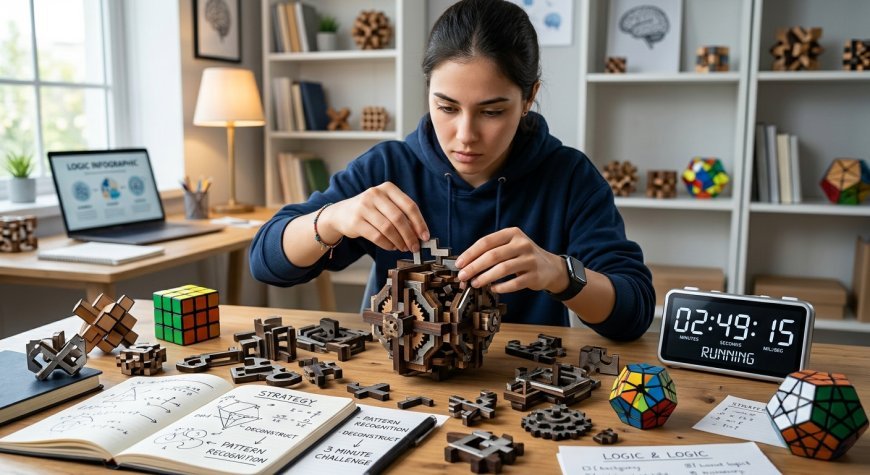
During the competitive exam, when you stare down a tricky puzzle, the clock feels like it is moving twice as fast. Whether it is a seating arrangement, floor-based puzzle, or scheduling problem, spending too much time on one set can completely throw off your entire paper and drain your confidence. If you want to turn these strategies into actual selection results, then join the bank coaching to practice under expert mentors and ace your upcoming exams.
The following are some simple, practical hacks to help you solve complex puzzles in under three minutes without feeling rushed:
1. Pick the Right Battle First
The biggest mistake candidates make is solving puzzles in the exact order they appear on the screen. Examiners often place the toughest, most convoluted puzzle right at the beginning just to trap you and waste your time.
-
Scan before you start: Spend the first 15 to 20 seconds skimming all the puzzles in the reasoning section.
-
Filter by variables: Look for puzzles with fixed parameters or direct information. Choose the first thing that looks open-ended or heavily dependent on multiple conditional statements.
-
Start with explicit clues; puzzles with good anchor points like “A sits at the extreme left end” or “Floor 4 is occupied by B” let you jump straight into the action without creating endless guesswork.
2. Make Cleaner Notes (The Direct Notation Method)
Never waste time reading the full paragraph over and over again. Your brain will get overloaded trying to remember who sits opposite whom. Instead, turn the text into shorthand symbols as you read line by line.
-
Use arrows and blocks: If the text says, "P sits two places away from Q," write it down as P _ _ Q or use directional arrows for floor and building puzzles.
-
Keep your scratchpad tidy: Divide your rough sheet into clear sections. Messy notes lead to silly reading errors, forcing you to start the whole puzzle from scratch.
3. Trust the Elimination and Possibility Split
Complex puzzles are designed with negative information—clues that tell you where someone cannot go rather than where they belong.
-
Use negative clues first: Cross out impossible slots immediately. Eliminating options cuts down your mental load instantly.
-
Create cases early: If a clue gives you two distinct possibilities (like "X sits on either the 2nd or 5th floor"), do not hesitate to draw two small parallel diagrams. Trying to hold both scenarios in your head will slow you down. One of these cases will usually hit a dead end within the first minute, leaving you with the right answer.
4. Master Sectional Time Management
Speed comes from discipline, not just fast reading. Mental checkpoint for your reasoning section:
-
Minute 0 to 1: Read the puzzle, make your shorthand notes, and set up your initial case structures.
-
Minute 1 to 2: Fill in the definite data points and test your primary possibility splits.
-
Minute 2 to 3: Double-check your final arrangement against all given conditions to avoid negative marking from a single missed constraint.
If you hit the 3-minute mark and your case is still stuck in a loop, leave it and move on. Getting stuck on ego is the easiest way to lose a selection.
If you want to move beyond average scores and convert these exact tips into an actual government job selection, join the SSC coaching to learn from the top-notch faculty and develop your exam temperament.
Conclusion
If you want to be good at reasoning puzzles, you need to have a solid plan on which you can rely on when things get tough. When you stop guessing and start following a repeatable system, the fear of the ticking clock starts to fade away.
Think of it like building a habit. Choose the right questions first, take clean shorthand notes, break your cases early, and never let your ego trap you on a single dead-end puzzle. Respect your time limits, and you will win the race against the clock with ease. If you practice these simple habits in your daily practice, your speed, accuracy, and confidence will naturally improve. Keep your cool in your mock tests, stay disciplined, and the results will follow.
What's Your Reaction?
 Like
0
 Dislike
0
 Love
0
 Funny
0
 Angry
0
 Sad
0
 Wow
0