






















Who Is Entering Your Construction Site? Why Access Control Matters for Singapore Projects

A Site Gate Is Not the Same as a Security Plan
A construction site can have a gate, security personnel and warning signs yet still face difficulties managing who enters, where people are allowed to go and when their access should end. Workers may change between project phases, subcontractors may need temporary permissions, and deliveries can arrive when site teams are busy coordinating other activities. Without a clear process, access management can become dependent on manual checks and informal communication.
This is why construction site access control deserves attention during project planning. A suitable system can help site managers regulate entry, assign permissions and maintain records of access events. When combined with clear site procedures and appropriate supervision, it can support a more organised approach to protecting people, equipment and project assets.
In Singapore, construction projects often involve multiple contractors, delivery teams and specialist workers operating within a shared environment. Their access requirements may differ according to their roles, work schedules and authorised zones. A properly planned access arrangement helps manage these differences while supporting the site's broader safety and security procedures.
What Does Construction Site Access Control Include?
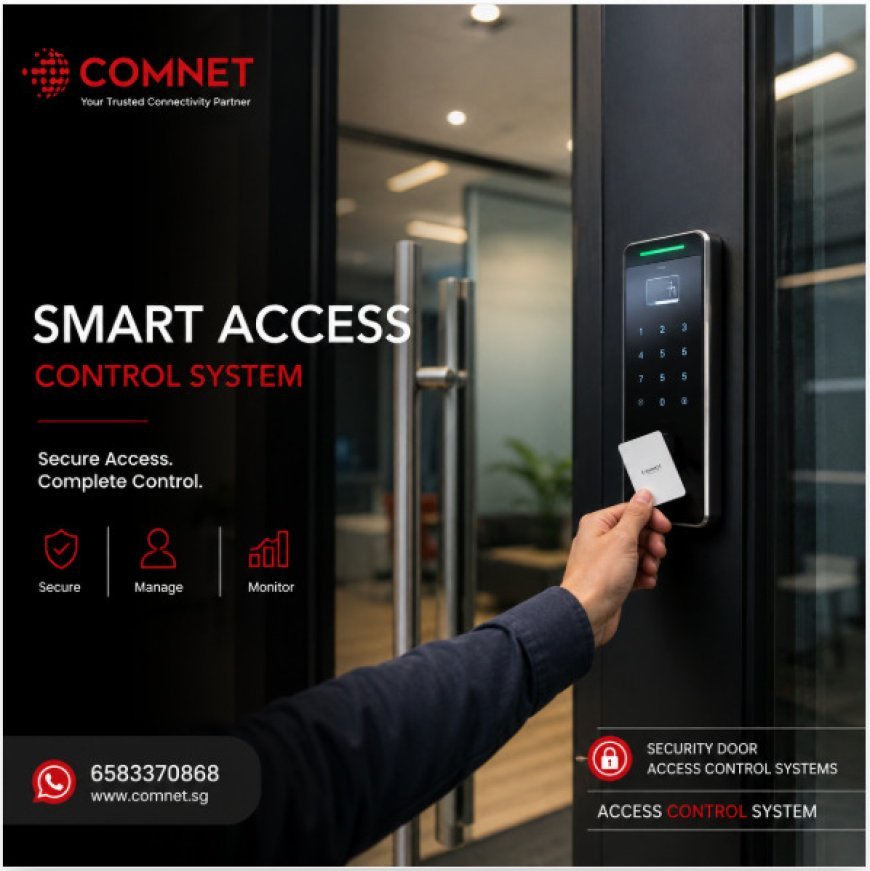
Construction site access control refers to the procedures and technology used to manage entry to a project site and, where necessary, specific areas within it. Depending on the project, the solution may include controlled gates, access cards, mobile credentials, PIN-based readers, security desks, electronic locks and access management software.
The design should reflect the site's physical layout and operating conditions. A small renovation project may require a straightforward entry process, while a large construction site may need separate arrangements for workers, visitors, vehicle access and restricted work areas. Temporary installations may also be necessary when the site changes as construction progresses.
Technology is only one part of the solution. Site managers must define who approves access, how identities and authorisations are checked, what happens when credentials are lost and how permissions are removed when a worker's assignment ends. Without these procedures, even a technically capable system can become difficult to manage.
Five Ways Access Control Can Help Construction Teams
1. More Consistent Entry Procedures
When entry rules rely entirely on verbal confirmation or paper lists, information can become outdated or difficult to verify during busy periods. An electronic access process can help authorised personnel apply the same entry rules more consistently, provided the system is configured correctly and maintained.
For example, a project team may assign approved access credentials to eligible workers and deactivate them when their authorisation expires. Visitors and delivery personnel can follow a separate check-in process. This creates a clearer distinction between regular site access and entry that requires additional approval.
An electronic system does not remove the need for security staff or supervision. Instead, it can support them with defined rules and recorded events, allowing personnel to focus on exceptions and situations that require human judgement.
2. Better Control of Restricted Zones
Not every person working on a construction project needs access to every part of the site. Electrical rooms, equipment storage areas, plant rooms and selected operational zones may require specific authorisation. Access control can help enforce these restrictions by assigning permissions to particular users or credential groups.
The access plan should be aligned with the project's site layout and risk assessment. As work progresses, restricted zones may move, temporary barriers may be introduced and certain routes may become unavailable. Permissions and access points should therefore be reviewed whenever the site configuration changes.
Electronic door controls must never be used as a substitute for required physical barriers, safety signage, supervision or legally required safeguards. Site safety planning remains essential, especially where access restrictions interact with emergency routes or hazardous work areas.
3. Improved Contractor and Visitor Management
Construction projects frequently involve subcontractors, inspectors, consultants, suppliers and other visitors. Their access needs are not identical. A contractor may need recurring access during a defined work period, whereas a visitor may require an escort and permission to enter only a limited area.
A structured access process can distinguish between these categories and establish clear approval requirements. Where the platform supports it, temporary credentials can be assigned with defined validity periods, reducing the chance that old permissions remain active indefinitely.
The organisation should also establish how identity checks, induction records and work authorisations relate to entry decisions. Access control should support the site's established compliance and safety processes rather than being treated as a standalone substitute for them.
4. More Useful Access Records
Access event records can help authorised site managers review when a credential was used at a controlled entry point. Depending on the system, records may support incident reviews, internal investigations and checks on whether access procedures are being followed.
However, a record of a credential being used does not necessarily establish every detail of a person's movements or activities. Records may be affected by shared credentials, tailgating, device faults or incomplete coverage. Good site procedures should address these limitations and ensure that logs are interpreted in context.
The organisation should also define who is permitted to view the records, the purpose for which they may be used and how long they should be retained. This helps prevent security information from being accessed or kept without a legitimate operational reason.
5. Better Management as the Site Changes
A construction project rarely remains physically identical from start to finish. Temporary offices may move, gates may be relocated and different contractors may take responsibility for new work packages. An access arrangement that worked during the initial phase may become unsuitable later.
Reviewing the system at project milestones helps identify access points that need to be added, removed or reconfigured. It also creates opportunities to check that former workers' credentials have been disabled and that current permissions reflect the latest site requirements.
Where temporary equipment is used, the project team should plan for removal, relocation, power requirements, network connectivity and environmental protection. These practical details can affect reliability as much as the choice of reader or software.
Choosing the Right Technology for a Construction Site
The best construction site security system depends on the project's duration, size, entry volume, environmental conditions and available infrastructure. Access cards may be suitable for recurring users, while PINs or other credential methods may suit particular temporary arrangements. Vehicle gates and pedestrian access points may require different equipment and procedures.
Outdoor equipment should be selected for the conditions in which it will operate. Dust, rain, heat, vibration and potential physical damage can affect device suitability. The project team should confirm the manufacturer's environmental ratings and installation requirements rather than assuming that every commercial reader is designed for exposed construction environments.
Connectivity is another important consideration. If access points rely on a central server or network connection, the design should specify how entry will be handled during a communication failure. Offline behaviour, backup power and manual procedures should be agreed in advance, especially when the access point is operationally critical.
Integrating Access Control with Site Safety
Access management and workplace safety are related, but they serve different purposes. A valid access credential confirms that a user has permission under the configured rules; it does not automatically confirm that the user has completed every required induction, holds the right work authorisation or is equipped for a particular task.
For this reason, site teams should connect access approval with established administrative procedures where practical. These may include contractor onboarding, visitor registration, work schedules and authorisation for restricted zones. Any integration should be tested to ensure that the information remains accurate and that access decisions follow the project's requirements.
Emergency exit arrangements require particular attention. Controlled gates and doors must be designed so that the system does not obstruct safe evacuation or conflict with applicable fire-safety requirements. The site team should consult the relevant qualified professionals and authorities when planning access hardware and emergency arrangements.
A Practical Checklist Before Deployment
Before implementing a construction site access control system in Singapore, consider the following:
-
Map the site's entry points, pedestrian routes and vehicle access requirements.
-
Identify which users need regular, temporary or escorted access.
-
Define how credentials are issued, renewed, reported missing and deactivated.
-
Establish permissions for restricted zones and review them when site conditions change.
-
Confirm equipment suitability for outdoor exposure, dust and other site conditions.
-
Determine how the system behaves during power, network or device failures.
-
Protect access logs and personal information through suitable administrative controls.
-
Coordinate electronic access arrangements with emergency egress and site safety procedures.
-
Schedule inspections and assign responsibility for maintenance and fault response.
A written plan makes it easier for project managers, security personnel and contractors to understand their responsibilities. It also reduces the risk of relying on informal practices that become harder to manage as the project grows.
Strengthen Site Access Planning with COMNET
Effective site security begins with a clear understanding of the project's access points, user groups and operational risks. The right combination of equipment, permissions and procedures can help construction teams manage entry more consistently while adapting to changing site conditions.
COMNET provides physical access control system installation solutions for organisations that need structured access management. If you are planning a new project, upgrading a site entrance or reviewing contractor access procedures, contact COMNET to discuss your requirements and identify an appropriate approach for your construction environment.
What's Your Reaction?
 Like
0
 Dislike
0
 Love
0
 Funny
0
 Angry
0
 Sad
0
 Wow
0