




















Can You Wear Tape-In Extensions With Chemically Relaxed Hair?

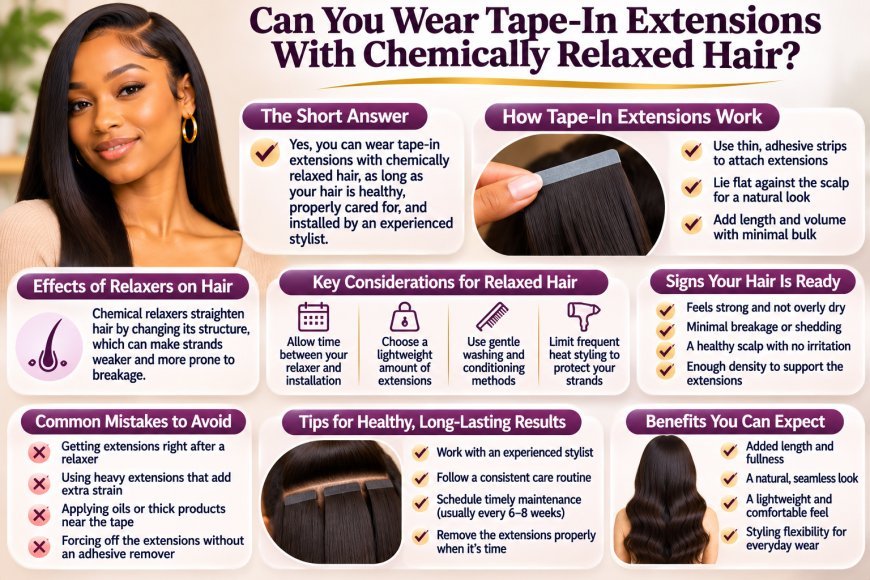
Chemically relaxed hair offers styling flexibility for people who prefer a straighter texture, but adding extensions requires careful consideration. Relaxing treatments permanently alter the structure of the hair shaft, which can leave individual strands more vulnerable to breakage. Even hair that appears smooth and healthy may have areas of weakness that are not immediately noticeable.
Tape-in extensions are often chosen because their flat attachments can blend discreetly with straightened hair. However, their suitability depends on the condition of the natural strands, the timing of chemical treatments, and the amount of additional weight the hair can support. Understanding these factors before installation can help you achieve the desired length and fullness without placing unnecessary stress on chemically treated hair.
How Chemical Relaxers Affect the Strength of Your Hair
Chemical relaxers straighten hair by altering the bonds responsible for its natural curl pattern. While the treatment makes hair easier to straighten, it can also weaken the protective outer layer of each strand. Research published in the Journal of the American Academy of Dermatology associates chemical relaxing with reduced hair strength and an increased risk of breakage.
The condition of relaxed hair depends partly on how frequently it has been processed and whether the chemicals have been applied correctly. Repeatedly applying relaxer to previously treated sections can increase damage. Before adding extensions, examine whether your hair has become unusually dry, brittle, or prone to snapping during ordinary brushing and styling.
How Tape Attachments Work on Processed Hair
Tape-in extensions generally consist of narrow sections of extension hair attached to adhesive strips. During installation, small sections of natural hair are positioned between the strips or secured using a single-sided attachment. The relatively flat construction helps conceal the extensions beneath surrounding strands.
The suitability of tape ins for relaxed hair depends on whether the natural strands can support the attachments without excessive pulling. Although the method does not require a braided foundation or heated bonding tools, it still introduces additional weight and adhesive contact. Carefully selecting the quantity of extension hair and positioning the strips away from fragile areas can help reduce unnecessary strain.
Leave Enough Time Between Relaxing and Installation
Getting extensions immediately after a chemical relaxing treatment may not be advisable, particularly if the scalp feels sensitive or the hair shows signs of damage. Relaxers can cause irritation, chemical burns, and changes in hair strength. Adding extensions before these concerns have been addressed may make the situation worse.
There is no universally established waiting period that guarantees a safe installation. The decision should depend on the condition of your hair and scalp rather than a fixed number of days. Discuss your most recent treatment with your stylist and allow any irritation to resolve before proceeding. Persistent sores, inflammation, or unusual shedding should be assessed by a dermatologist.
Choose Extension Weight According to Your Hair Condition
Long, thick extensions may create the appearance of fuller hair, but the additional weight can place considerable pressure on chemically treated strands. Fine hair and areas with reduced density require particular attention because fewer strands may be available to support each attachment.
Instead of concentrating entirely on length, consider how much additional hair is necessary to achieve your preferred appearance. Adding a modest amount of volume may be sufficient. The British Association of Dermatologists warns that combining tension-producing hairstyles with chemical relaxing can increase the risk of traction alopecia. Lightweight attachments may reduce unnecessary strain, but they cannot eliminate the risk entirely.
Consider How New Growth Will Affect Texture Matching
Relaxed hair remains chemically straightened, but new growth develops according to your natural curl pattern. As the roots grow, differences between the natural texture and previously processed lengths may become more noticeable. Maintaining a consistent appearance can become increasingly difficult if the extensions are significantly straighter than the new growth.
Select extension hair that complements your usual hairstyle without requiring daily flat ironing. Slightly textured extensions may provide a more manageable transition for some individuals. Avoid repeatedly straightening the roots simply to conceal differences in texture, as combining frequent heat exposure with chemical processing can contribute to further damage.
Adjust Your Washing and Conditioning Routine
Chemically treated hair often benefits from regular conditioning to improve manageability and reduce friction during detangling. Tape attachments, however, require particular care because certain oils and conditioning products can interfere with the adhesive and cause the extensions to slip.
Extension care guidance generally recommends applying conditioner and heavier moisturizing products to the middle and lower sections of the hair, away from the adhesive strips. Cleanse the scalp gently and rinse thoroughly to remove residue. When brushing, support the hair near the attachments and work upward from the ends rather than pulling through tangled sections.
What to Discuss During a Professional Consultation
A stylist should examine more than your existing hair length before recommending an extension method. The assessment should include strand thickness, hair density, chemical treatment history, and the condition of vulnerable areas around the temples and crown.
When comparing local services listed under hair extensions Plano, ask whether the stylist has experience working with chemically processed hair. Discuss suitable extension weight, adhesive sensitivity, maintenance appointments, and future relaxer treatments. A professional consultation should also identify circumstances in which postponing the installation or selecting a less demanding hairstyle would be more appropriate.
Recognizing Problems With Adhesive and Attachment Placement
Some individuals may develop irritation from adhesives used in hair extension systems. Persistent itching, redness, or discomfort around the attachment areas should not be dismissed as part of adjusting to a new hairstyle. The British Association of Dermatologists recognizes that certain hair adhesives can contribute to irritant or allergic contact dermatitis.
Slipping attachments also require attention. Applying additional adhesive at home or attempting to reposition loose strips without professional assistance may damage surrounding strands. Arrange an assessment if the extensions begin shifting, pulling unevenly, or becoming tangled near the roots. Prompt adjustments can prevent relatively minor attachment problems from becoming more difficult to manage.
Planning Relaxer Touch-Ups and Extension Removal
As natural hair grows, the attachment points gradually move farther from the scalp. This can complicate subsequent relaxing treatments because the stylist needs clear access to the new growth without unnecessarily exposing previously processed hair or the adhesive strips to chemicals.
Discuss whether the extensions should be removed before your next relaxer appointment. During removal, an appropriate adhesive-releasing solution is used to separate the tape attachments. Pulling the strips apart forcefully can cause breakage, particularly in chemically weakened hair. After removal, cleanse and condition your natural strands and assess their condition before arranging another installation.
Frequently Asked Questions
Can tape-in extensions be worn on freshly relaxed hair?
It is generally preferable to have the hair and scalp assessed first. Recent chemical irritation, excessive dryness, or noticeable breakage may make immediate installation unsuitable.
Can I use a flat iron while wearing tape-in extensions?
Yes, if the extension hair is suitable for heat styling. Avoid applying direct heat to the adhesive strips and limit heat exposure to chemically treated natural strands.
Are tape-in extensions suitable for transitioning hair?
They may be suitable in some cases. The point where natural growth meets relaxed hair can be particularly fragile, making careful assessment and lightweight attachment placement necessary.
Can tape-in extensions cause permanent hair loss?
Excessive or prolonged tension can damage hair follicles and contribute to permanent traction alopecia. Pain, progressive thinning, and persistent scalp tenderness require prompt attention.
Prioritize Hair Strength Before Adding Length
Tape-in extensions can be worn with chemically relaxed hair, but their suitability depends on the existing condition of the natural strands. Comfortable attachment placement, manageable extension weight, suitable aftercare, and careful removal all deserve consideration.
Before committing to an installation, review your chemical treatment schedule and discuss your hair's condition with an experienced stylist. Allowing damaged hair to recover or grow out before adding extensions may be a better decision than pursuing immediate length at the expense of your long-term hair health.
What's Your Reaction?
 Like
0
 Dislike
0
 Love
0
 Funny
0
 Angry
0
 Sad
0
 Wow
0



