





























How AI Calling Services Are Revolutionizing Business Communication
Explore how AI calling services transform business communication through voice automation, customer support, lead qualification, and intelligent calling solutions.
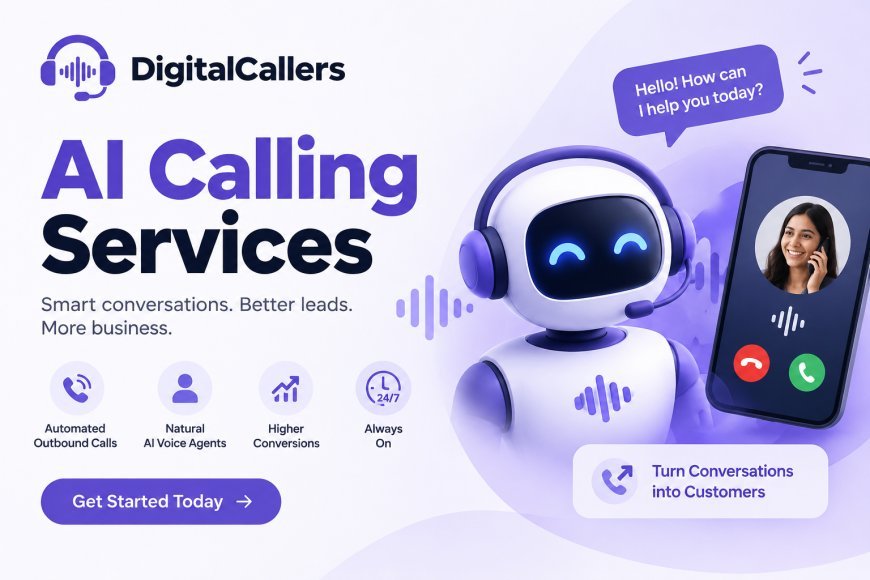
Business communication has undergone a remarkable transformation over the past decade. From traditional telephone systems to cloud-based communication platforms, organizations have continuously adopted new technologies to improve customer interactions and operational efficiency. Today, artificial intelligence is creating another significant shift by introducing intelligent voice automation into everyday business communication.
Modern businesses handle hundreds or even thousands of customer conversations daily. Managing these interactions manually can become expensive, time-consuming, and difficult to scale. AI-powered calling technology provides organizations with new opportunities to automate repetitive conversations, improve responsiveness, and deliver more consistent customer experiences.
Understanding AI Calling Services
AI calling services use artificial intelligence, conversational AI, speech recognition, and voice technologies to automate telephone conversations. These systems can interact with customers, understand spoken requests, provide information, and perform predefined communication tasks.
Unlike conventional automated phone systems that depend on rigid menus and keypad selections, modern AI calling solutions can support more natural conversations.
Businesses can deploy these technologies for customer support, lead qualification, appointment scheduling, reminders, follow-ups, and other communication workflows.
The growing adoption of intelligent voice automation reflects the increasing demand for efficient, scalable, and customer-friendly communication solutions.
Why Businesses Are Embracing AI Calling Technology
Organizations are constantly searching for ways to improve productivity without compromising customer satisfaction. AI calling technology addresses several operational challenges that businesses commonly experience.
1. Automating Repetitive Communication
Many businesses spend considerable time making routine calls, confirming appointments, answering frequently asked questions, and following up with customers.
AI-powered calling systems can automate suitable repetitive conversations, allowing employees to concentrate on more complex responsibilities.
This improves resource allocation and helps organizations manage communication workloads more effectively.
2. Improving Customer Response Times
Customers expect quick responses when contacting businesses. Long waiting periods and unanswered calls can create frustration and negatively affect customer relationships.
AI voice agents can answer incoming calls automatically, provide relevant information, and direct callers toward appropriate assistance.
This helps businesses improve accessibility and reduce unnecessary delays.
3. Supporting Sales and Lead Qualification
Sales teams frequently receive inquiries from prospects with different interests, requirements, and purchasing intentions.
AI calling systems can assist with preliminary lead qualification by collecting relevant information, asking appropriate questions, and identifying prospects who require further attention.
Sales representatives can then prioritize valuable conversations and focus on building stronger customer relationships.
4. Streamlining Appointment Scheduling
Appointment-based businesses often manage booking confirmations, rescheduling requests, and reminder calls.
Voice automation can simplify these processes by communicating appointment information, confirming availability, and assisting with scheduling workflows.
This can reduce administrative workload while helping businesses maintain organized schedules.
The Role of AI Voice Agents in Customer Experience
AI voice agents are becoming an important component of modern customer communication strategies.
These intelligent systems are designed to interact with callers through spoken conversations and support specific business objectives.
Depending on their configuration, AI voice agents can answer common questions, collect customer information, provide service details, route calls, and assist with administrative tasks.
For example, a customer contacting a service company might receive immediate assistance from an AI voice agent instead of waiting for a representative to become available.
When a conversation requires specialized knowledge, emotional sensitivity, or complex decision-making, the system can direct the customer toward a human employee.
This combination of automation and human support allows businesses to improve efficiency while preserving meaningful customer interactions.
Industries That Can Benefit From AI Calling
AI calling technology can support communication requirements across numerous industries.
Healthcare: Clinics and healthcare organizations can automate appointment reminders, scheduling assistance, and routine administrative communication.
Real Estate: Property businesses can manage initial inquiries, qualify prospective buyers, and coordinate property visits.
E-commerce: Online retailers can provide order-related updates, support customer inquiries, and assist with post-purchase communication.
Education: Educational institutions can automate admission inquiries, application reminders, and information-sharing processes.
Financial Services: Organizations can streamline appropriate customer service interactions while maintaining relevant privacy and security safeguards.
Travel and Hospitality: Hotels, travel agencies, and service providers can automate booking confirmations, reservation inquiries, and customer assistance.
The flexibility of voice automation makes it suitable for businesses with different communication volumes and operational requirements.
Choosing the Right AI Calling Solution
Implementing AI calling technology requires careful planning. Businesses should evaluate their communication objectives before selecting a solution.
Important considerations include:
-
Automation capabilities: Identify which communication tasks can be automated effectively.
-
Conversation quality: Evaluate how naturally the system understands and responds to callers.
-
Customization: Ensure workflows can accommodate business-specific requirements.
-
Integration: Consider compatibility with CRM platforms and existing business applications.
-
Scalability: Choose a solution that can support increasing communication volumes.
-
Security: Review privacy, data protection, and regulatory requirements.
-
Human escalation: Make sure callers can access human representatives when necessary.
A thoughtful implementation strategy helps businesses maximize the benefits of automation while maintaining customer trust.
Responsible AI Calling and Customer Trust
Although AI calling offers significant advantages, responsible implementation remains essential.
Businesses should maintain transparency about automated interactions, respect customer communication preferences, and comply with applicable calling regulations.
Organizations should also avoid excessive communication and ensure that automated calls provide meaningful value to recipients.
Monitoring conversation quality, reviewing customer feedback, and continuously improving automation workflows can help create more reliable customer experiences.
Responsible voice automation is not simply about increasing call volumes. It is about making communication more useful, accessible, and efficient.
The Future of Intelligent Business Communication
Artificial intelligence is expected to continue reshaping customer communication as conversational systems become more capable of understanding context, responding naturally, and supporting increasingly sophisticated workflows.
Businesses may increasingly combine voice automation with customer relationship management, analytics, and other digital systems to create connected communication experiences.
Organizations that strategically adopt these technologies can improve operational productivity, reduce repetitive workloads, and respond more effectively to changing customer expectations.
The future of business communication will likely involve a balanced combination of intelligent automation and human expertise.
Discover AI Calling Solutions With DigitalCallers
DigitalCallers helps businesses explore intelligent voice automation for modern communication requirements.
Organizations looking to automate business calls, streamline customer interactions, improve lead qualification, and enhance communication efficiency can explore solutions designed to support their operational goals.
Discover AI calling services from DigitalCallers and learn how intelligent voice automation can transform everyday business communication.
As digital transformation continues to influence industries worldwide, AI calling technology offers businesses an opportunity to build more efficient, scalable, and customer-focused communication processes.
What's Your Reaction?
 Like
0
 Dislike
0
 Love
0
 Funny
0
 Angry
0
 Sad
0
 Wow
0