





























How to Manage Your Dealership by Car Dealer DMS Software
A Car Dealer DMS Software provides dealerships with tools to manage daily operations, maintain accurate records, and improve coordination between departments.

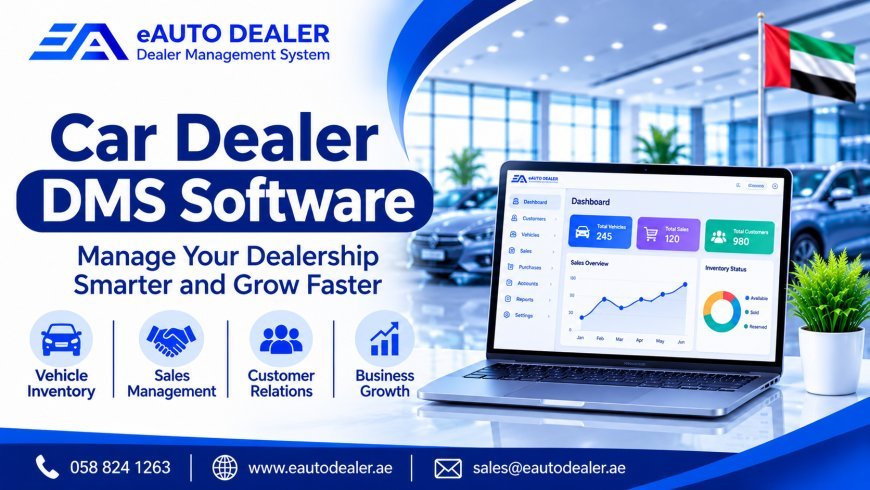
Running a car dealership involves several connected activities, from purchasing vehicles and maintaining stock to managing customer enquiries, processing sales, and tracking financial transactions. As a dealership expands, keeping these operations organized through separate applications or manual records can become increasingly difficult. A centralized management system can help bring important business processes together and give employees a clearer way to handle their responsibilities.
A Car Dealer DMS Software provides dealerships with tools to manage daily operations, maintain accurate records, and improve coordination between departments. Understanding its features and practical benefits can help dealership owners choose a solution that supports their current operations and future expansion.
What Is a Car Dealer DMS?
A Dealer Management System (DMS) is business software developed to manage the operational activities of automotive dealerships. It brings different dealership functions into a connected platform, helping employees access and update business information from one place.
Depending on the solution, a car dealer DMS may include:
-
Vehicle inventory and stock management.
-
Vehicle purchasing and supplier records.
-
Sales and customer relationship management.
-
Accounting and financial management.
-
Employee and branch administration.
-
Reporting and business dashboards.
-
Garage and vehicle maintenance operations.
The main purpose of a DMS is to reduce disconnected workflows and help dealership teams manage information more consistently.
Why Are Dealerships Moving Towards Integrated DMS Software?
As a dealership handles more vehicles, customers, transactions, and employees, its operational requirements become more complex. A process that works for a small showroom may not be suitable for a business with several branches.
An integrated DMS helps address common operational challenges.
Managing Information Across Departments
When inventory, sales, and accounting teams use separate systems, important information may need to be entered multiple times. This can increase administrative work and create inconsistencies.
A connected DMS allows departments to work with shared business records, reducing unnecessary duplication.
Maintaining Better Stock Visibility
Dealerships need to know which vehicles are available, reserved, purchased, or sold. A centralized inventory system helps employees review stock information and update vehicle records as business activities change.
Improving Financial Organization
Vehicle purchases, sales, supplier payments, expenses, and customer balances all contribute to dealership finances. An integrated system can help organize these transactions and provide management with clearer financial information.
Supporting Business Expansion
As dealerships add employees or open new showrooms, they need better ways to manage access, responsibilities, and branch-level activities. A suitable DMS can support these requirements through centralized controls and role-based permissions.
Essential Features of Car Dealer DMS Software
A useful DMS should cover the operational requirements that matter most to your dealership. The following features are particularly important when comparing different platforms.
1. Vehicle Inventory Management
Inventory is one of the most important parts of dealership operations. The system should allow employees to maintain detailed vehicle records, including specifications, purchase information, costs, prices, and current stock status.
Useful inventory capabilities include:
-
Vehicle registration and record management.
-
Stock availability tracking.
-
Vehicle purchase details.
-
Reserved and sold vehicle status.
-
Vehicle cost and pricing information.
-
Inventory reports and summaries.
Accurate stock records help sales representatives access reliable vehicle information and support better purchasing decisions.
2. Sales and Customer Relationship Management
Managing customer enquiries is an important part of converting available stock into sales. A DMS with CRM capabilities helps dealerships maintain customer profiles, record enquiries, assign leads, and track sales opportunities.
Sales representatives can review previous conversations, schedule follow-ups, and monitor customer progress. Managers can also use activity reports to understand how the sales team is handling enquiries.
3. Vehicle Purchase and Supplier Management
Dealerships need an organized purchasing process to record vehicle acquisitions and maintain supplier information.
A DMS may help manage purchase orders, supplier records, vehicle acquisition details, and related costs. Businesses importing vehicles can also benefit from workflows that organize shipment information and additional import expenses.
4. Accounting and Financial Management
Financial activities should be connected with the dealership's daily transactions. Look for accounting features that support sales invoices, purchase records, expenses, receipts, payments, and financial reporting.
For UAE dealerships, VAT-related accounting support is also an important consideration. The system should help organize relevant transaction information and maintain appropriate financial records.
5. Multi-Branch and Showroom Management
Businesses operating across multiple locations need a consistent way to monitor their activities.
Multi-branch functionality can help owners review operations centrally while assigning access according to employee roles and branch responsibilities. This makes it easier to maintain oversight as the business grows.
6. Reporting and Management Dashboards
Reports help dealership owners understand business performance without manually collecting information from every department.
Depending on the platform, dashboards may provide visibility into:
-
Available and sold vehicle stock.
-
Sales activity and revenue.
-
Customer enquiries and lead progress.
-
Purchase and expense records.
-
Outstanding customer and supplier balances.
-
Branch-level performance.
These insights can help management identify operational issues and plan business activities more effectively.
7. Garage and Maintenance Management
Some dealerships also operate service departments or garages. In such cases, maintenance management features can help organize service requests, job records, vehicle details, and workshop activities.
Connecting garage operations with the wider dealership system can provide a more complete view of business activities.
How a DMS Connects the Complete Vehicle Sales Cycle
One of the main advantages of a dealership management system is its ability to connect different stages of a vehicle transaction.
Consider a dealership purchasing a vehicle for resale. The purchasing team records the acquisition and related expenses. The vehicle is then added to inventory with its specifications and cost details. The sales team can access the stock record when responding to customer enquiries.
When a customer decides to purchase the vehicle, the dealership processes the sale and records the relevant financial transaction.
With connected workflows, employees do not need to manage each stage as an isolated activity. Information can be maintained within a shared system, helping departments coordinate their work more effectively.
Cloud-Based DMS vs. Traditional Dealership Systems
The way dealership software is hosted can influence accessibility and daily operations.
Traditional systems may depend on local installations and office-based infrastructure. This can make access across different branches more complicated, depending on the system's setup.
Cloud-based DMS platforms allow authorized users to access business information through supported devices and internet connections. This can be useful for dealership owners, managers, and employees who need access across multiple locations.
Before selecting a cloud solution, review its data protection measures, user permissions, backup arrangements, availability, and technical support. Also confirm whether the system can handle your dealership's expected number of users and transactions.
Choosing the Right Car Dealer DMS Software
Not every dealership requires the same set of features. A small showroom may prioritize inventory and sales, while a larger automotive business may need purchasing, accounting, garage management, and multi-branch controls.
Use the following points when evaluating a DMS:
-
Understand your operations: Identify which departments and processes need to be managed.
-
Check system integration: Make sure important functions share information instead of operating independently.
-
Evaluate usability: Employees should be able to complete routine tasks without unnecessary complexity.
-
Review customization: Check whether the software can accommodate your dealership's workflows.
-
Consider scalability: Ensure the platform can support additional stock, employees, and branches.
-
Examine reporting: Confirm that the available reports provide useful operational and financial information.
-
Review security: Understand how customer, vehicle, and financial records are protected.
-
Ask about implementation: Discuss data migration, training, onboarding, and ongoing support.
A product demonstration is especially useful. Test realistic activities such as adding a vehicle, registering a customer enquiry, recording a purchase, and processing a sale.
Car Dealer DMS Software for UAE Automotive Businesses
Dealerships in the UAE may handle local vehicle purchases, international imports, multiple showrooms, VAT-related records, and different types of vehicle transactions. Their software requirements can therefore extend beyond basic inventory management.
eAuto Dealer offers an integrated dealership management solution for UAE automotive businesses, bringing together sales, CRM, inventory, purchasing, imports, accounting, and garage operations. Its platform is intended to support connected dealership workflows and centralized management.
For businesses comparing DMS solutions, eAuto Dealer is one option to evaluate based on requirements such as multi-branch operations, financial management, stock control, and customer handling. Dealership owners should review the available features through a product demonstration to determine how well the system fits their processes.
Common Mistakes to Avoid When Implementing a DMS
Choosing suitable software is important, but successful implementation also depends on how the dealership introduces it to employees.
Avoid these common mistakes:
-
Moving existing records without checking their accuracy.
-
Selecting software based only on the number of features.
-
Ignoring the requirements of individual departments.
-
Providing insufficient employee training.
-
Failing to establish clear user permissions.
-
Overlooking data migration and backup arrangements.
-
Not reviewing reports after implementation.
A structured implementation plan helps employees understand their responsibilities and encourages consistent use across the dealership.
Final Thoughts
A car dealership depends on several departments working together, and managing them through disconnected tools can create unnecessary complexity. Car Dealer DMS Software provides a centralized way to manage vehicle inventory, customer relationships, purchasing, accounting, and other essential operations.
When comparing solutions, focus on how well the system connects your business processes, supports employees, and provides useful information for management. A suitable DMS should meet your current requirements while offering enough flexibility to support future expansion. Taking time to evaluate features, usability, integrations, and implementation support can help you make a more informed decision.
Frequently Asked Questions
1. What is car dealer DMS software?
Car dealer DMS software is a management platform that helps automotive businesses handle operations such as inventory, sales, purchasing, customer management, accounting, and reporting.
2. How is a DMS different from CRM software?
CRM software mainly focuses on customer relationships, leads, communication, and sales opportunities. A DMS covers a wider range of dealership activities, often including CRM alongside inventory, purchasing, accounting, and other operational functions.
3. Can a DMS manage multiple dealership branches?
Many modern DMS platforms support multi-branch management. They can help businesses monitor operations across locations and control employee access according to roles and responsibilities.
4. Does car dealer DMS software include inventory management?
Yes. Inventory management is a core feature of many dealership systems. It helps maintain vehicle records, track stock status, record purchase details, and monitor available inventory.
5. Is DMS software useful for used car dealerships?
Yes. Used car dealerships can use DMS software to organize individual vehicle records, purchase costs, customer enquiries, sales transactions, and financial information.
6. Can DMS software support UAE dealership accounting?
Some dealership management systems provide accounting features that support invoices, expenses, payments, financial reports, and VAT-related recordkeeping. Businesses should confirm the specific capabilities of the software before choosing it.
7. What should I consider before purchasing a dealership management system?
Evaluate inventory management, CRM, purchasing, accounting, reporting, multi-branch support, security, ease of use, integration options, and customer support. A practical product demonstration can help confirm whether the system meets your requirements.
What's Your Reaction?
 Like
0
 Dislike
0
 Love
0
 Funny
0
 Angry
0
 Sad
0
 Wow
0