

























Promotional Code: How It Works and How to Tell a Real One from a Fake
What is a promotional code and how do stores use it? Learn how to spot real offers, avoid fake codes and apply them correctly at checkout.
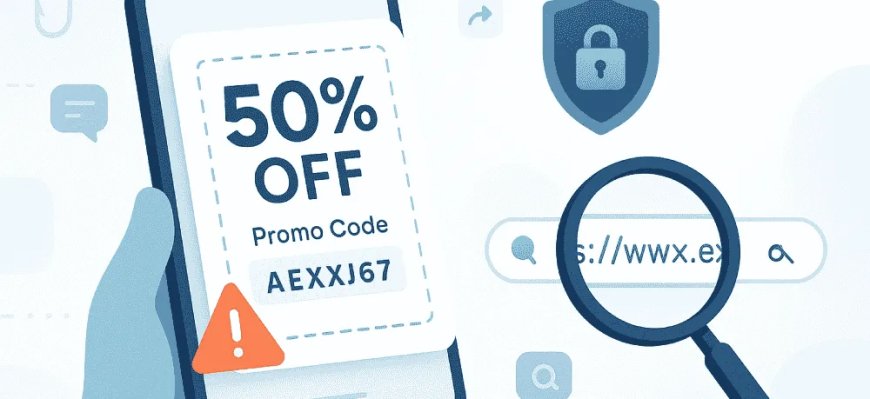
You’re about to pay for an order and a banner pops up: “Use this promotional code and save 25%.” It looks tempting. But is it real? Will it work? And why is the store giving it away in the first place?
Those are fair questions. Promotional codes are everywhere, and so are the traps around them. Here’s how they work and how to use them with confidence.
What is a promotional code?
A promotional code is a unique word or string of characters that a business creates for a specific marketing campaign. When you enter it at checkout, the store applies an offer: money off, a percentage off, free delivery, or a bonus item.
The key word is “promotional.” The code exists to promote something, whether that’s a product launch, a seasonal sale or a newsletter. Every time someone uses it, the business learns which campaign is bringing in customers.
Promotional code vs automatic discount
Not every sale needs a code. Some stores apply discounts automatically, and that difference matters.
- Automatic discount: the price drops on its own, with nothing to type.
- Promotional code: the offer only unlocks when you enter the code.
Codes let stores target specific people, such as new subscribers or returning customers, without lowering prices for everybody. That’s why a code can exist even while a public sale is running, and also why some codes refuse to combine with sale prices.
How businesses use promotional codes
If you’ve ever wondered why the same store offers so many different codes, this is the reason.
- Single-use codes. Created for one customer, often as a thank-you or an apology.
- Campaign codes. Shared on one channel, like Instagram or an email list, so the store can track results.
- Welcome codes. Given to new subscribers to encourage a first order.
- Win-back codes. Sent to people who haven’t bought for a while.
- Partner codes. Shared with influencers, bloggers or affiliates so the store knows who sent each sale.
Once you see the pattern, you can guess where a store’s best offers will appear.
How to tell a real promotional code from a fake one
This is where many shoppers get burned. Some websites list codes that never worked, or worse, push you toward unsafe pages. Watch for these signs.
Good signs
- The code comes from the brand’s own email, app or official social page.
- The offer has clear terms: expiry date, minimum spend, exclusions.
- The discount is realistic, usually between 10% and 30%.
- The site shows when the code was last verified.
Warning signs
- A huge discount, like 80% or 90% off, on a popular brand.
- A “click to reveal” button that sends you to an unrelated site.
- Pressure wording such as “only 2 left, act now” with no real terms.
- A checkout page that asks for more personal information than a normal purchase needs.
If something feels off, go directly to the store’s website and look for the offer there.
How to use a promotional code correctly
- Add your items to the cart first, so you know the real total.
- Read the terms before copying anything.
- Enter the code exactly as written, with no extra spaces.
- Confirm the total changed before you pay.
- Compare the final price, including delivery, with one other store.
Why a promotional code sometimes fails
Most failures come down to a short list: the code has expired, the cart is below the minimum spend, the items are excluded, the code is for new customers only, or it can’t be combined with another offer. A quick look at the terms usually shows the cause. If it doesn’t, a short message to customer support often fixes it.
A note for store owners
If you run an online shop, a promotional code is one of the simplest marketing tools you have. A few habits make it work better:
- Give each campaign its own code so you can see what works.
- Set a clear expiry date to create genuine urgency.
- Keep discounts sensible. Constant deep discounts teach customers to never pay full price.
- State the terms in plain language, right next to the code.
- Check your margins before you launch. A popular code that loses money is not a success.
The bottom line
A promotional code is a small piece of marketing that works for both sides. Stores use it to bring in and reward customers, and shoppers use it to pay less for something they already planned to buy. Stick to official sources, read the terms and check the final price. With Black Friday close, now is a good time to join the email lists of the brands you like, so the best codes reach you first.
What's Your Reaction?
 Like
0
 Dislike
0
 Love
0
 Funny
0
 Angry
0
 Sad
0
 Wow
0