






















What Common Industrial Problems Can PTFE Sheets Help Solve?
Industrial operations often involve challenging working conditions where materials are exposed to friction, heat, chemical contact, pressure, and continuous movement. These conditions can affect equipment performance and create problems such as surface wear, material damage, leakage, and frequent maintenance. Using unsuitable materials may also increase production interruptions and replacement expenses. Therefore, selecting the right engineering material is important for maintaining equipment efficiency and ensuring reliable industrial operations.
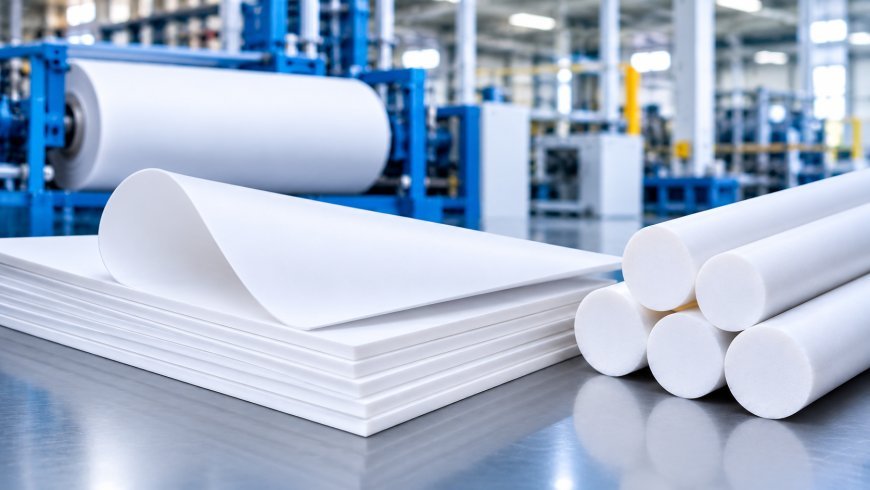
Choosing products from a reliable PTFE Sheet Manufacturer In India can help industries find suitable material solutions for different engineering and sealing requirements. PTFE sheets are widely used because of their low-friction properties, excellent chemical resistance, electrical insulation, and ability to perform in many demanding environments. They can be used in gaskets, linings, insulation parts, and customized industrial components to address several common material-related challenges.
1. Excessive Friction Between Moving Surfaces
Friction is a common problem in industrial equipment where surfaces remain in contact during regular operation. Excessive friction can contribute to heat generation, surface damage, and increased wear. Over time, these conditions may affect machinery efficiency and increase maintenance requirements.
PTFE sheets have naturally low-friction properties, making them useful in applications where smooth contact between surfaces is important. They can be used to manufacture sliding components, protective layers, and customized parts that help reduce friction-related problems. Selecting the correct PTFE grade according to operating conditions can improve component performance.
2. Chemical Exposure and Material Damage
Industries such as chemical processing, pharmaceuticals, and manufacturing frequently handle aggressive chemicals, solvents, and industrial liquids. Ordinary materials may deteriorate when exposed to these substances, leading to leakage, contamination, and unexpected equipment maintenance.
PTFE offers excellent resistance to a wide range of chemicals. This makes PTFE sheets suitable for applications involving chemical exposure, including tank linings, protective surfaces, and sealing components. However, chemical compatibility should always be checked according to the chemical type, concentration, and operating temperature.
3. Leakage in Industrial Sealing Applications
Leakage is a serious concern in pipelines, processing equipment, valves, and industrial connections. Poor-quality sealing materials or incorrect gasket selection can result in fluid leakage, pressure loss, product wastage, and operational difficulties.
PTFE sheets can be converted into gaskets and sealing components for different industrial applications. Their chemical resistance and sealing characteristics make them useful in many environments where conventional gasket materials may not be suitable. Proper thickness, surface condition, compression requirements, and operating pressure should be considered during gasket selection.
4. Problems Caused by High Operating Temperatures
Industrial equipment often operates under changing temperature conditions. Materials that cannot withstand the working temperature may lose their properties, become damaged, or affect the performance of connected components.
PTFE sheets offer good thermal stability and can perform across a broad temperature range. They are used in applications involving heat exposure, insulation, and industrial sealing. However, the maximum operating temperature depends on the PTFE grade and application conditions. Industries should review technical specifications before selecting a suitable sheet.
5. Electrical Insulation Difficulties
Electrical equipment and industrial systems require materials that can provide reliable insulation. Using unsuitable materials may increase the risk of electrical failure, equipment damage, and maintenance problems.
PTFE has excellent electrical insulation properties, making it useful for different electrical and electronic applications. PTFE sheets can be used in insulation parts, protective components, and specialized industrial applications where electrical resistance is required. Selecting the correct thickness and material specifications is important for achieving the desired insulation performance.
6. Surface Damage and Equipment Wear
Industrial machines often experience repeated contact, pressure, and movement during production. These conditions can damage equipment surfaces and reduce the service life of certain components. Frequent repairs and replacements may also increase operating expenses.
PTFE sheets can be used as protective liners and wear-resistant surfaces in suitable applications. Their low-friction characteristics help reduce direct surface contact in selected equipment designs. Reinforced PTFE grades, such as glass-filled PTFE, can also be considered when improved stiffness and wear performance are required.
7. Difficulty Finding Materials for Customized Industrial Applications
Different industries use equipment with specific dimensions, designs, and performance requirements. Standard materials may not always fit specialized machinery, creating difficulties during component manufacturing and replacement.
PTFE sheets are available in different thicknesses and can be machined or fabricated into customized components according to application requirements. They can be used for gaskets, spacers, insulation parts, liners, and other engineering applications. Working with an experienced manufacturer helps industries identify suitable material grades and product dimensions.
Factors to Consider Before Selecting PTFE Sheets
Choosing the right PTFE sheet requires understanding the actual working conditions of the application. Industries should consider the following factors:
-
Operating Temperature: Check the temperature range in which the material will be used.
-
Chemical Compatibility: Identify the chemicals and substances that may come into contact with the sheet.
-
Thickness Requirements: Select the appropriate thickness according to the component design and application.
-
Mechanical Load: Consider pressure, compression, and other mechanical stresses.
-
Material Grade: Compare virgin PTFE and reinforced PTFE grades according to performance requirements.
-
Product Quality: Choose a manufacturer that offers consistent quality and relevant technical specifications.
Conclusion
Industrial problems such as excessive friction, chemical damage, sealing failures, electrical insulation difficulties, and surface wear can affect equipment performance and increase maintenance costs. PTFE sheets provide useful material properties that help address these challenges across different engineering applications. Selecting the right grade, thickness, and product specifications is essential for achieving reliable results.
At Goa Polymer, we provide a wide range of PTFE solutions, including PTFE Sheets, PTFE Rods, PTFE Bushes, PTFE Gaskets, Glass-Filled PTFE, PTFE Glass-Filled Rods, PTFE Valve Seats, and customized PTFE components. We focus on understanding industrial requirements and providing suitable material solutions for sealing, machining, and engineering applications.
What's Your Reaction?
 Like
0
 Dislike
0
 Love
0
 Funny
0
 Angry
0
 Sad
0
 Wow
0