






















Duct Leakage Testing for Better HVAC Performance
Duct leakage testing helps improve airflow, comfort, efficiency, and overall commercial HVAC system performance.
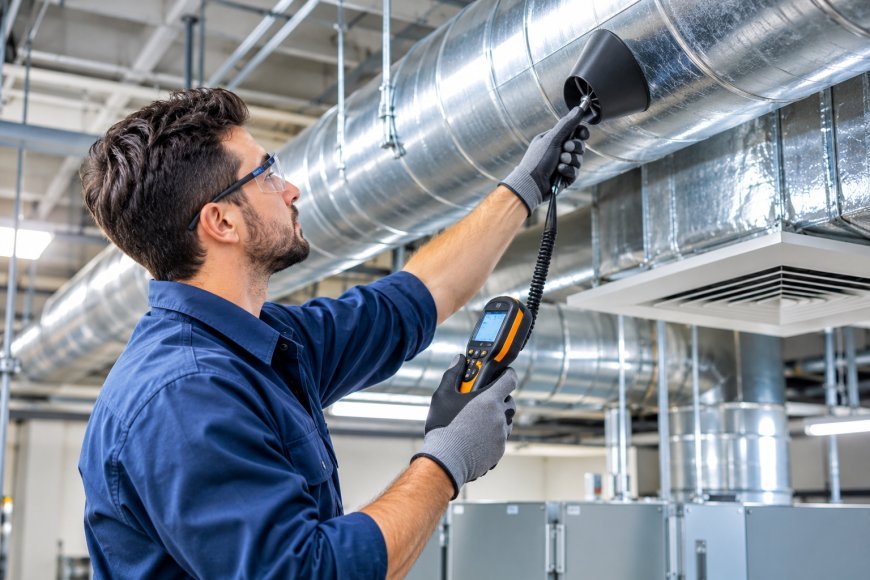
A commercial HVAC system can have properly selected equipment and still struggle to deliver consistent comfort if the ductwork is leaking or poorly balanced. Air distribution plays a major role in how efficiently conditioned air reaches occupied spaces. When ducts lose air through gaps, loose connections, or damaged sections, the system may work harder while some areas remain uncomfortable.
Duct leakage testing provides a practical way to identify these problems and verify whether the distribution system is performing as intended.
Finding Hidden Air Loss
Ductwork often runs through ceilings, mechanical spaces, shafts, and other areas that are difficult to inspect visually. Small leaks may go unnoticed for years, gradually affecting system performance.
Testing can help identify excessive leakage and determine where corrective work may be needed. Sealing joints, connections, access panels, and other problem areas can help reduce unnecessary air loss.
For building owners, this is more than an efficiency concern. Excessive leakage can make it harder for HVAC equipment to maintain desired temperatures throughout the building.
Improving Air Distribution
Airflow needs to be distributed according to the requirements of each occupied area. Offices, retail spaces, healthcare facilities, educational buildings, and industrial environments can all have different ventilation and comfort demands.
After ductwork is installed or modified, airflow testing and balancing can help confirm that individual areas receive the appropriate amount of conditioned air. Dampers, diffusers, registers, and supply connections may require adjustment to achieve better distribution.
This work is particularly valuable during Commercial HVAC Commissioning New York, when the completed system is tested against design expectations before regular operation begins.
Connecting Ductwork With Equipment Performance
Duct leakage can also affect the performance of air-handling equipment and fans. When conditioned air escapes before reaching the intended space, the system may need to operate longer to satisfy temperature requirements.
Proper duct design and testing should therefore be considered alongside equipment selection and installation. For example, a Commercial Boiler Installation Suffolk County project may involve more than the boiler itself. Associated air distribution, ventilation, controls, and mechanical systems may all need to work together as part of the building's overall HVAC strategy.
Supporting Long-Term Reliability
Testing is not only useful for new construction. Existing commercial buildings can benefit from duct performance evaluations when occupants report uneven temperatures, airflow complaints, unusual operating costs, or persistent comfort issues.
Identifying distribution problems early can help facility managers prioritize repairs instead of immediately replacing major equipment that may still be capable of performing effectively.
A Smarter Approach to HVAC Performance
Duct leakage testing and air distribution verification provide valuable insight into how a commercial HVAC system actually performs. By identifying air losses, correcting distribution problems, and confirming system operation, building owners can support better comfort and more dependable performance.
Good HVAC results depend on the entire system working together. Equipment, ductwork, controls, and airflow must be properly coordinated to deliver the results the building needs.
What's Your Reaction?
 Like
0
 Dislike
0
 Love
0
 Funny
0
 Angry
0
 Sad
0
 Wow
0