

















What Problems Can Occur When Using Low-Quality PTFE Washers?
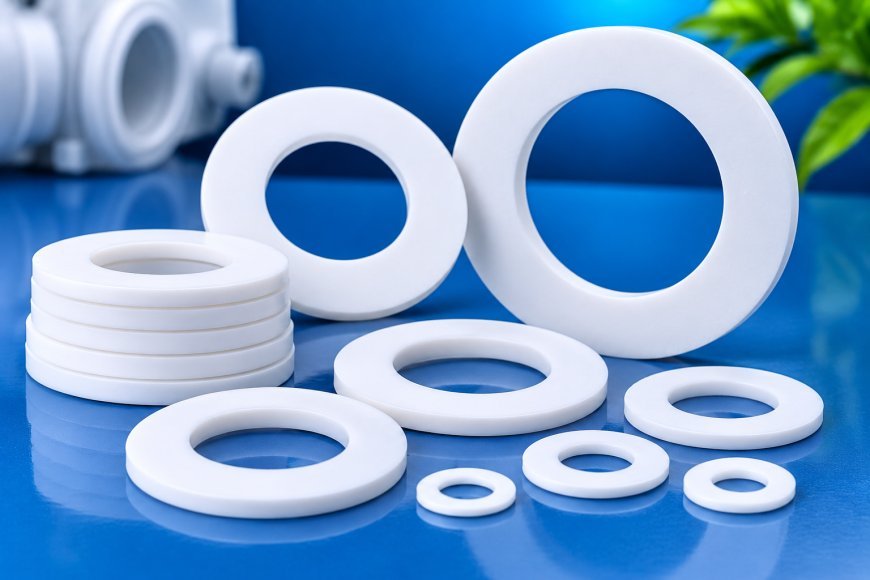
Industrial components are expected to perform consistently throughout their service life. However, equipment problems do not always begin with large or complex parts. Sometimes, a small component such as a washer can affect the performance of an entire assembly. Poor material quality, incorrect sizing, and unsuitable manufacturing methods can result in fitting issues, deformation, leakage, and repeated maintenance.
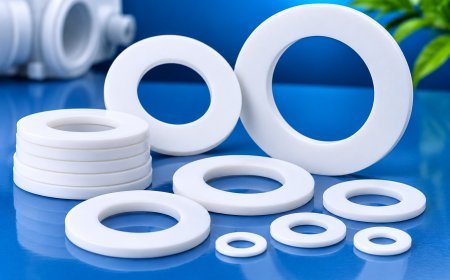
Selecting suitable PTFE Round Flat Washers is one way to address these concerns in applications where PTFE properties are required. These washers are used in different industrial assemblies because PTFE offers chemical resistance, low friction, and electrical insulation. However, the final performance depends on more than the material name. Product dimensions, thickness, manufacturing quality, and operating conditions must also match the application.
Why Do Low-Quality PTFE Washers Create Industrial Problems?
Low-quality washers may not meet the technical requirements of an assembly. A small dimensional difference or inconsistent material quality can affect how the washer fits and performs. The following situations explain some common problems and how industries can address them.
1. Washer Does Not Fit the Required Assembly
One of the first problems users may notice is incorrect fitting. If the inner diameter, outer diameter, or thickness does not match the equipment design, the washer may not sit correctly.
This can affect installation and may create gaps or alignment issues between connected parts.
Always check the required measurements before ordering. For special equipment, provide technical drawings or exact dimensions to the manufacturer.
2. Washer Changes Shape During Use
A washer may experience compression when installed between two surfaces. If its material grade or thickness is unsuitable for the applied load, it may deform over time.
Deformation can affect the fit of the assembly and may require inspection or replacement.
Consider the expected load and compression conditions. Select the appropriate material grade and thickness instead of using a standard specification for every application.
3. Surface Defects Affect Product Performance
Rough edges, scratches, uneven surfaces, and manufacturing defects can create problems during installation and operation. Such defects may prevent the washer from making proper contact with the surrounding components.
In applications requiring accurate fitting, even small surface irregularities can become a concern.
Inspect washers for visible defects and choose products manufactured with consistent quality-control practices.
4. Chemical Exposure Reduces Reliability
Industrial washers may be used in equipment that comes into contact with different chemicals. Although PTFE is known for its chemical resistance, the complete application conditions still need to be evaluated.
Using an unsuitable material specification can lead to unexpected performance issues.
Identify the chemicals, their concentration, operating temperature, and exposure duration. Confirm material compatibility before finalizing the product.
5. Washer Cannot Meet Temperature Requirements
Some industrial processes involve changing or elevated temperatures. If the selected washer is not suitable for the actual temperature conditions, its performance may be affected.
Temperature should therefore be considered along with pressure and mechanical load when choosing a washer.
Check the operating temperature range and select a suitable PTFE grade based on the equipment's working environment. Also consider temperature variations during starting, stopping, and normal operation.
6. Maintenance Work Becomes More Frequent
Repeated washer damage can increase inspection and replacement work. Maintenance teams may need to stop equipment, remove connections, and install new components more often than expected.
This can affect production schedules and increase operating expenses.
Focus on long-term suitability rather than only the purchase price. Review product specifications, inspect installed components periodically, and replace damaged washers when necessary.
7. Connected Components May Experience Additional Stress
An incorrectly sized or deformed washer may not distribute pressure as intended. This can place additional stress on nearby surfaces and fastening components.
Over time, such problems may affect the condition of the complete assembly.
Solution: Match the washer specifications with the equipment design. Ensure proper installation and use compatible components to support the intended connection.
How to Choose Better Quality PTFE Washers
Making the right selection requires attention to a few important details:
-
Confirm the dimensions: Check inner diameter, outer diameter, and thickness.
-
Understand the application: Identify where and how the washer will be used.
-
Check material suitability: Consider chemical exposure, temperature, and mechanical load.
-
Review manufacturing quality: Look for consistent dimensions and a suitable surface finish.
-
Discuss customized requirements: Share drawings or specifications when standard sizes are not suitable.
-
Choose a reliable manufacturer: Prefer a supplier that understands industrial requirements and can provide clear product specifications.
Conclusion
Low-quality PTFE washers can create several avoidable problems, from incorrect fitting and deformation to chemical compatibility concerns and frequent maintenance. These issues may affect the performance of industrial assemblies and increase operating costs. Selecting the right product requires careful attention to material grade, dimensions, thickness, and actual working conditions.
Goa Polymer provides PTFE products and customized components for various industrial and engineering requirements. By considering application needs and product specifications before purchasing, industries can make more informed decisions and reduce common problems associated with unsuitable washers.
What's Your Reaction?
 Like
0
 Dislike
0
 Love
0
 Funny
0
 Angry
0
 Sad
0
 Wow
0