



















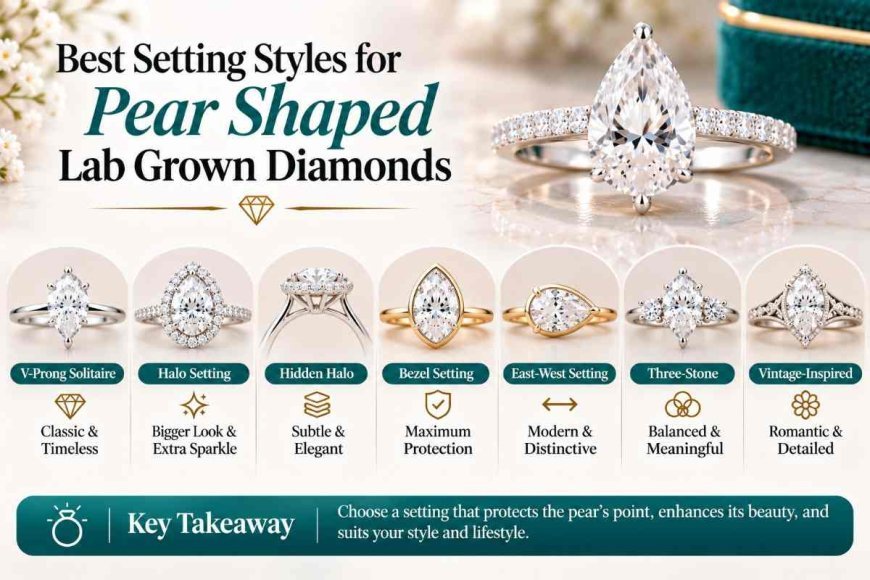
Best Setting Styles for Pear Shaped Lab Grown Diamonds
Learn how to choose the perfect emerald ring for women: emerald-cut vs green emerald, clarity, ratio, setting, metal and care, plus tips for a confident purchase.

The pear-shaped diamond is a graceful teardrop: one softly rounded end, one elegant point. It combines the sparkle of a round brilliant with the lengthening line of a marquise, which is why it has become such a favourite for engagement rings. With lab-grown diamonds, a larger and finer pear is often within reach, which makes choosing the right setting all the more rewarding.
This guide explains the best setting styles for pear shaped lab grown diamonds, what each one does for the stone, and how to protect that delicate point.
Quick Answer
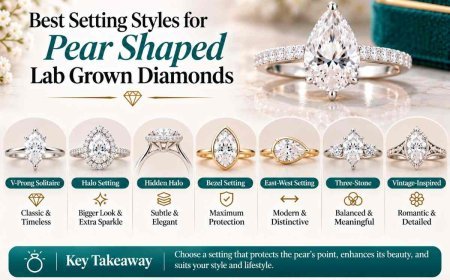
The best settings for a pear-shaped diamond are those that protect the point and flatter the teardrop outline. V-prong solitaires keep it classic, halo settings add sparkle and protection, bezel settings offer maximum security, and east-west or three-stone designs add a modern or symbolic twist. The right choice depends on your style and daily routine.
Understanding the Pear Shape
A pear diamond has a single point at one end and a rounded curve at the other. Like any pointed stone, its tip is the most vulnerable area, and it can chip if it is not protected. Pears are also elongated, so they can appear larger than a round diamond of the same weight and tend to lengthen the finger.
Pear stones can also show a "bow-tie," a darker band across the middle caused by the way light moves through elongated shapes. A well-cut stone keeps it subtle, so it is worth looking closely at the actual diamond. If you want to explore options, a lab grown pear diamond ring collection shows how differently this shape looks across settings.
Why Lab-Grown Pear Diamonds Are a Smart Choice
Lab-grown diamonds are real diamonds with the same hardness and brilliance as natural ones, and they typically cost less for a comparable size and quality. For a shape that is all about length and presence, that can mean a more generous pear or a higher grade within your budget. The hardness is identical, so the stone is as durable as any diamond. The point still needs a protective setting, whichever type you choose.
1. Solitaire With V-Prongs
A solitaire lets the pear shine without distraction. The key detail is the protective V-prong at the tip, a small V-shaped claw that cradles the point from both sides. The rounded end is usually held by two or three more prongs, giving a secure, elegant look.
-
Best for: people who love a clean, timeless style.
-
Pros: maximum light and sparkle, a classic look, easy to maintain.
-
Consider: the V-prong should be well made, as it is doing the protective work.
2. Halo Setting
A halo surrounds the pear with a ring of small diamonds that follows its teardrop outline. It makes the centre stone look larger, adds a lot of sparkle and provides a useful frame around the edge, including the tip.
-
Best for: those who want glamour and a bigger look.
-
Pros: added sparkle, apparent size, extra edge protection.
-
Consider: slightly more cleaning, and resizing can be trickier with pavé detail.
3. Hidden Halo
A hidden halo sits beneath the stone, visible mainly from the side. It adds a subtle shimmer without the more obvious frame of a classic halo.
-
Best for: people who want a touch of extra sparkle with a refined, understated look.
-
Pros: modern, elegant and subtly brilliant.
-
Consider: it does not frame the top edge, so the tip still depends on good prong work.
4. Bezel or Partial Bezel Setting
A bezel surrounds the stone with a thin metal rim. A full bezel protects the whole outline, including the point, while a partial bezel covers only part of the edge and lets in more light.
-
Best for: active lifestyles and anyone who wants maximum security.
-
Pros: excellent protection, sleek modern look, nothing to snag.
-
Consider: slightly less light reaches the stone than in an open prong setting.
5. East-West Setting
An east-west setting turns the pear sideways, so it lies across the finger instead of along it. It feels contemporary and editorial, and the point is often easier to protect and less likely to catch on fabric.
-
Best for: modern, fashion-forward style.
-
Pros: distinctive look and a practical orientation.
-
Consider: it does not lengthen the finger as strongly as a north-south setting.
6. Three-Stone Setting
A three-stone ring pairs a pear centre with two smaller side stones, such as rounds, baguettes or smaller pears. It carries symbolic meaning, often representing past, present and future, and gives a fuller, more formal look.
-
Best for: those who love meaningful, elegant designs.
-
Pros: balanced look with generous sparkle.
-
Consider: choose side stones that complement the pear and do not overpower it.
7. Vintage-Inspired Setting
Milgrain edging, filigree and decorative galleries create a romantic, antique feel that suits a pear shape beautifully, as the teardrop echoes classic vintage design.
-
Best for: people who love detail and heritage style.
-
Pros: rich, characterful look.
-
Consider: intricate work needs careful, skilled finishing.
Pear Diamond Settings at a Glance
|
Setting |
Look |
Protection of the Point |
Sparkle |
|
V-prong solitaire |
Classic, minimal |
Good |
Maximum |
|
Halo |
Glamorous |
Very good |
Very high |
|
Hidden halo |
Subtle, modern |
Good |
High |
|
Bezel or partial bezel |
Sleek, modern |
Excellent |
Moderate to high |
|
East-west |
Contemporary |
Good |
High |
|
Three-stone |
Elegant, symbolic |
Good |
Very high |
|
Vintage-inspired |
Romantic, detailed |
Good |
High |
Which Direction Should the Point Face?
The traditional way to wear a pear ring is with the point toward the fingertip, which creates the longest, most flattering line. Some people prefer the point toward the wrist, and others enjoy the east-west orientation. There is no rule, so try each way on and choose what you like best.
Choosing the Right Metal
-
White gold or platinum: a bright, cool look that keeps the diamond crisp.
-
Yellow gold: a warm, classic look that suits vintage styles.
-
Rose gold: a soft, romantic tone that flatters many skin tones.
Practical Tips for Choosing
-
Protect the point first. Whatever setting you choose, make sure the tip is well covered.
-
Think about lifestyle. Active hands often suit bezels or lower profiles.
-
Check the cut. Look for good symmetry and a subtle bow-tie.
-
Compare in detail. View the actual stone and setting up close before deciding.
Browsing a wide range of lab diamond engagement rings makes it easy to see how different shapes, settings and metals compare, so you can find the style that feels right.
Care Tips for Pear Diamond Rings
-
Have the prongs and tip protection checked by a jeweller about once a year.
-
Remove the ring for heavy hand work, sport and harsh cleaning products.
-
Clean it gently with warm water, mild soap and a soft brush.
-
Store it separately so the point cannot knock against other jewellery.
Frequently Asked Questions
1.What is the best setting for a pear-shaped diamond?
Ans. V-prong solitaires, halos and bezels are all excellent. The best choice depends on whether you want maximum sparkle, extra size or maximum protection.
2.Do pear-shaped diamonds chip easily?
Ans. The point is the most vulnerable part, but a protective setting, such as a V-prong or bezel, greatly reduces the risk.
3.Is a pear diamond a good choice for an engagement ring?
Ans. Yes. It lengthens the finger, looks larger than a round diamond of the same weight and feels distinctive while remaining elegant.
4.Are lab-grown pear diamonds as durable as natural ones?
Ans. Yes. Both are real diamonds with a hardness of 10 on the Mohs scale, so they are equally scratch resistant.
Final Thoughts
A pear-shaped lab-grown diamond is a graceful, flattering choice, and the right setting makes it shine. Protect the point, whether with V-prongs, a halo or a bezel, then choose the style that matches your taste, from classic solitaire to modern east-west. Compare real options, look closely at the details and pick the setting that suits both your style and your everyday life.
What's Your Reaction?
 Like
0
 Dislike
0
 Love
0
 Funny
0
 Angry
0
 Sad
0
 Wow
0