

















Door Interlock Remote Monitoring: Improve Cleanroom Safety, Access Control and Operational Visibility
When combined with compatible supervisory technology, door interlock remote monitoring can provide additional visibility into door conditions and help facility managers respond to unusual operating situations.

Maintaining a controlled environment is essential for industries where cleanliness, safety, and operational accuracy directly affect product quality. Pharmaceutical manufacturing units, laboratories, biotechnology facilities, and healthcare organisations must ensure that restricted areas remain properly separated. Even a small mistake, such as two interconnected doors being opened simultaneously, can affect the controlled conditions of a cleanroom.
This is where door interlock remote monitoring becomes an important part of modern facility management. It helps organisations improve visibility into door operations, supervise access points, and identify unusual activities through suitable monitoring and control arrangements.
A reliable door interlocking arrangement prevents unauthorised or simultaneous door openings according to predefined operating logic. When combined with compatible monitoring technology, it can also help facility managers understand door conditions and respond to operational issues more efficiently.
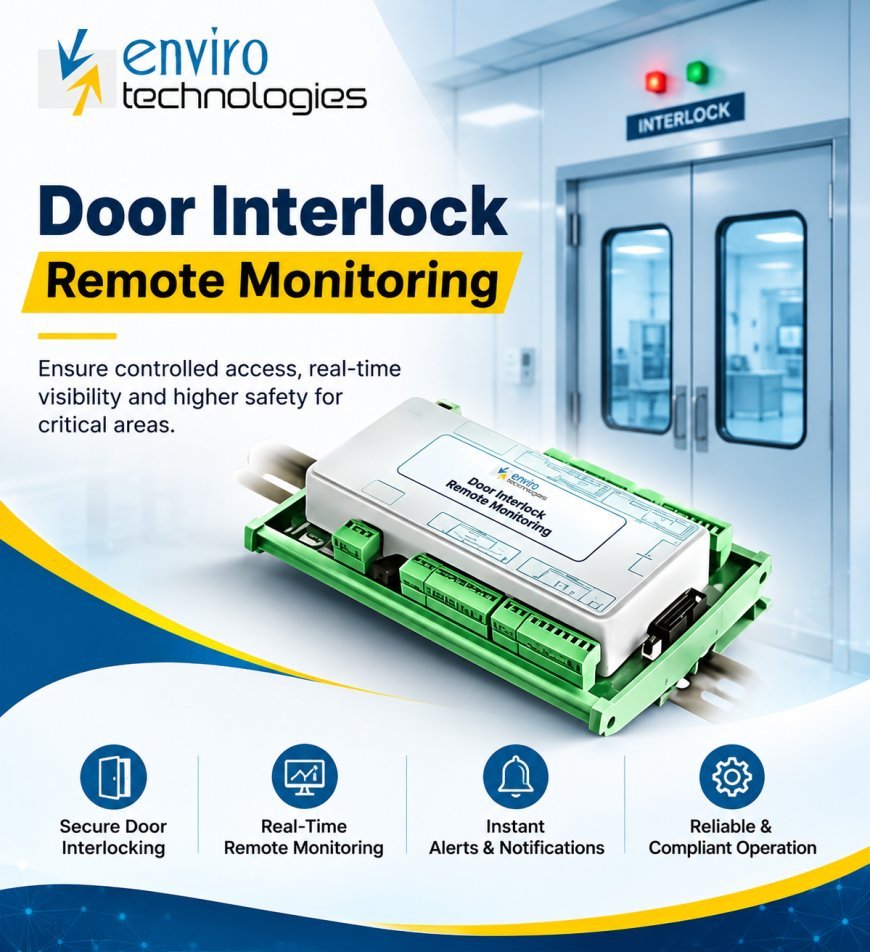
Enviro Technologies offers its enviroDIS door interlocking solution, designed to manage multiple interconnected doors using embedded software and configurable door logic. The solution is available in different configurations, supporting applications involving two, four, and up to eight doors.
What Is Door Interlock Remote Monitoring?
Door interlock remote monitoring refers to the supervision of interconnected doors through a suitable monitoring interface or connected control system. It allows authorised facility personnel to check door conditions and identify operational issues without having to physically inspect every access point.
In a conventional door interlocking arrangement, when one door opens, the associated interlocking logic prevents another connected door from opening simultaneously. This helps maintain separation between controlled areas and reduces the possibility of unwanted air movement or contamination.
With an appropriate remote-monitoring integration, the system can provide additional operational visibility. Depending on the installed architecture, users may be able to review door-open and door-closed conditions, monitor alarms, identify abnormal events, and supervise multiple access points from a central location.
For pharmaceutical and cleanroom facilities, this visibility is particularly useful because door operations are closely connected to contamination control, personnel movement, and environmental management.
It is important to distinguish the interlocking controller from the monitoring platform. Remote access, network dashboards, notifications, and historical monitoring depend on the connected hardware and software configuration.
Why Is Remote Monitoring Important for Door Interlock Systems?
Cleanroom operations require consistent procedures. Employees must follow designated entry and exit sequences, and connected doors must operate according to the facility's safety requirements.
A properly designed door interlocking arrangement supports these procedures, while compatible monitoring facilities provide additional visibility.
1. Better Control Over Door Operations
Managing several interconnected doors manually can become difficult, especially in large pharmaceutical facilities.
Door interlock remote monitoring, when implemented with a suitable connected monitoring platform, helps authorised personnel supervise door conditions and identify unusual operating situations.
This makes it easier to investigate issues such as doors remaining open longer than expected or unexpected changes in door status.
2. Support for Cleanroom Contamination Control
Cleanrooms are designed to maintain controlled environmental conditions. Simultaneous opening of interconnected doors can create unwanted airflow between areas and increase the risk of contamination.
A door interlocking controller helps prevent incompatible doors from opening together according to configured logic.
This is particularly important in pharmaceutical manufacturing, sterile processing areas, and laboratories where maintaining room separation is essential.
3. Improved Operational Visibility
When a facility contains multiple access points, physically checking every door is not always practical.
A compatible remote-monitoring arrangement can provide a central overview of connected doors. Facility managers can use this information to understand operational conditions and identify situations requiring attention.
Door interlock remote monitoring can therefore support more organised supervision across controlled areas.
4. Faster Identification of Abnormal Conditions
A door that remains open unexpectedly, an interlocking conflict, or an emergency override may require immediate attention.
Where alarm monitoring and event reporting are integrated, responsible personnel can identify such situations more quickly and take appropriate action.
The exact alarms and notifications available depend on the connected monitoring architecture.
Key Features to Consider in Door Interlock Remote Monitoring
Selecting a suitable solution requires more than checking whether doors can be electronically locked. Businesses should consider the actual operating conditions of their facilities and the monitoring capabilities required by their teams.
Real-Time Door Status Monitoring
Door status monitoring helps authorised personnel understand whether individual doors are open or closed.
When supported by network-connected monitoring software, this information can be displayed through a central interface. It helps facility managers identify unexpected door conditions and improve supervision.
Configurable Door Interlocking Logic
Every controlled environment has different access requirements. Some areas require two-door interlocking, while larger facilities may need several interconnected access points.
A flexible controller should support suitable door configurations and allow the required operating logic to be established.
Enviro Technologies' enviroDIS uses embedded firmware that allows commissioning engineers to configure door logic directly at the installation site without requiring a PC or computer.
Emergency Door Release
Emergency situations require a clearly defined safety procedure.
The enviroDIS solution includes an emergency facility that can release all connected doors through an external centralised emergency switch. Its fascia plate also provides an emergency operation option through a configurable press-and-hold function.
Emergency arrangements should always be configured according to the facility's safety requirements and applicable procedures.
Alarm and Event Supervision
Alarm visibility is an important consideration when planning a remote-monitoring installation.
Depending on the monitoring system and connected equipment, facilities may require notifications for forced door opening, prolonged door-open conditions, communication failures, or emergency operations.
Businesses should confirm which alarm signals are supported by the selected controller and which require an additional monitoring interface.
Integration With Access Control Systems
A door interlocking arrangement can work alongside compatible access control equipment.
EnviroDIS supports connection with an access controller, allowing businesses to combine authorised entry procedures with door interlocking logic.
This is useful for facilities that need controlled personnel movement between different cleanroom sections.
Understanding EnviroDIS by Enviro Technologies
Enviro Technologies develops control, instrumentation, access control, and environmental monitoring solutions for industrial and commercial applications.
Its enviroDIS product is a door interlocking system with embedded software for configuring door operating logic. It is designed to simplify commissioning while providing different configurations for facilities with varying door requirements.
The available configurations include:
Two-Door Interlocking: Suitable for applications where two connected doors must follow a defined opening sequence.
Four-Door Master Controller: Designed to manage interlocking logic for up to four doors.
Four-Door Master With Four-Door Slave: An expandable arrangement supporting interlocking applications involving up to eight doors.
The system also offers DIN rail mounting, helping save installation space compared with conventional panel enclosures.
For organisations considering door interlock remote monitoring, enviroDIS can form part of a wider door-control arrangement. However, a separate compatible network or supervisory interface may be required for remote dashboards, historical records, or centralised notifications. These requirements should be discussed with the Enviro Technologies technical team before implementation.
Industries That Benefit From Door Interlocking and Remote Monitoring
Different industries have different reasons for controlling access between interconnected rooms. However, the common requirement is maintaining safe and organised movement between controlled areas.
Pharmaceutical Manufacturing
Pharmaceutical facilities must maintain controlled conditions across production, storage, and processing areas.
Door interlocking helps prevent simultaneous opening of interconnected doors, supporting room separation and contamination-control procedures.
Door interlock remote monitoring can add further operational visibility when connected to a suitable supervisory platform.
Biotechnology and Research Laboratories
Research laboratories often contain areas with different access permissions and environmental requirements.
A properly configured door interlocking arrangement helps regulate movement between these sections. Additional monitoring can help facility personnel review door conditions and investigate unexpected operations.
Hospitals and Healthcare Facilities
Hospitals contain several restricted areas, including laboratories, sterile processing sections, and specialised treatment rooms.
Electronic door interlocking can help manage movement between connected spaces while supporting access-control procedures.
Cleanroom Manufacturing Units
Cleanroom manufacturing environments depend on consistent operating procedures to protect sensitive products and processes.
Door interlocking helps maintain separation between areas, while compatible monitoring systems can improve supervision of connected entry points.
Food and Specialised Processing Facilities
Food processing and other controlled manufacturing environments may require restricted access between production zones.
An appropriate interlocking arrangement helps maintain defined entry and exit sequences and supports organised facility operations.
How to Choose the Right Door Interlock Remote Monitoring Solution
Before investing in a system, businesses should understand their operational requirements rather than selecting equipment based only on the number of doors supported.
Start by identifying the number of interconnected doors and the opening sequence required for each area. Check whether the controller supports the required configuration and whether the system can accommodate future expansion.
Next, review the monitoring requirements. Some facilities only need local door status indications, while others require central dashboards, alarm notifications, network connectivity, and event history.
Also consider access control compatibility, emergency release arrangements, installation space, maintenance requirements, and integration with existing building management systems.
For pharmaceutical applications, discuss documentation, system validation, data handling, and applicable regulatory requirements with the solution provider.
The right door interlock remote monitoring setup should address both immediate operational needs and future facility requirements.
Why Consider Enviro Technologies?
Enviro Technologies offers solutions across environmental monitoring, control and instrumentation, access control, and related industrial applications.
Its enviroDIS product provides several useful capabilities for organisations that need dependable door interlocking, including:
-
Embedded firmware for convenient onsite door-logic configuration.
-
Two-door and four-door controller options.
-
Expansion to support up to eight interconnected doors.
-
Emergency door release facilities.
-
Access controller connectivity.
-
Compact DIN rail mounting.
-
CE and BIS certification as stated on the product page.
These features make enviroDIS relevant for facilities that need structured control over interconnected access points.
Businesses planning a door interlock remote monitoring installation should discuss their network supervision requirements, monitoring interfaces, alarm functionality, and integration possibilities with the Enviro Technologies team.
Frequently Asked Questions
1. What is door interlock remote monitoring?
Door interlock remote monitoring involves supervising interconnected door conditions through a compatible monitoring interface. It can help authorised personnel review door status, identify abnormal conditions, and improve operational visibility across controlled areas.
2. How does a door interlocking system work?
A door interlocking system uses configured control logic to prevent two or more interconnected doors from opening simultaneously. When one door is opened, the controller keeps the other associated doors locked until the required conditions are satisfied.
3. Can EnviroDIS control multiple interconnected doors?
Yes. EnviroDIS offers two-door and four-door configurations, with an expandable master-and-slave arrangement supporting up to eight doors.
4. Is remote monitoring available with EnviroDIS?
EnviroDIS provides embedded door-interlocking control and supports access controller connectivity. Remote dashboards, network-based monitoring, and additional notification facilities depend on the connected monitoring architecture. Contact Enviro Technologies to confirm the appropriate configuration for your application.
5. Why is door interlocking important in pharmaceutical cleanrooms?
Door interlocking helps prevent simultaneous opening of interconnected doors, supporting separation between controlled areas. This can help reduce unwanted airflow and contamination risks when used as part of an appropriately designed cleanroom system.
Conclusion
Maintaining controlled access between interconnected rooms is an important requirement for pharmaceutical manufacturing, cleanrooms, laboratories, hospitals, and specialised industrial facilities.
Door interlocking provides a structured way to manage door-opening sequences, support area separation, and improve operational safety. When combined with compatible supervisory technology, door interlock remote monitoring can provide additional visibility into door conditions and help facility managers respond to unusual operating situations.
Enviro Technologies' enviroDIS offers configurable embedded door logic, emergency operation facilities, access controller connectivity, and expandable configurations for up to eight doors.
For businesses planning to improve cleanroom access management, understanding the available controller configurations and monitoring integration requirements is an important first step. Explore EnviroDIS and discuss your application requirements with Enviro Technologies to identify a suitable door interlocking solution.
What's Your Reaction?
 Like
0
 Dislike
0
 Love
0
 Funny
0
 Angry
0
 Sad
0
 Wow
0