


























Herbal Henna and Indigo Powder for Black Hair
Henna can give grey hair a beautiful copper colour. But if your natural hair is black, those warm strands may stand out more than you expected. Adding indigo to your colouring routine can help deepen the shade and bring the greys closer to the rest of your hair.
Using herbal henna and indigo powder for black hair takes a little preparation. The powders work differently, and the order of application matters. For a deeper black result, the two-step method—henna first, followed by indigo—is a commonly used approach. Results still depend on your starting colour, the products and how readily your hair takes the dye.
Here is how to approach the process, what to expect and how to avoid the mistakes that often lead to uneven colour.
How Do Henna and Indigo Work Together?
Henna powder comes from the leaves of Lawsonia inermis. Its pigment gives hair an orange-red stain, which shows most clearly on grey or white strands.
Indigo powder, commonly prepared from Indigofera tinctoria leaves, contributes a blue-toned pigment. Over a henna base, it helps create a darker colour.
That is why henna alone usually does not turn grey hair black. The warm henna colour and the darker indigo pigment work together to build the final shade.
Keep in mind that these powders deposit colour. They cannot lighten naturally dark hair, and they do not reverse greying.
Why Choose the Two-Step Method for Black Hair?
You may have seen recipes that mix henna and indigo in one bowl. A combined application is often used for brown shades. For black hair, applying them separately gives you a different route: first colour the greys with henna, then deepen that colour with indigo.
| Application Method | How It Works | Common Colour Goal |
|---|---|---|
| Henna alone | One henna application | Copper or reddish tones on greys |
| Henna and indigo combined | Separately prepared pastes are mixed and applied together | Brown shades |
| Henna followed by indigo | Henna is applied and rinsed before a separate indigo application | A deeper brown-to-black result |
These are general colour expectations. A strand test is essential because the same method can look different on two people.
What You Need Before Colouring?
Set everything out before you begin, especially because indigo is generally prepared close to application time.
You will need:
- Henna and indigo powders intended for hair colouring
- Mixing bowls and a spoon
- Water or another liquid specified in the product directions
- Gloves and an application brush
- Sectioning clips
- An old towel and protective clothing
- A shower cap, if recommended
Read both ingredient lists. Herbal henna powder may contain additional botanical ingredients, so its preparation can differ from pure henna.
Complete the manufacturer’s recommended allergy test before use. Also test the entire colouring process on a small, hidden strand to check the shade and hair feel.
How to Use Henna and Indigo Powder for Black Hair
Step 1: Prepare Your Hair
Follow the product instructions for washing and whether application should be on dry or damp hair.
Avoid starting with hair heavily coated in oil or styling products. Divide it into sections so you can reach the roots and cover the grey strands evenly.
Step 2: Mix the Henna
Prepare the henna according to its directions. Add liquid gradually until you have a smooth paste that spreads easily without running.
Allow the recommended resting or dye-release time. Do not assume every henna product needs overnight soaking—formulas and instructions vary.
For your first application, keep to the recommended recipe rather than adding several DIY ingredients.
Step 3: Apply Henna Evenly
Put on gloves and apply the paste section by section. Pay particular attention to the temples, hairline and parting, where greys are often most noticeable.
Coat the strands thoroughly, then leave the paste on for the processing time stated by the manufacturer.
Step 4: Rinse Out the Henna
Rinse carefully until the paste has been removed. Follow the directions on whether shampoo or conditioner should be used at this stage.
Your grey hair may now look orange or copper. This is the henna base, so do not judge it as the finished result.
Step 5: Prepare Fresh Indigo
Mix the indigo powder shortly before you are ready to apply it. Use the water temperature and preparation method specified by the manufacturer.
Unlike some henna preparations, indigo is generally mixed fresh rather than soaked overnight. Follow the instructions for the timing between the two colouring stages.
Step 6: Apply Indigo Over the Henna Base
Work through your hair in sections again, covering the henna-coloured strands evenly.
Give resistant grey areas enough attention. Missing small sections can leave copper strands visible beside the darker ones.
Leave the indigo on for the recommended processing time, then rinse as directed. Henna followed by indigo is an established method for achieving black-looking botanical colour, although an identical result cannot be guaranteed for everyone.
Step 7: Allow the Colour to Settle
The shade may continue to deepen after rinsing. Follow your product’s guidance before shampooing or deciding whether another application is needed.
Take a photograph in natural daylight once the colour has settled. It can help you assess the coverage and plan your next root touch-up.
Will Henna and Indigo Cover All Grey Hair?
They can colour visible greys, but coverage varies. Some strands take colour readily, while others remain lighter or warmer.
Your result depends on:
- The proportion of grey hair
- Previous colour or bleaching treatments
- The products used
- Preparation and processing time
- How evenly the paste is applied
- Your hair’s response to the pigments
For resistant greys, seek guidance from the manufacturer before changing the recipe or repeating the application.
Can You Apply Indigo Alone for Black Hair?
Indigo alone is not a reliable shortcut to black colour on white, very light or bleached hair. Its blue-toned pigment may leave an unwanted blue-green cast.
If you want to colour greys black, use a process designed for henna and indigo together. Previously lightened hair needs particular care and a strand test.
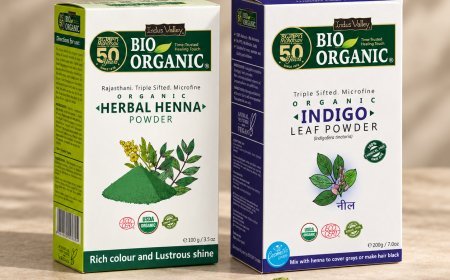
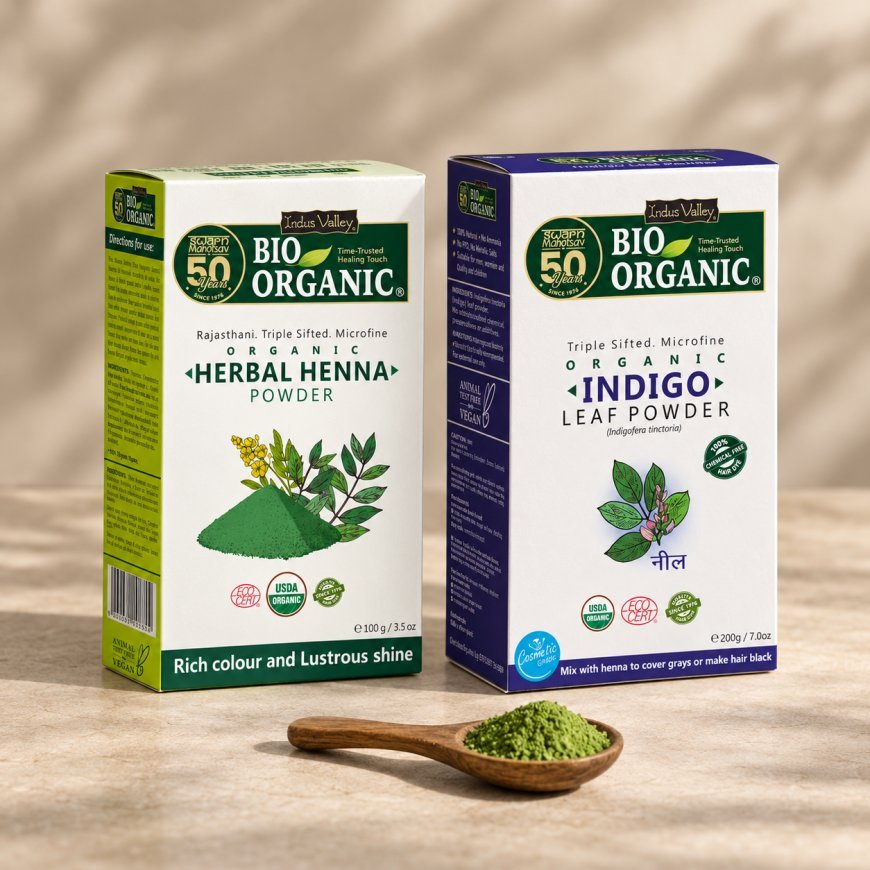
Using Bio Organic Herbal Henna and Indigo Powder
Bio Organic offers Herbal Henna and Indigo Powder for botanical hair colouring. Its indigo product information describes using the powder alongside herbal henna to customise the shade.
Follow the instructions supplied with the exact products you choose. Preparation, proportions and processing times should come from those directions rather than a general recipe intended for another formula.
Common Mistakes to Avoid
Preparing Both Powders at the Same Time
Henna may need a resting period, while indigo is generally prepared fresh. Plan the two stages separately.
Adding Oil to the Colouring Paste
Extra ingredients may change how the mixture spreads or colours. Add them only if the manufacturer recommends it.
Rushing the Roots
The hairline and temples are easy to miss. Use small sections and check coverage before starting the processing time.
Expecting an Instant Final Shade
Allow the colour to settle before judging it. Avoid immediately recolouring because a few strands look warm just after rinsing.
Repeatedly Colouring the Full Lengths
Full-length applications can gradually deepen the shade. For later sessions, focus on new growth where appropriate.
Caring for Your Hair After Colouring
Follow the recommended washing schedule and use suitable conditioning care if your lengths feel dry. Detangle gently and limit unnecessary heat styling.
If you want to bleach or lighten your hair later, tell your colourist exactly which henna and indigo products you used. These pigments can be difficult to remove, and lightening may produce unwanted tones. A professional strand test is important before proceeding.
Frequently Asked Questions
1. Can henna and indigo make grey hair black?
A two-step application can produce a black-looking result, but the depth and coverage depend on your hair and the products.
2. Why does my hair look orange after henna?
Henna naturally stains light strands orange-red. In the two-step method, indigo is applied afterwards to deepen that base.
3. Should I mix henna and indigo together for black hair?
Combined mixtures are commonly used for brown shades. A separate henna application followed by indigo is often chosen for a deeper black result.
4. How long should I leave each powder on?
Follow the processing times supplied with your products. There is no single timing that suits every formula.
5. Should I soak indigo overnight?
Generally, no. Prepare it fresh according to the manufacturer’s directions.
6. Will the colour look the same on everyone?
No. Starting colour, grey percentage, previous treatments and application all affect the shade.
7. Are henna and indigo allergy-free?
No. Botanical ingredients can cause reactions, so follow the recommended allergy-testing instructions.
8. Do these powders stop hair from turning grey?
They colour existing strands. They do not reverse or prevent the greying process.
Final Thoughts
For black hair, the main task is creating an even henna base and following it with a carefully applied indigo stage. Good preparation and thorough coverage matter more than a complicated recipe.
Start with a strand test, follow your products’ directions and give the colour time to settle. Once you understand how your hair responds, future root touch-ups become easier to plan.
What's Your Reaction?
 Like
0
Like
0
 Dislike
0
Dislike
0
 Love
0
Love
0
 Funny
0
Funny
0
 Angry
0
Angry
0
 Sad
0
Sad
0
 Wow
0
Wow
0