





























How to store a mattress long term without mould or damage
Choose storage lockers Perth for long term mattress storage with practical tips to prevent mould, moisture damage and sagging.
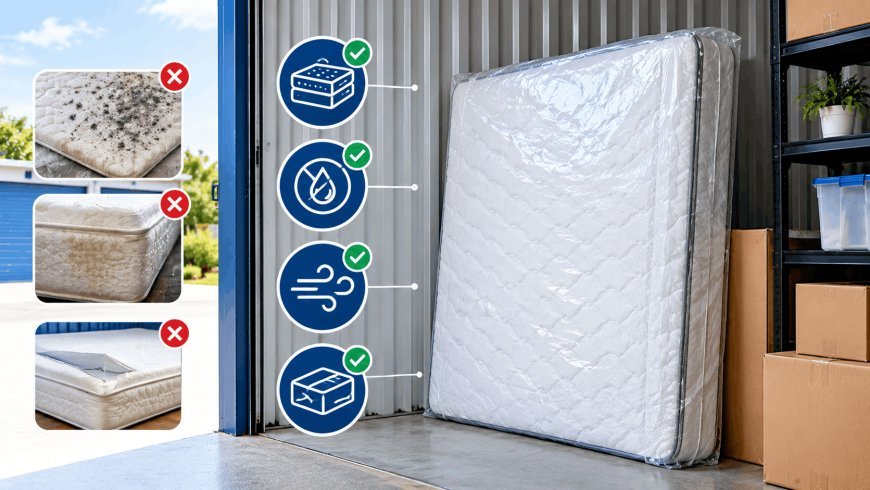
Clean it, dry it completely, wrap it in a breathable cover, lay it flat and keep it off the floor in a space that stays cool and dry. Skip thin plastic wrap. Visit it every couple of months. That's the whole method, and the rest of this article explains why each step matters. If you're booking one of the storage units perth options for a move or a long trip, the mattress is the item most likely to come out worse than it went in, and almost always because of damp.
The short answer first
1. What actually ruins a stored mattress
Four things do the damage: moisture, heat, weight and pests. Moisture brings mould and that sour, closed-up smell. Heat can break down foam and fade fabric. Weight and bending squash the filling and bend the springs. Pests need no explanation.
Get those four under control and a good mattress can sit for a year or more and come out fine.
2. Why a mattress is harder to store than other furniture
A wooden table doesn't care if you leave it for six months. A mattress is closer to a big sponge wrapped in cloth, and it reacts to whatever the air around it is doing.
Moisture
Foam and fabric soak up humidity without you noticing. Mould tends to settle in when the air stays humid, and a common rule of thumb puts the risk line at around 60 percent relative humidity. Once a mattress has mould inside, you can't really get it all out. Prevention is the only fix that works.
Pressure and bending
Springs and foam are built to be pushed down, then released. Leave a heavy weight on top, or fold the mattress in half, and they stay pushed. You won't see it in the unit. You'll feel it on the first night back.
Prepare the mattress before it goes anywhere
1. Strip it, vacuum it, spot clean it
Take off every sheet, protector and topper. Vacuum the whole surface and the sides with an upholstery attachment, paying attention to the seams where dust and skin cells collect. Then spot clean any marks with a damp cloth and a mild cleaner. Damp, not wet. A soaked mattress takes days to dry and invites exactly the problem you're trying to avoid.
2. Deodorise and dry it completely
Sprinkle baking soda over the surface, leave it for a few hours, then vacuum it up. After that, let the mattress air in a dry, ventilated room, flipping it halfway through, until it feels dry all the way through. A day is usually enough in a dry spot, but a mattress that was sweaty or damp will need longer.
Strong direct sun can warm foam and fade the cover, so shade with good airflow is the better choice. When in doubt, give it another day. The extra day costs nothing, and a mattress packed away damp will smell like it for good.
3. Check for pests and damage
Look along the seams and under the edges for stains, small dark spots or anything that suggests bed bugs. If you find signs, deal with them before storing, because a sealed unit is a comfortable place for a problem to grow. Note any existing tears or sagging too. You'll want to know what was already there when you pull it out again.
Warranty and care guide
Check the manufacturer's care guide and warranty terms. Some brands have specific advice on storage, and some warranties have conditions around how the mattress is handled. I can't tell you what yours says, so read it before you wrap anything.
Wrapping it: what to use and what to skip
1. A breathable cover
A cotton or breathable fabric mattress bag is the better pick for long term storage. It keeps dust and scuffs off and lets trapped moisture escape. Cheap and boring, and it works.
2. Where plastic fits
Heavy plastic bags are fine for the trip from your house to the unit. They also work for short stays, as long as the mattress is bone dry. For long term storage, plastic is a risk, because any moisture that does get in has nowhere to go. Picture a lunchbox left shut over a long weekend. That's the smell you're trying to avoid.
If you do use plastic for transport, take it off when the mattress is inside the unit and swap in a breathable cover.
3. Don't fold or squash it
Folding bends the springs and cracks foam. Roll packing and heavy compression can damage a mattress that wasn't made to be compressed. It's best to avoid both unless the maker says otherwise.
Memory foam and latex
Foam and latex handle being stored better than springs, but they're sensitive to heat and long periods under weight. Keep them flat, cool and uncompressed. Some beds sold in a box are designed to be compressed, so check the instructions for that specific one.
Innerspring and hybrid
These carry the most risk from bending. Never fold them, never stand them on their side for months, and never vacuum seal them. A bent coil rarely goes back.
Picking the right space
1. Check the size first
Mattress sizes in Australia are fairly standard. A queen is about 153 by 203 cm, a king about 183 by 203 cm. Many small spaces are too narrow to lay one flat once you add other boxes. If you're looking at storage lockers perth providers, ask for the exact internal measurements, because lockers are often built for boxes and small furniture, not king beds. Don't assume. Ask.
2. Think about heat and humidity
Perth summers get hot, and a metal roofed unit can bake. Winters are damper, and that matters just as much for mould. For a cheap spare mattress that you'd replace anyway, a standard unit with a breathable cover will probably do. For a good mattress that cost real money, I'd look at climate controlled storage if the budget stretches. Is the extra monthly cost worth it? That depends on how long it's staying and how much you'd mind replacing it.
If you're comparing storage units perth providers, ask how they handle ventilation and what temperature range the unit can reach in a heatwave.
3. Get it off the floor
Concrete floors hold and release moisture. Put the mattress on a pallet, a few sturdy boards or a bed base so air can move underneath. A thin layer of clean cardboard or a plastic sheet on top of the pallet is a fine barrier, but don't seal the mattress in against it.
Positioning the mattress inside
1. Flat is the default
Lying flat spreads the weight evenly and keeps the springs and foam supported. That's why it's the best option for most mattresses, and if you have the floor space you should use it.
2. Upright, if you have to
If the unit is too small to lay it flat, standing it upright for a short period is possible. It needs to be fully supported along its length, not leaning at an angle, because a lean bends the mattress slowly. Treat this as a short term fix, not a long term plan.
3. Keep the top clear
Don't stack boxes, furniture or other mattresses on top. The weight squashes the filling in the middle, and you won't notice until you sleep on it. If you need to stack, put the mattress on top of the pile, not under it.
Checking in while it's stored
1. Set a reminder
A visit every two to three months is a good habit. It takes ten minutes. Open the unit, let some air in, and check how things look and smell.
2. What to look and smell for
A musty smell, damp patches on the cover or spots on the fabric are all warning signs. Slip a moisture absorber into the unit if humidity is an issue, and replace it when it fills up. If you find damp early, you can dry the mattress and fix the problem. Find it late and you're buying a new bed.
3. Bringing it back into use
When you collect it, remove the cover and let the mattress air for a day or two before sleeping on it. Foam especially needs time to recover its shape and clear any stale smell. Then put a mattress protector on straight away.
Conclusion
A mattress stored long term needs three things from you: a clean and fully dry start, a breathable cover, and a space where it lies flat and off the floor. The rest is checking in now and then. What I can't settle for you is whether climate control is worth paying for. For a cheap mattress, probably not. For a good one, it deserves a proper look. If you're comparing storage lockers perth options for a smaller bed or a single, confirm the internal size before you commit. Your mattress will thank you, quietly, on the first night back.
FAQs
1. Can I store a mattress in a storage unit for a year?
Yes, if it's clean, completely dry, covered with something breathable, stored flat and off the floor. Check it every couple of months. Storage units perth providers can tell you how their units handle heat and humidity.
2. Is it better to store a mattress flat or on its side?
Flat is better for nearly every mattress. Upright works for short periods if the mattress is fully supported and not leaning. Long term upright storage can cause sagging, especially with springs.
3. Should I wrap my mattress in plastic for storage?
Plastic is fine for the move and for short stays if the mattress is totally dry. For long term storage, a breathable cotton cover is safer because it lets moisture escape.
4. How do I stop mould on a stored mattress?
Make sure it's dry before it goes in, use a breathable cover, raise it off the floor and keep the space ventilated. A moisture absorber helps, and regular checks catch problems early.
5. Will a mattress fit in a storage locker?
It depends on the locker. A queen is about 153 by 203 cm, so many small lockers can't take one laid flat. Ask any provider of storage lockers perth about the exact internal size before booking.
What's Your Reaction?
 Like
0
Like
0
 Dislike
0
Dislike
0
 Love
0
Love
0
 Funny
0
Funny
0
 Angry
0
Angry
0
 Sad
0
Sad
0
 Wow
0
Wow
0