


























How to Choose a Luxury Car: A Complete Guide to Budget, Comfort, Performance, Features, and Ownership Costs
Learn how to choose a luxury car by comparing budget, comfort, performance, safety features, maintenance costs, and resale value to find the right model for your needs.

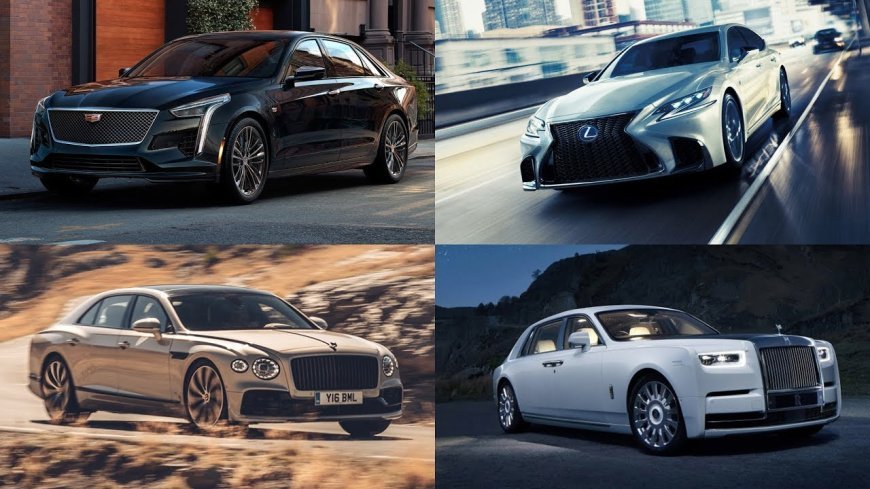
Choosing a luxury car involves more than selecting a prestigious brand or an attractive design. The right vehicle should match your budget, driving habits, comfort expectations, performance preferences, and long-term ownership plans. Whether you are considering a Mercedes-Benz, BMW, Audi, Porsche, Lexus, or Range Rover, you need to compare practical features alongside the prestige each brand offers. This guide explains how to evaluate luxury cars, avoid common buying mistakes, and choose a model that delivers the right balance of comfort, performance, technology, and value.
1. Set a Realistic Budget Before Choosing a Luxury Car
Your budget should determine which luxury cars you consider. A higher purchase price does not automatically mean a better ownership experience, especially when insurance, maintenance, fuel, and depreciation increase the total cost.
Consider these expenses before making your decision:
-
Purchase price: Compare the vehicle's price with your available budget and financing options.
-
Insurance: Premium vehicles may cost more to insure because of their repair expenses, performance capabilities, and replacement parts.
-
Maintenance: Luxury cars often require specialized servicing, manufacturer-approved parts, and qualified technicians.
-
Fuel or charging: Powerful petrol engines may consume more fuel, while electric luxury cars require access to suitable charging facilities.
-
Depreciation: Some models lose value faster than others, depending on demand, mileage, condition, and market trends.
-
Registration and taxes: Check the applicable fees in your country or region.
For example, a luxury sedan with a lower purchase price might still cost more to maintain than a competing model with better reliability and more affordable replacement parts.
Create a total ownership budget instead of focusing exclusively on the showroom price. This approach helps you choose a vehicle that you can comfortably afford to maintain.
2. Choose the Right Type of Luxury Car
Luxury cars serve different purposes, so start by identifying the type of vehicle that fits your lifestyle. A large SUV may suit a family that needs extra space, while a luxury sedan may provide a more comfortable experience for daily commuting and business travel.
|
Luxury car type |
Best suited for |
Main advantages |
|
Luxury sedan |
Professionals, couples, and business travelers |
Refined ride, comfortable seating, and elegant styling |
|
Luxury SUV |
Families and frequent long-distance travelers |
Higher seating position, flexible cargo space, and available all-wheel drive |
|
Luxury sports car |
Driving enthusiasts |
Strong acceleration, responsive handling, and performance-focused design |
|
Luxury coupe |
Drivers who prefer distinctive styling |
Sleek proportions, sporty character, and an exclusive appearance |
|
Luxury electric car |
Drivers seeking electric performance |
Quiet operation, instant torque, and no tailpipe emissions |
|
Luxury convertible |
Drivers who enjoy open-air motoring |
Retractable roof and an engaging driving experience |
Consider how many people usually travel with you, how much luggage you carry, and where you drive most often. These details can help you narrow your choices before comparing individual models.
3. Compare Luxury Car Brands and Their Strengths
Luxury brands often emphasize different aspects of the driving experience. However, their characteristics vary by model, trim level, engine, and model year, so evaluate individual vehicles rather than relying on brand reputation alone.
-
Mercedes-Benz: Consider models that prioritize cabin refinement, comfort, and advanced driver assistance features.
-
BMW: Explore models that emphasize responsive handling, driver engagement, and a balance between performance and everyday usability.
-
Audi: Compare its vehicles for interior design, digital technology, and the availability of quattro all-wheel drive.
-
Lexus: Evaluate its comfort, reliability record, hybrid options, and ownership costs.
-
Porsche: Consider models designed around precise handling, strong performance, and a driver-focused experience.
-
Range Rover: Assess its premium interiors, spacious SUV options, and combination of road comfort and off-road capability.
-
Rolls-Royce: Explore its emphasis on bespoke craftsmanship, exceptional cabin refinement, and personalized luxury.
-
Bentley: Consider its blend of high performance, handcrafted interiors, and grand-touring comfort.
These distinctions provide a useful starting point, but no brand guarantees that every model will suit your needs. Compare independent reliability data, warranty coverage, service availability, and owner feedback before making a final decision.
4. Evaluate Interior Comfort and Cabin Quality
The interior determines how comfortable your luxury car feels during everyday journeys. Premium materials and attractive styling matter, but seating support, cabin noise, climate control, and space can have a greater effect on daily satisfaction.
Check these features when comparing vehicles:
-
Seat comfort: Test the seat cushioning, lumbar support, headrests, and available adjustments.
-
Upholstery: Compare leather, synthetic leather, fabric, and other materials based on comfort, durability, and maintenance requirements.
-
Cabin insulation: Listen for wind, tire, and engine noise during a test drive.
-
Climate control: Check whether the car offers effective air conditioning, rear ventilation, and available heated or ventilated seats.
-
Rear passenger space: Assess legroom, headroom, and ease of entering and leaving the vehicle.
-
Ride quality: Test the suspension over different road surfaces to understand how well it absorbs bumps.
-
Storage: Examine the boot, door pockets, center console, and other compartments you expect to use.
If you regularly travel with family members or clients, prioritize passenger comfort over features that you might rarely use. A vehicle that feels impressive in a showroom should also remain comfortable after several hours on the road.
5. Choose an Engine and Performance Level That Matches Your Driving
Luxury cars offer a wide range of powertrains, including petrol, diesel in some markets, hybrid, plug-in hybrid, and fully electric systems. Each option provides different benefits, so consider your driving conditions before selecting an engine.
|
Powertrain |
Main benefits |
Important considerations |
|
Petrol |
Smooth performance and broad availability |
Fuel consumption and emissions |
|
Diesel |
Strong low-speed torque and potential efficiency on long journeys |
Local restrictions, availability, and suitability for short trips |
|
Hybrid |
Combines an internal combustion engine with electric assistance |
Greater system complexity and model-dependent fuel savings |
|
Plug-in hybrid |
Can cover some journeys using electricity |
Charging access, battery range, and weight |
|
Fully electric |
Quiet operation, instant torque, and no tailpipe emissions |
Charging access, real-world range, and charging time |
Performance also depends on the vehicle's weight, transmission, drivetrain, and tuning. A powerful engine may provide rapid acceleration, but you do not necessarily need the highest-output version for comfortable daily driving.
Choose an engine that suits your typical routes. City drivers may value smooth low-speed response and manageable fuel consumption, while frequent highway travelers may prefer relaxed cruising and strong overtaking performance.
6. Examine Safety and Driver Assistance Features
Luxury vehicles often offer advanced safety technology, but the equipment varies between models and trim levels. Some features come as standard, while others require an optional package.
Look for these technologies:
-
Automatic emergency braking: Can help reduce the severity of certain frontal collisions or avoid them under suitable conditions.
-
Adaptive cruise control: Maintains a selected following distance from traffic when operating within its system limits.
-
Lane-keeping assistance: Helps the driver remain within lane markings under suitable conditions.
-
Blind-spot monitoring: Warns about vehicles in adjacent areas that may be difficult to see.
-
Parking cameras and sensors: Help the driver judge obstacles and maneuver in tight spaces.
-
Airbags and structural protection: Check the available restraint systems and independent crash-test results.
-
Driver attention monitoring: May alert the driver when the system detects signs of reduced attention.
Review the exact specifications of the model and year you intend to buy. You can also consult the Euro NCAP vehicle safety ratings to compare crash protection and safety assistance performance for tested vehicles.
Remember that driver assistance technology supports the driver rather than replacing attentive driving. Test the systems where possible and confirm that they work reliably under the road conditions you encounter.
7. Check Infotainment, Connectivity, and Convenience Technology
A modern luxury car should make driving easier without creating unnecessary distractions. Touchscreens, digital instrument displays, smartphone connectivity, voice controls, and connected services can improve convenience when they work intuitively.
Evaluate the following features before buying:
-
Infotainment system: Check the menu structure, screen responsiveness, and ease of accessing frequently used controls.
-
Apple CarPlay and Android Auto: Confirm compatibility and whether the system supports wired or wireless connections.
-
Navigation: Test route guidance, traffic information, and map coverage in your region.
-
Audio system: Listen to music at different volumes to assess clarity and sound balance.
-
Wireless charging and USB ports: Make sure the available connections suit your devices.
-
Digital keys and remote functions: Check compatibility with your phone and the availability of connected services.
-
Over-the-air updates: Determine which software features receive updates and whether the manufacturer charges for particular services.
Do not choose a car solely because it has the largest screen or the longest feature list. An intuitive interface and dependable everyday functions often provide more value than technology you rarely use.
8. Consider Reliability, Maintenance, and Spare Parts
Luxury cars can deliver excellent driving experiences, but repair costs may rise when they use complex electronics, specialized components, adaptive suspension systems, or high-performance parts.
Before purchasing a model, investigate its maintenance history and expected service requirements.
-
Review reliability reports for the specific model and model year.
-
Check the manufacturer's recommended service intervals.
-
Obtain estimates for routine servicing, brake replacement, tires, and common repairs.
-
Confirm whether authorized service centers operate near your home.
-
Ask about warranty coverage, exclusions, and extended warranty options.
-
Inspect the service history of any used luxury vehicle.
-
Check for outstanding recalls and verify that the seller has addressed them.
For used vehicles, an independent pre-purchase inspection can reveal mechanical problems, accident damage, electronic faults, and signs of neglected maintenance.
You can also review NHTSA vehicle safety recalls when evaluating a vehicle covered by the US recall database. For cars registered in other countries, consult the relevant local transport authority or manufacturer.
A well-maintained vehicle with documented service records can be a more sensible purchase than a newer car with an uncertain history.
9. Decide Whether to Buy New or Used
Both new and used luxury cars can make sense, depending on your priorities. A new car offers a known history and access to the applicable new-vehicle warranty, while a used model may provide access to a higher trim level for a lower purchase price.
|
Factor |
New luxury car |
Used luxury car |
|
Purchase price |
Usually higher |
Often lower |
|
Vehicle history |
No previous owner history to investigate |
Requires careful verification |
|
Warranty |
Usually includes a new-car warranty |
Depends on age, mileage, and remaining coverage |
|
Depreciation |
Initial depreciation can be significant |
Some depreciation has already occurred |
|
Available features |
Can select available factory options |
Depends on the original specification |
|
Maintenance risk |
Usually lower at the beginning |
Depends on condition and maintenance history |
When buying used, inspect the odometer, service records, ownership documents, accident history, and condition of the tires, brakes, suspension, and interior.
For an electric luxury car, check battery health and the remaining battery warranty. For a performance car, inspect the drivetrain, brakes, tires, and maintenance records particularly carefully.
Avoid making a decision based on age or mileage alone. The vehicle's maintenance history and current condition often provide more useful information.
10. Understand Depreciation and Resale Value
Luxury vehicles can lose a substantial portion of their value over time, but depreciation varies considerably by brand, model, market conditions, and vehicle condition.
Before buying, compare the prices of similar vehicles across different model years. Look at mileage, trim level, accident history, service records, and remaining warranty coverage to understand how the market values each model.
Several factors can influence resale value:
-
Brand and model demand in your local market.
-
Maintenance records and overall mechanical condition.
-
Mileage and vehicle age.
-
Fuel type and changing buyer preferences.
-
Availability and cost of replacement parts.
-
Accident history and quality of repairs.
-
Original equipment, popular options, and trim level.
If you plan to replace the vehicle after a few years, estimate depreciation alongside fuel, insurance, and maintenance. This gives you a more realistic picture of the total cost of ownership.
Avoid assuming that every luxury model from a prestigious brand will retain its value. Research the specific vehicle and local resale market before committing to a purchase.
11. Test Drive the Car Before Making a Decision
A test drive helps you determine whether a luxury car meets your expectations in real-world conditions. Manufacturer specifications cannot fully describe seat comfort, steering feel, visibility, braking response, or the behavior of the suspension on your usual roads.
During the test drive, check the following:
-
Driving position: Adjust the seat, steering wheel, and mirrors to find a comfortable position.
-
Visibility: Check the view through the windshield, rear window, and side mirrors.
-
Acceleration: Evaluate how smoothly the engine or electric motor responds.
-
Braking: Check for predictable braking and any unusual vibration or noise.
-
Steering: Assess how easily the vehicle turns, parks, and changes direction.
-
Ride comfort: Drive over uneven surfaces and speed bumps where permitted.
-
Cabin noise: Listen for wind, tire, and mechanical sounds at different speeds.
-
Technology: Try the navigation, parking assistance, climate controls, and smartphone connection.
-
Parking: Confirm that the vehicle fits your usual parking spaces and is easy to maneuver.
-
Passenger comfort: If possible, have regular passengers assess the rear seats and ride quality.
If you are unfamiliar with a particular luxury category, consider experiencing it before committing to a purchase. For example, luxury car rental in Dubai can help you understand the comfort, performance, and practicality of a premium vehicle during everyday driving, subject to the available models and rental terms.
A test drive should answer practical questions, not simply confirm that you enjoy the car's appearance.
12. Match the Car to Your Lifestyle and Driving Environment
The right luxury car should fit the conditions in which you actually drive. Consider your daily routes, passenger needs, parking arrangements, climate, and the availability of servicing facilities.
For city driving, a midsize luxury sedan or compact premium SUV may provide a useful balance of comfort, maneuverability, and technology. Drivers who regularly travel with children or carry substantial luggage may benefit from a larger SUV.
If you frequently travel between cities, prioritize supportive seats, a quiet cabin, stable highway handling, and a suitable fuel or charging range. Drivers who enjoy winding roads may place greater emphasis on steering response, braking performance, and chassis balance.
Climate and road conditions also matter. In hot regions, evaluate air-conditioning performance, seat ventilation, window insulation, and the manufacturer's guidance on operating the vehicle in high temperatures. On rough roads, consider ground clearance, tire sidewall height, and suspension comfort.
Before choosing a large or powerful model, consider whether its size, running costs, and performance suit your everyday needs. A luxury car should improve your driving experience rather than create unnecessary compromises.
13. Compare the Total Cost of Ownership
The total cost of ownership shows how much a car may cost you over a specific period. It includes more than the purchase price and helps you compare vehicles with different prices, fuel consumption, and maintenance requirements.
Use this simple framework:
Total ownership cost = Purchase price − Expected resale value + Running costs + Insurance + Taxes and fees + Financing costs
Running costs can include fuel or electricity, servicing, tires, repairs, and parking. Your actual expenses will depend on annual mileage, driving conditions, local prices, and the vehicle's condition.
For example, compare two luxury cars over five years. One may cost less initially but require more frequent repairs, while the other may have a higher purchase price and stronger resale demand. The better financial choice depends on the difference between their total expenses, not their original prices alone.
Use realistic estimates rather than relying on advertised fuel economy or optimistic resale projections. When possible, obtain insurance quotations and service estimates before finalizing the purchase.
14. Consider Renting Before Buying an Expensive Luxury Car
Buying a luxury car makes sense when you want long-term ownership, but renting can provide flexibility when you only need a premium vehicle for specific occasions or a limited period.
A rental can also help you evaluate a model before deciding whether to purchase it. You can experience its comfort, technology, parking requirements, and real-world running characteristics without immediately committing to the full cost of ownership.
For instance, someone visiting Dubai for business may prefer a premium sedan for meetings, while a family exploring the city may need a spacious SUV. Depending on the itinerary, a Mercedes-Benz rental in Dubai or a Range Rover rental in Dubai may provide an opportunity to experience these different vehicle categories.
Great Dubai is one option to explore when comparing available rental vehicles for a visit. Before booking, review the specific model, rental duration, mileage allowance, security deposit, insurance coverage, age requirements, and other terms.
Renting does not replace a thorough purchase inspection, but it can help you understand your preferences before making a major financial commitment.
15. Avoid Common Luxury Car Buying Mistakes
Even experienced drivers can overlook important details when a vehicle's appearance, badge, or performance attracts their attention. A careful evaluation helps you avoid unnecessary expenses and disappointment.
Watch out for these common mistakes:
-
Buying for prestige alone: Choose a car that meets your actual needs rather than relying only on its brand image.
-
Ignoring ownership costs: Calculate insurance, maintenance, fuel, depreciation, and financing before deciding.
-
Overlooking optional equipment: Confirm which features the specific trim includes and which require additional payment.
-
Skipping the inspection: Have a qualified professional inspect a used vehicle before you commit.
-
Trusting incomplete service records: Verify the documentation and investigate unexplained gaps in maintenance history.
-
Choosing excessive performance: Consider whether the additional power improves your everyday driving experience.
-
Ignoring local conditions: Check service availability, fuel quality requirements, charging access, road conditions, and climate suitability.
-
Rushing the decision: Compare several vehicles and take enough time to review their specifications and costs.
A disciplined buying process helps you focus on the qualities that matter most and reduces the chance of paying for features you do not need.
Final Checklist for Choosing a Luxury Car
Before purchasing a luxury car, make sure you can answer these questions confidently:
-
Does the vehicle fit my purchase and ownership budget?
-
Does its body style suit my passengers, luggage, and driving routine?
-
Does the engine or powertrain match my daily routes?
-
Are the seats, suspension, and cabin noise comfortable?
-
Does the car provide the safety and technology features I need?
-
Can I access qualified servicing and reasonably priced replacement parts?
-
Have I compared reliability information and resale values?
-
Have I reviewed the warranty, insurance, and maintenance requirements?
-
Have I completed a thorough test drive or independent inspection?
-
Does the car offer enough practical value to justify its cost?
Conclusion
Choosing a luxury car requires a balance between comfort, performance, technology, reliability, and affordability. Start by defining your budget and preferred vehicle type, then compare individual models based on their specifications, safety features, maintenance requirements, and expected resale value. A thorough test drive and realistic ownership-cost estimate can help you make a more informed decision.
The best luxury car is not necessarily the most expensive or powerful model. It is the vehicle that meets your needs, suits your driving environment, and delivers an ownership experience you can comfortably maintain over time.
What's Your Reaction?
 Like
0
Like
0
 Dislike
0
Dislike
0
 Love
0
Love
0
 Funny
0
Funny
0
 Angry
0
Angry
0
 Sad
0
Sad
0
 Wow
0
Wow
0