



























What Factors Affect Root Canal Treatment Success?
Discover the main factors affecting root canal treatment success, including tooth condition, canal cleaning, dental crowns, oral hygiene, and aftercare.
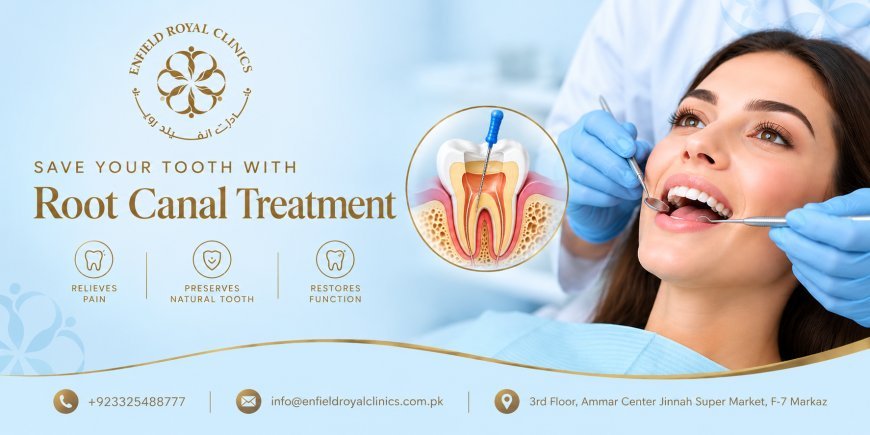
Root canal treatment is a dental procedure designed to save a tooth when the pulp inside it becomes infected or irreversibly inflamed. The treatment involves removing the damaged tissue, cleaning the root canals, and sealing them to help prevent further infection. When followed by an appropriate restoration and good oral care, it can allow the natural tooth to remain functional for many years.
However, the success of root canal treatment depends on several factors. The severity of the infection, the structure of the tooth, the complexity of its root canals, the quality of the procedure, and the patient's aftercare can all influence the outcome. Understanding these factors helps patients make informed decisions and know what to expect during recovery.
People considering Root Canal Treatment in Islamabad can benefit from learning how proper diagnosis, effective treatment, and long-term maintenance work together to support a healthy result.
1. How Does the Condition of the Tooth Affect Treatment Success?
The condition of the tooth before treatment plays an important role in determining the likely outcome. A tooth with infected pulp but enough healthy structure remaining may have a good chance of being preserved. However, extensive decay, severe fractures, or damage to the surrounding tissues can make treatment more challenging.
Deep cavities can allow bacteria to reach the pulp, causing inflammation or infection. If the infection spreads through the root canals and affects the tissues around the root, additional healing time may be required.
Several tooth-related factors can influence success:
-
Extent of decay: Extensive decay may weaken the tooth and make it harder to restore securely.
-
Presence of cracks: A crack that extends deeply into the root can reduce the likelihood of long-term success.
-
Remaining tooth structure: The tooth needs enough healthy structure to support a filling or crown.
-
Condition of surrounding tissues: Infection around the root may require monitoring after treatment.
-
Previous dental work: Large fillings or earlier procedures may affect the tooth's strength and internal structure.
A dentist examines the tooth and may use dental X-rays to assess the roots and surrounding bone. This evaluation helps determine whether root canal treatment is appropriate or whether another option should be considered.
2. Why Are Proper Diagnosis and Canal Cleaning Important?
Accurate diagnosis is essential because not every toothache is caused by infected pulp. Gum disease, a cracked tooth, bite problems, and other dental conditions can produce similar symptoms. If the underlying cause is not identified correctly, treatment may not resolve the discomfort.
Once root canal treatment is considered appropriate, thorough cleaning of the canal system becomes a key part of the procedure. Root canals can be narrow, curved, or contain small branches that are difficult to access. Bacteria and infected tissue may remain if the canals are not adequately cleaned and disinfected.
The treatment generally involves:
-
Examining the tooth and identifying the source of the problem.
-
Accessing the pulp chamber through a small opening in the tooth.
-
Removing infected or irreversibly inflamed pulp tissue.
-
Cleaning and shaping the root canals using suitable instruments and disinfecting solutions.
-
Filling and sealing the canals to help prevent bacterial entry.
The complexity of the root system can affect the difficulty of treatment. Some teeth have additional canals or unusual anatomy that requires careful assessment.
For patients seeking Root Canal Treatment in Islamabad, an appropriate diagnosis and thorough treatment approach can help reduce the risk of persistent infection and support a more predictable outcome.
3. How Does the Quality of the Final Restoration Affect Success?
Completing the root canal procedure is only one part of preserving a tooth. The tooth also needs a suitable restoration to protect it from further damage and prevent bacteria from entering through the treated area.
During treatment, an opening is created in the tooth, and decay or previously damaged structure may already have weakened it. Without an appropriate permanent restoration, the tooth may become vulnerable to leakage, reinfection, or fracture.
Depending on the amount of remaining tooth structure, the dentist may recommend a permanent filling, a dental crown, or another suitable restoration.
A well-fitted restoration can help to:
-
Protect the tooth from excessive chewing pressure.
-
Seal the treated area against bacterial contamination.
-
Restore the tooth's natural shape and function.
-
Reduce the risk of fractures in weakened teeth.
-
Support comfortable chewing and long-term use.
Molars and premolars often require particular attention because they experience substantial chewing forces. A crown may be recommended when a tooth has lost significant structure, although not every root canal-treated tooth automatically needs one.
Delaying the recommended final restoration can leave the tooth more vulnerable to damage. Patients should follow the dentist's instructions about temporary fillings, crowns, and the timing of permanent restoration.
4. Can Oral Hygiene and Aftercare Influence the Outcome?
Yes. Good oral hygiene and appropriate aftercare help protect the treated tooth and the surrounding tissues. Although root canal treatment removes the damaged pulp, the tooth remains vulnerable to problems such as new decay, gum disease, and fractures.
Patients can support recovery and maintain oral health by following a few practical habits:
-
Brush twice daily with fluoride toothpaste.
-
Clean between the teeth every day.
-
Avoid chewing hard foods on a tooth that has only a temporary restoration.
-
Attend follow-up appointments as recommended.
-
Seek dental advice if the filling or crown becomes loose or damaged.
-
Avoid habits such as biting ice or opening packaging with the teeth.
Some tenderness around the treated tooth may occur for several days after the procedure. This discomfort should generally improve over time. Persistent or worsening pain, swelling, or discomfort when biting should be assessed rather than ignored.
Regular dental checkups can help identify new decay or restoration problems before they threaten the treated tooth. Patients considering Root Canal Treatment in Islamabad should understand that long-term success depends not only on the procedure itself but also on maintaining the tooth afterward.
5. How Do Root Canal Complexity and Previous Treatment Affect Success?
Not all root canal procedures are equally straightforward. The number, shape, and curvature of the canals can influence how difficult a tooth is to treat. Molars often have several canals, and some may be narrow, curved, or difficult to locate.
Previous dental treatment can also affect the process. In some cases, a tooth that has already undergone root canal treatment may develop persistent infection or become reinfected. This may happen because bacteria remain in an untreated canal, the seal becomes compromised, or a new crack or cavity allows bacteria to enter.
Depending on the findings, additional options may include:
-
Root canal retreatment: The existing root canal filling is removed, the canals are cleaned again, and the tooth is resealed.
-
Endodontic surgery: A procedure such as an apicoectomy may be considered in selected cases when infection persists around the root tip.
-
Extraction: This may be necessary if the tooth is not predictably restorable or the infection cannot be managed successfully.
The most suitable option depends on the cause of the problem, the condition of the tooth, and the likelihood of achieving a useful long-term result.
A detailed examination and appropriate imaging can help clarify these factors and guide treatment planning.
6. What Warning Signs May Suggest a Root Canal Problem?
Root canal treatment can be successful, but no procedure guarantees that a tooth will remain problem-free forever. Recognizing warning signs early can help patients receive appropriate care before a small issue becomes more serious.
Symptoms that warrant dental assessment include:
-
Pain that persists or returns after treatment
-
Increasing discomfort when biting
-
Swelling around the gums near the treated tooth
-
A pimple-like bump on the gum
-
A loose, cracked, or damaged crown or filling
-
New sensitivity or discomfort in the surrounding area
These symptoms do not always mean the root canal has failed. For example, a high restoration may cause biting discomfort, while gum inflammation can develop for reasons unrelated to the root canal itself. A dentist can examine the tooth and determine the cause.
Facial swelling, fever, or rapidly worsening symptoms require urgent assessment. Difficulty breathing or swallowing, or significant swelling of the face or neck, requires emergency medical care.
Timely evaluation can help determine whether the tooth needs a simple restoration adjustment, further treatment, or another intervention.
Frequently Asked Questions
1. How long can a successful root canal treatment last?
A root canal-treated tooth can remain functional for many years and sometimes for a lifetime. Its longevity depends on the original damage, the quality of the treatment and restoration, oral hygiene, and regular dental care.
2. Can root canal treatment fail even after proper care?
Yes. Persistent or recurring infection, complex canal anatomy, new decay, or a fracture can affect the outcome. Proper treatment and maintenance can reduce risks, but they cannot eliminate every possible complication.
3. Does every root canal-treated tooth need a crown?
No. A crown is often recommended for weakened back teeth or teeth with substantial structural damage. Some teeth with enough healthy structure may be restored with a suitable filling or bonded restoration.
4. How can patients improve the chances of root canal treatment success?
Patients can support a good outcome by seeking timely dental care, completing the recommended restoration, maintaining daily oral hygiene, attending follow-up appointments, and arranging an examination if pain or swelling returns.
What's Your Reaction?
 Like
0
Like
0
 Dislike
0
Dislike
0
 Love
0
Love
0
 Funny
0
Funny
0
 Angry
0
Angry
0
 Sad
0
Sad
0
 Wow
0
Wow
0