

























Retrofitting Existing Buildings to Improve Cooling Performance
Retrofitting existing buildings with energy-efficient cooling systems can improve performance, reduce electricity consumption, and enhance equipment reliability. Learn how maintenance, smart controls, building upgrades, and performance monitoring can support cost-effective and sustainable cooling.
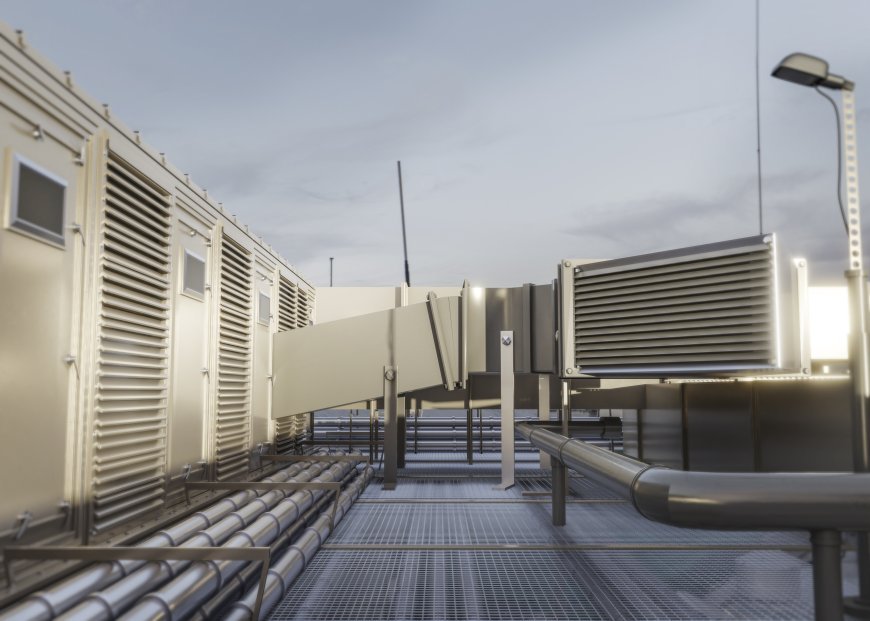
Existing buildings offer a major opportunity to improve energy performance without replacing entire structures. Offices, residential properties, hotels, hospitals, and retail facilities may operate for decades, even as their cooling equipment becomes less efficient or occupancy patterns change. Energy-efficient cooling solutions can help building owners reduce avoidable electricity use, improve equipment reliability, and maintain comfortable indoor conditions. Carefully selected energy efficient cooling systems can also support wider environmental objectives when improvements are based on measured performance rather than assumptions about potential savings.
Retrofitting requires a different approach from designing cooling infrastructure for a new building. Existing equipment, available space, electrical capacity, pipework, controls and building use all influence the options available. A successful project therefore begins with an assessment of how the building operates today.
Understanding the Existing Cooling System
Reviewing equipment and operating conditions
Before selecting replacement equipment, facility managers should document the existing system. This includes chillers, pumps, air-handling units, cooling towers where applicable, thermostats, sensors, ductwork and distribution pipes.
Equipment age matters, but it should not be the only factor in the decision. A relatively old system may still perform adequately with proper maintenance, while newer equipment may consume excessive energy because of poor controls, unsuitable sizing, or inadequate commissioning.
Maintenance records can reveal recurring faults, refrigerant issues, frequent shutdowns and components approaching the end of their service life. Electricity bills and operating logs can help identify periods of unexpected consumption.
Conducting an energy audit
An energy audit examines how a building uses energy and identifies practical opportunities for improvement. For cooling systems, the audit should consider operating schedules, indoor temperature settings, equipment loads, maintenance practices and the relationship between cooling demand and electricity consumption.
Where suitable metering is available, engineers can compare energy use during different operating periods. When interpreting the results, they should account for changes in occupancy, weather, and building activity.
An audit can also identify problems unrelated to the main cooling equipment. Poor insulation, uncontrolled air leakage, excessive solar heat gain, and inefficient lighting can increase cooling demand even when the mechanical system operates correctly.
Prioritising Improvements
Start with maintenance and controls
Not every improvement requires a major capital investment. Cleaning heat-transfer surfaces, replacing clogged filters, repairing leaks, calibrating sensors and correcting faulty control settings can improve performance when these issues are present.
Control systems deserve particular attention. Incorrect temperature readings, simultaneous heating and cooling, poorly configured schedules and unnecessary operation outside occupied hours can waste energy.
Implement these measures only after identifying the underlying problem. Maintenance teams should record the work performed and verify whether the expected improvement occurred.
Evaluate equipment replacement
When equipment is inefficient, unreliable or nearing the end of its useful life, replacement may be appropriate. Engineers should compare available models using performance data under conditions similar to those expected in the building.
A machine's rated efficiency does not necessarily reflect its performance throughout the year. Actual consumption depends on outdoor temperatures, part-load operation, water temperatures, maintenance and the efficiency of supporting equipment.
Replacement decisions should also consider refrigerant requirements, compatibility with existing systems, electrical capacity, noise, maintenance access, and the availability of trained service personnel.
Avoid oversizing
Oversized equipment can increase initial costs and may operate inefficiently when the cooling load is much lower than its design capacity. Undersized equipment, meanwhile, may struggle during periods of high demand.
A revised load calculation should account for changes made to the building envelope, occupancy and internal equipment. This helps determine whether the existing capacity remains appropriate before purchasing new equipment.
Improving the Building Envelope
Reducing heat entering the building
The amount of heat entering a building directly affects its cooling requirements. External shading, suitable glazing, roof insulation, and improved airtightness can reduce heat gains where these measures suit the building's construction.
Window films or glazing upgrades may help in certain circumstances, but their suitability depends on the existing glass, solar exposure, daylight requirements and potential effects on occupants. Assess any intervention for compatibility with the building and relevant safety requirements.
Roof treatments may also be considered where solar heat gain is a significant issue. Evaluate the expected benefit alongside durability, maintenance, water management, and the building's existing roof design.
Improving lighting and internal equipment
Lighting, computers, kitchen appliances and other electrical equipment generate heat. Replacing inefficient lighting and managing equipment use can reduce internal heat loads.
Occupancy sensors and scheduling controls can help limit unnecessary operation in suitable spaces. However, controls must preserve required ventilation, indoor air quality and safety conditions.
These measures can reduce the load that the cooling system must handle. Assess their value alongside mechanical improvements rather than as unrelated projects.
Managing Retrofitting Work in Occupied Buildings
Planning around building operations
Cooling upgrades often take place while buildings remain in use. Work may need to be scheduled outside normal business hours or divided into stages to minimise disruption.
Facility managers should coordinate with occupants, contractors, maintenance teams and building owners before work begins. Plans should identify access restrictions, temporary cooling arrangements, safety requirements and expected service interruptions.
Hospitals, laboratories, and other specialised facilities may require additional safeguards because temperature control can be critical to health, safety, or equipment performance.
Commissioning after upgrades
Commissioning verifies that installed equipment and controls operate as intended. It should include checks of sensors, flow rates, pressure, temperature settings, alarms and operating sequences where applicable.
Contractors should provide operating instructions, maintenance requirements and relevant test records. Facility staff should understand how to operate the updated system and how to identify abnormal conditions.
Commissioning is especially important when new equipment connects to older infrastructure. Compatibility issues may otherwise reduce the benefits of the upgrade.
Measuring the Results
Establishing a baseline
Before work begins, building owners should record relevant energy consumption and operating conditions. Where possible, measurements should cover a representative period and account for occupancy, weather and operating hours.
After the retrofit, use comparable indicators to assess performance. Useful measures include electricity consumed by cooling equipment, total building energy use, indoor temperature stability, equipment downtime and maintenance frequency.
A reduction in total electricity consumption should not automatically be attributed to the retrofit if occupancy or operating hours have also changed. Reporting should explain these factors clearly.
Evaluating financial value
The financial assessment should include installation costs, equipment replacement, maintenance, energy consumption, and the upgrade's expected service life. Some projects may also involve financing costs, temporary disruption or improvements to electrical infrastructure.
Simple payback calculations can provide an initial indication, but lifecycle cost analysis offers a more complete picture. It considers costs over a defined period and can help compare options with different purchase prices and operating expenses.
Common Challenges and How to Address Them
Retrofit projects may encounter limited plant-room space, ageing electrical systems, incomplete maintenance records or uncertainty about actual demand. Identify these issues during the assessment stage rather than after ordering equipment.
Phased implementation can help spread investment and reduce disruption. However, individual phases should be designed to work with the existing system and with any future improvements.
Building owners should also consider spare-parts availability and the competence of maintenance providers. Equipment that is difficult to service may create operational challenges even if its initial performance specifications are attractive.
Final Thoughts
Retrofitting offers building owners a practical opportunity to improve cooling performance while extending the useful life of existing assets. The strongest results usually come from combining reliable maintenance, suitable controls, reduced heat gains and carefully selected equipment upgrades.
The value of energy efficient cooling solutions should be assessed using real operating data, clear objectives and a realistic financial analysis. Similarly, energy efficient cooling systems deliver their intended benefits only when they are correctly sized, commissioned and maintained.
A systematic approach helps organisations distinguish essential improvements from unnecessary expenditure. By establishing a baseline, prioritising the most significant problems and measuring results after implementation, building owners can make better-informed decisions about cooling upgrades and long-term building performance.
What's Your Reaction?
 Like
0
Like
0
 Dislike
0
Dislike
0
 Love
0
Love
0
 Funny
0
Funny
0
 Angry
0
Angry
0
 Sad
0
Sad
0
 Wow
0
Wow
0