



























How a Capacitive Load Bank Helps Test Power Systems and Improve Reliability
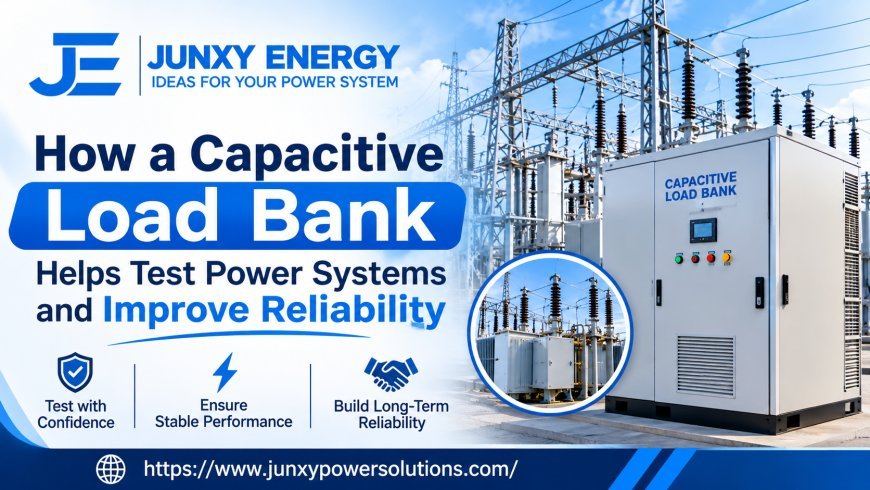
Backup power systems are only useful if they work when needed. Generators, UPS units, and inverters may sit unused for months, but when the main supply fails, they must respond immediately. Testing them under realistic conditions helps identify performance issues before an actual power outage. A capacitive load bank makes this possible by simulating electrical loads and helping evaluate how power equipment handles changing demands.
This article explains what it does, where it fits, and how to use it well.
What Is a Capacitive Load Bank?
A capacitive load bank is a test unit that applies a leading power-factor load to a power source. It uses capacitors to do this. The source has to push power into the load while the current runs ahead of the voltage.
Most people know the plain resistive load bank, which turns power into heat. Capacitive units work differently. They mimic the kind of load that long cables, power factor correction equipment and some electronic devices create on real sites.
Resistive, Inductive and Capacitive: The Quick Difference
● Resistive load: Uses only real power. It tests the engine and the basic output.
● Inductive load: Creates a lagging power factor. It mimics motors and transformers.
● Capacitive load: Creates a leading power factor. It tests how a source behaves when the current leads the voltage.
A capacitive unit is reactive only. You usually pair it with a resistive bank to build the exact load profile you need.
Why Leading Power Factor Testing Matters
Many people test only at lagging power factor, because motors are so common. But some sites run into leading loads. Data centers, large cable runs and banks of power factor correction capacitors can all push a system that way.
A generator may not handle a leading load well. Its voltage regulator can struggle, and the voltage can rise out of control. A capacitive load bank lets you see this problem in a safe test instead of during a real outage.
What the Test Can Show
● How well the generator voltage regulator copes with a leading load
● Whether the voltage stays steady or drifts
● How the UPS or inverter reacts to a changing power factor
● Early signs of wear in the equipment
● Whether the unit really meets its stated specification
Where You Can Use It
You can use this kind of testing on many types of power equipment:
● Diesel and gas generators
● UPS systems and battery banks
● Inverters and PV systems
● Transformers and switchgear
● Data center power systems
New equipment also needs acceptance testing. A load test proves the output matches the contract before you sign off. Tests after repairs or overhauls work the same way.
How the Testing Works
The process is simple when you plan it well. Here is a typical flow:
- Set the goal. Decide what you want to prove, such as rated output or voltage stability.
- Connect the load bank. A trained technician wires it to the power source with safe cables and protection.
- Mix the load. Combine resistive, inductive and capacitive steps to reach the power factor you need.
- Raise the load in steps. Move up slowly and record voltage, current and frequency at each step.
- Watch and record. Track temperature, noise and any alarms during the run.
- Review the results. Compare the data with the equipment specification and write up a report.
Many modern units let you control the steps from a PC or a touch panel. That makes it easier to repeat tests and keep clean records.
Benefits for Your Business
Regular testing costs less than a failed backup system. Here is what you get:
● Fewer surprises. You find weak points before an outage does.
● Less downtime. Small faults get fixed early.
● Longer equipment life. Running a generator under load also helps prevent wet stacking.
● Better compliance. Many codes call for regular loaded tests, such as 30 to 60 minutes each year for diesel generators.
● More confidence. You know the system works because you saw it work.
What to Check Before You Choose One
Not every unit fits every job. Before you buy or rent, ask these questions:
● What voltage and phase does your system use?
● How many kVAR do you need to test?
● Do you need fixed steps or fine adjustment?
● Will you use it on site, or in a lab or factory?
● Does it have solid safety features, such as overload and overheat protection?
● Can it pair with resistive and inductive banks for full RLC testing?
A well-built capacitive load bank should match your voltage, handle your target load and give accurate readings. Cheap units that miss any of these can waste your time and give you wrong data.
Why Work With Junxy Energy
Junxy Energy is a turnkey power solutions provider based in Shenzhen, China. The team manufactures resistive, inductive and reactive AC load banks, along with RLC systems, for testing UPS units, generators, transformers, PV systems and inverters. Its product range includes compact 40A units and high-capacity programmable load banks up to 2500kW.
For rack-mounted applications, Junxy also offers rack mounted load bank solutions designed for convenient integration and power system testing. If your site needs a capacitive load bank or a custom test setup, the Junxy Energy team can help you select the right capacity and features. Download the product catalogue from the website or contact the sales team for expert guidance.
Final Thoughts
Your backup power only counts when the main supply fails. Testing with a capacitive load bank shows how your generator, UPS, or inverter behaves under leading power factor loads, and it shows you before it becomes a problem. Plan regular tests, use the right equipment and keep good records. Your power system will be ready when you need it.
What's Your Reaction?
 Like
0
 Dislike
0
 Love
0
 Funny
0
 Angry
0
 Sad
0
 Wow
0