























How to Choose a Motorcycle Dash Cam: Complete Guide
This complete guide explains how to choose a motorcycle dash cam based on your riding style, budget, and technical needs. It covers the difference between dedicated dash cams and action cameras, the features that matter most, installation considerations, and common mistakes to avoid.

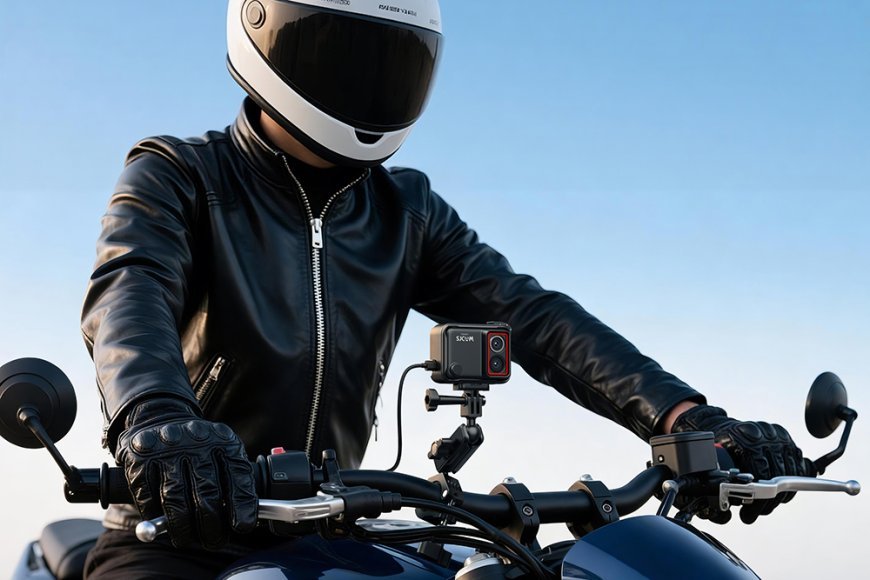
Motorcycle dash cams are no longer a niche accessory. Riders use them to document collisions, protect themselves against false claims, review close calls, and record scenic journeys. But the market is crowded, and not every camera marketed as “action-ready” is suitable for motorcycle use. A camera that works well on a bicycle or hiking trail may struggle with vibration, weather, power management, and continuous recording on a motorcycle.
This complete guide explains how to choose a motorcycle dash cam based on your riding style, budget, and technical needs. It covers the difference between dedicated dash cams and action cameras, the features that matter most, installation considerations, and common mistakes to avoid.
1. Start With Your Riding Style and Purpose
The best motorcycle dash cam depends on how you ride. A daily commuter needs reliable continuous recording, quick startup, and good low-light performance. A touring rider may value long recording times, GPS tagging, and easy file transfer. An adventure rider needs weather resistance, shock resistance, and secure mounting. A sportbike rider may prioritize a compact, low-profile setup that does not create wind drag.
Ask yourself whether you want evidence recording, travel footage, or both. If you only need occasional clips, a versatile action camera may be enough. If you want automatic recording every time you turn on the ignition, a dedicated motorcycle dash cam system is usually more convenient.
2. Dedicated Dash Cam vs. Action Camera
Dedicated motorcycle dash cams are designed for vehicle use. They often wire into the bike’s electrical system, start recording automatically, support loop recording, and use compact cameras mounted at the front and sometimes the rear. They are convenient for riders who want a set-and-forget solution.
Action cameras are more flexible. They can record riding footage, travel memories, and off-bike activities. However, they may require manual start, battery changes, and additional mounting hardware. Some action cameras support dash-cam-style features such as loop recording, but you should verify this before buying.
Neither option is inherently better. A dedicated system is ideal for evidence-focused riders. An action camera is better for riders who want one device for multiple purposes.
3. Video Quality: Look Beyond the Resolution Number
Resolution matters, but it is not the whole story. A 4K camera with a poor sensor may produce worse footage than a well-tuned 1080p camera, especially at night. For motorcycle dash cams, the ability to read license plates and capture road details is more important than cinematic quality.
Consider these factors:
- Resolution: 1080p is a practical minimum. 2K and 4K provide more detail but require more storage and processing power.
- Frame rate: Higher frame rates help with fast motion, but they also increase file size. 30 fps is usually sufficient for road recording; 60 fps can be useful for action footage.
- Low-light performance: Many incidents happen at dawn, dusk, or night. Check sample night footage before buying.
- Lens quality: A good lens with controlled distortion produces more usable evidence than an overly wide, distorted image.
- Bitrate: Higher bitrate generally means better detail, but it fills memory cards faster.
Do not choose a camera solely because it advertises 8K or 4K. Check real-world footage, especially in motion and at night.
4. Field of View and Distortion
A wide field of view helps capture adjacent lanes and peripheral hazards. However, extremely wide lenses can distort the image and make distant license plates difficult to read. A balanced field of view is usually better for evidence. If the camera offers multiple fields of view, test them to see which provides the best detail.
5. Image Stabilization and Mounting
Motorcycles produce constant vibration and sudden shocks. Electronic image stabilization can make footage smoother and more readable. Mechanical mounting also matters. A rigid, well-damped mount reduces shake and prevents the camera from drifting out of alignment.
Handlebar mounts are common, but they can transmit vibration. Windscreen and fairing mounts may be more stable on some bikes. Test different positions before finalizing your installation. The camera should not obstruct your view, interfere with controls, or create a safety risk.
6. Power and Automatic Recording
Power management is one of the biggest differences between a good and a frustrating motorcycle dash cam. Battery-powered action cameras require charging and manual operation. Hardwired dash cams can start and stop with the ignition, but installation must be done correctly to avoid battery drain.
Consider whether you want:
- Automatic recording when the bike starts
- A wired power connection
- A battery setup with easy charging
- Parking mode or motion detection
- A power bank or backup battery
For daily riders, automatic recording is a major convenience. For occasional riders, a battery-powered action camera may be simpler.
7. Loop Recording and Storage
Loop recording overwrites the oldest files when the memory card is full. This is essential for continuous dash-cam use. Without it, the camera stops recording when storage runs out.
Choose a high-endurance memory card designed for continuous video recording. Standard cards may fail under repeated write cycles. Format the card in the camera before use, and check footage regularly to ensure the system is working. Larger cards provide more recording time, but they should be matched to the camera’s supported capacity.
8. Weather Resistance and Durability
Rain, dust, and road spray are common on motorcycles. A camera that is not weather-sealed may fail quickly. If you use an action camera, a waterproof housing can help, but it may reduce audio quality or make controls harder to access. Check whether the camera is designed for exposed outdoor use and whether its ports and card slots are protected.
9. File Transfer and App Support
Reviewing footage should be easy. Wi-Fi transfer, a mobile app, or a removable memory card all make file management more convenient. A camera with a clear file structure and reliable app support saves time after an incident. GPS overlays can also be useful for showing speed, time, and location, but check local privacy rules before sharing footage.
10. Legal and Privacy Considerations
Recording laws vary by country and region. Some places restrict camera mounting, audio recording, or publishing footage. Riders should understand local rules before using motorcycle dash cams. If you share footage online, blur faces and license plates when appropriate.
11. Budget and Total Cost
The camera price is only part of the total cost. Consider mounts, memory cards, waterproof housings, wiring kits, and installation. A budget camera with a poor mount may cost more in the long run if it fails or produces unusable footage. Set a realistic budget that includes accessories and maintenance.
12. Test Before You Rely on It
After installation, test the camera in daylight, at night, and at highway speed. Check that license plates are readable at a reasonable distance. Confirm that the camera starts and stops correctly, that files are saved, and that the mount stays secure. Review footage after every few rides until you trust the setup.
Final Recommendation: SJCAM SJ30 Action Camera
If you want a compact, versatile camera that can serve as a motorcycle dash cam and an action camera, the SJCAM SJ30 8K Action Camera is a strong option to consider. It offers high-resolution recording in a portable form, making it suitable for riders who want to document commutes, road trips, and outdoor adventures with one device.
For motorcycle use, mount the SJCAM SJ30 securely, use appropriate weather protection, manage storage with a high-endurance memory card, and confirm that its recording and power settings suit your riding style. Before relying on it as a daily motorcycle dash cam, test the setup in real riding conditions and check that continuous recording, file saving, and mounting stability meet your needs. For riders seeking a flexible action camera that can also capture road footage, the SJCAM SJ30 is a practical and rider-friendly choice to explore.
What's Your Reaction?
 Like
0
 Dislike
0
 Love
0
 Funny
0
 Angry
0
 Sad
0
 Wow
0