


























How to Prepare for an Occupational Health Assessment in the UK
Learn how to prepare for an occupational health assessment in the UK, understand employee rights, workplace adjustments, confidentiality, and what to expect during your appointment.
Occupational health plays an important role in helping employees stay healthy, safe, and productive at work. In the UK, many employers use occupational health services to understand how an employee's health may affect their job and what support they may need. If you have been asked to attend an occupational health assessment, knowing what to expect can help you feel more confident.
An occupational health assessment is not something to fear. It is an opportunity to discuss your health concerns, explain any workplace challenges, and explore ways to make your working life easier. Understanding the process can help you prepare for the appointment and communicate your needs clearly.
What Is an Occupational Health Assessment?
An occupational health assessment looks at the relationship between an employee's health and their work. It may be arranged when an employee has been absent due to illness, is returning after a long period away, or needs support with a health condition.
The assessment may be carried out by an occupational health nurse, doctor, or another qualified professional. Depending on the situation, the appointment may take place in person, over the phone, or through a video call.
During the assessment, the professional may ask about your job duties, symptoms, working environment, and any difficulties you experience at work. The purpose is generally to understand your needs and advise your employer about suitable workplace support.
Why Do Employers Refer Employees to Occupational Health?
Employers may arrange occupational health assessments for several reasons. One common reason is long-term sickness absence. The assessment can help identify what support may be needed before an employee returns to work.
Other reasons include ongoing health conditions, workplace stress, repeated sickness absence, or concerns about whether an employee can safely perform certain duties.
Occupational health professionals may also recommend reasonable adjustments, such as changes to working hours, temporary changes in duties, additional breaks, or adjustments to the workplace.
These recommendations depend on the employee's circumstances, the nature of their role, and the professional's assessment. Occupational health advice does not automatically mean that every recommendation must be implemented in exactly the same way.
How Should You Prepare for an Occupational Health Appointment?
Preparation can help you explain your situation clearly and make the most of your appointment.
Start by thinking about how your health affects your daily work. Consider whether you experience pain, tiredness, difficulty concentrating, sleep problems, anxiety, or other challenges that affect your ability to complete certain tasks.
It may also help to prepare answers to questions such as:
- Which work activities are difficult for you?
- Are your symptoms affecting your attendance or performance?
- What tasks can you complete comfortably?
- Would any workplace changes help you manage your responsibilities?
- Do you need a phased return after sickness absence?
Be ready to explain both your difficulties and the tasks you can still manage. This gives the occupational health professional a clearer picture of your situation.
You can also write down any questions you want to ask before the appointment. Having notes available may help you remember important details.
What Should You Say During an Occupational Health Assessment?
Honest and clear communication is important during an occupational health assessment. Explain your symptoms in practical terms and describe how they affect your work.
For example, instead of saying that you cannot manage your job at all, explain which duties cause problems and why. If you struggle with long periods of standing, describe how long you can comfortably stand and whether regular breaks help.
Avoid guessing or exaggerating your symptoms. At the same time, do not minimise genuine difficulties simply because you want to return to work quickly or avoid worrying your manager.
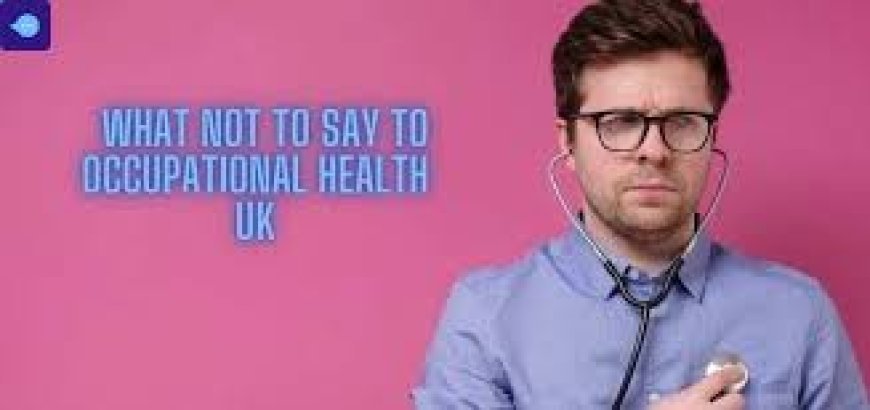
It is also useful to understand what not to say to occupational health. Knowing which communication mistakes to avoid can help you explain your circumstances accurately and reduce unnecessary confusion during the assessment.
Remember that you do not need to use complicated medical terms. Clear examples of how your health affects your daily duties are often more helpful than vague statements.
What Information Can Occupational Health Share With Your Employer?
Many employees worry about confidentiality when attending an occupational health appointment. It is important to understand what information may be shared and why.
An occupational health professional may prepare a report for the employer that focuses on fitness for work, possible workplace adjustments, and recommendations for supporting the employee.
The exact information shared depends on the circumstances, applicable confidentiality rules, the purpose of the referral, and relevant legal requirements. Consent and access arrangements may also be important, particularly when medical reports are involved.
Before the assessment, ask how the report will be prepared, who may receive it, and what information will be included. If you are unsure about confidentiality or consent, request a clear explanation before proceeding.
Can Occupational Health Recommend Workplace Adjustments?
Yes. Occupational health professionals may recommend adjustments to help employees manage health conditions while continuing to work, where appropriate.
Possible recommendations include flexible working hours, changes to physical duties, additional rest breaks, temporary home working, or a phased return following sickness absence.
Some employees may also need changes to equipment or their working environment. For example, an employee with back pain may benefit from an appropriate workstation assessment, while someone experiencing work-related stress may need a discussion about workload and support.
Employers should consider relevant recommendations in light of the employee's circumstances, the requirements of the role, and their legal obligations. Under the Equality Act 2010, reasonable adjustments may be required for eligible disabled employees.
What Happens After an Occupational Health Assessment?
After the assessment, the occupational health professional may provide a report with advice for the employer. This may include an opinion on fitness for work, suggested adjustments, or whether further assessment is appropriate.
The employer can then consider the recommendations and discuss possible next steps with the employee. Depending on the situation, this could involve a return-to-work meeting, a review of duties, or an agreed plan to monitor progress.
If you disagree with information in the report or believe important details are missing, ask about the available process for raising your concerns. You may also seek advice from your HR department, trade union representative, or an appropriate employment adviser.
Final Thoughts
Preparing for an occupational health assessment can make the process less stressful and help you communicate your needs with confidence. Understand the purpose of the appointment, prepare examples of your workplace challenges, and be honest about how your health affects your duties.
Employers also have an important role in creating a supportive workplace where employees feel comfortable discussing health concerns. Open communication, suitable adjustments, and access to the right support can help improve employee wellbeing and support a healthier working environment.
By approaching occupational health assessments with clear information and realistic expectations, employees and employers can work together to identify practical solutions that benefit both individual health and workplace performance.
What's Your Reaction?
 Like
0
Like
0
 Dislike
0
Dislike
0
 Love
0
Love
0
 Funny
0
Funny
0
 Angry
0
Angry
0
 Sad
0
Sad
0
 Wow
0
Wow
0