
























Sunrise Electric Car: The Story Behind the Solectria Sunrise EV
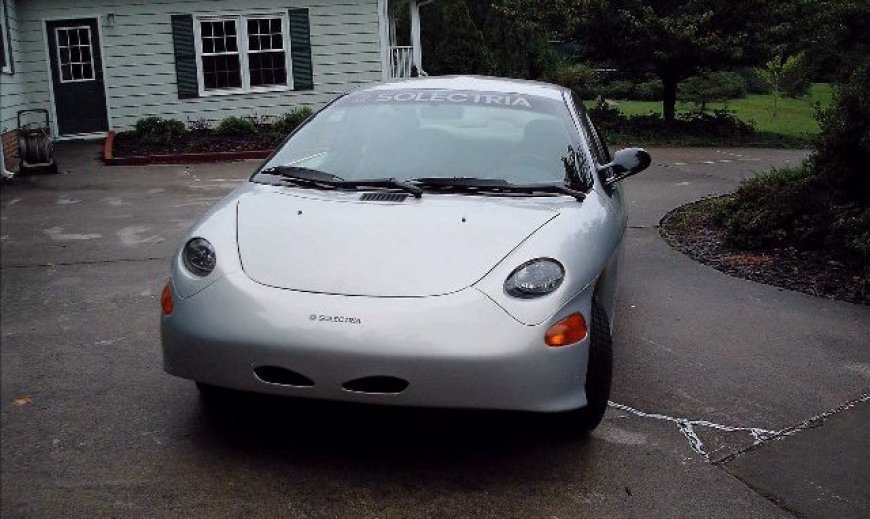
The Sunrise electric car represents an interesting chapter in the early development of highly efficient electric vehicles. Long before electric cars became common on American roads, the Solectria Sunrise showed how lightweight construction, thoughtful engineering, and good aerodynamics could make a major difference in electric vehicle performance.
The story is not simply about an old electric car. It is also about an engineering idea that continues to inspire people interested in efficient transportation, EV technology, and hands-on vehicle projects.
Where the Solectria Sunrise EV Began
The Solectria Sunrise EV was developed by Solectria Corporation with design ideas influenced by Amory Lovins' Hypercar principles. The concept focused heavily on reducing energy consumption rather than simply adding more battery capacity.
Its lightweight construction and aerodynamic shape helped the vehicle achieve remarkable efficiency for its time. Only a small number of Sunrise vehicles were produced, making the car an unusual and historically interesting part of electric vehicle development.
The project demonstrated an important principle: an efficient electric vehicle does not depend only on its motor or batteries. Weight, aerodynamics, drivetrain choices, and overall vehicle design can all have a major effect on how much energy a vehicle requires.
Why the Sunrise Design Still Matters
Modern EVs have benefited from decades of development, but some of the ideas behind the original project remain relevant. Reducing unnecessary weight and improving aerodynamic efficiency can help an electric vehicle use less energy.
The Sunrise project is particularly interesting because it approached electric transportation from an engineering and efficiency perspective. It provides a useful example for anyone researching the history of electric vehicles or exploring how older EV concepts can influence future projects.
It also highlights the value of understanding the individual systems inside an electric vehicle instead of treating the car as a single, finished product.
From an Original Car to a New EV Project
The story continued when Lee A. Hart acquired the last unfinished Sunrise from Solectria CEO James Worden. This became the starting point for the Sunrise EV2 project.
Rather than simply reproducing the original vehicle, the project explored the possibility of developing it as a kit car. The concept was similar to light aircraft kits, where builders could participate in construction and make choices about individual components.
The planned approach was modular. Builders could potentially select different motors, controllers, batteries, chargers, instrumentation, and interior components. Options could include AC or DC systems and different battery technologies.
This approach also reflects the project's interest in making electric vehicle technology more understandable, accessible, and adaptable for hands-on builders.
How Sunrise EV Supports Electric Vehicle Projects
Sunrise EV is more than a page about one historic vehicle. Its resources document practical electronics and EV engineering projects connected to battery systems, motor controllers, and other components.
The website includes technical documentation covering projects such as battery testers, battery balancers, the Batt-Bridge out-of-balance alarm, the Zener-Lamp Regulator, and other electric vehicle-related circuits.
These resources can be useful to hobbyists, researchers, and builders who want to understand how individual EV systems work. The site also provides information about the Sunrise development project, photographs, videos, technical documents, and related experimental work.
For people researching an older electric vehicle or developing their own project, this type of documentation can provide valuable technical context rather than just historical background.
What the Sunrise Story Teaches About EV Development
The history of the Sunrise shows that electric vehicle innovation did not begin with today's mass-market models. Earlier projects were already exploring efficiency, lightweight construction, alternative power systems, and builder-focused engineering.
It also shows why documentation matters. Preserving design information, testing methods, photographs, and technical notes can help future builders understand what earlier EV projects attempted and why certain engineering choices were made.
Conclusion
The Sunrise electric car remains an intriguing example of early electric vehicle engineering and efficiency-focused design. From the original Solectria project to the ongoing EV2 concept and technical resources maintained by Sunrise EV, its story connects automotive history with hands-on experimentation.
Readers interested in the Solectria Sunrise EV, vintage electric vehicles, or practical EV electronics can explore Sunrise EV's project documentation, technical resources, photos, and videos to learn more about the engineering behind this unusual vehicle.
What's Your Reaction?
 Like
0
Like
0
 Dislike
0
Dislike
0
 Love
0
Love
0
 Funny
0
Funny
0
 Angry
0
Angry
0
 Sad
0
Sad
0
 Wow
0
Wow
0