























Technology Changing the Way Saudi Businesses Manage Their Finances
Explore how digital technology is changing financial management in Saudi Arabia through smart accounting software, automation, e-invoicing and cloud solutions.
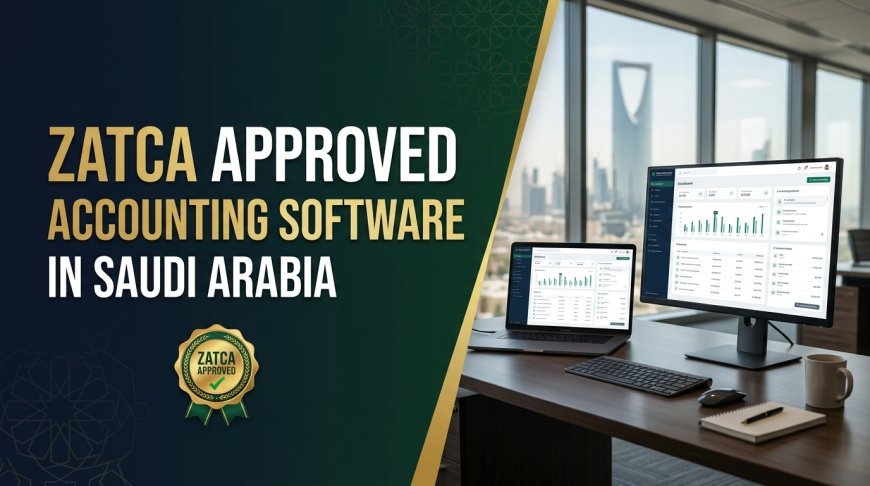
Managing business finances involves much more than recording sales and checking expenses. Companies need to monitor cash flow, prepare tax records, manage invoices, track payments, and make decisions based on accurate financial information. Choosing ZATCA approved accounting software in Saudi Arabia is therefore an important consideration for businesses looking to improve their financial processes and meet local e-invoicing requirements. The right accounting system can bring different financial activities together, reduce manual work, and help business owners maintain better control over their operations.
Financial management in Saudi Arabia has changed considerably as companies adopt digital tools for everyday tasks. Many businesses that once depended on spreadsheets, paper records, and separate applications are moving towards connected accounting platforms. These systems make it easier to review transactions, prepare reports, and manage financial information without relying on disconnected records.
How Technology Is Changing Financial Management in Saudi Arabia
Traditional accounting often involved employees entering transactions manually, organizing receipts, preparing reports, and checking figures across multiple files. This approach could work for a small business with limited transactions, but it became difficult as operations expanded.
For example, a company managing several branches might receive sales information from different locations. Its finance team would then need to collect the records, compare payments, update expenses, and prepare financial summaries. If the systems were not connected, the same information might be entered more than once.
Digital Accounting has made these processes easier to manage. Modern accounting platforms can record transactions, organize financial data, and connect with other business applications. Employees can review updated information, while managers can use reports to make decisions about expenses, sales, and future requirements.
Technology does not replace the need for qualified accounting professionals. Instead, it helps them spend less time on repetitive administrative tasks and more time reviewing financial performance.
Why Accounting Software Has Become Important for Saudi Businesses
Accounting Software provides a structured way to manage financial activities. Instead of maintaining separate records for every transaction, businesses can use one system to organize important information.
1. More Accurate Financial Records
Manual data entry can lead to mistakes, especially when employees handle large numbers of transactions. Incorrect amounts, duplicate entries, and missing records can affect financial reports.
Accounting software can reduce these problems by using predefined account categories, transaction records, and automated calculations. When connected to sales and payment systems, it can also receive information directly rather than requiring employees to enter every detail again.
However, the quality of financial records still depends on accurate information and proper system configuration. Businesses should review entries regularly and make sure employees follow consistent accounting procedures.
2. Better Cash Flow Monitoring
A business can report strong sales and still experience financial difficulties if customers delay payments or operating expenses increase.
Accounting platforms help companies monitor incoming and outgoing money. Finance teams can review unpaid invoices, upcoming expenses, supplier payments, and available balances.
For example, a service company may use its accounting dashboard to identify customers with overdue invoices. Its team can follow up on those payments and plan upcoming expenses more carefully.
This makes Business Finance Management more organized and gives managers a clearer picture of the company's financial position.
3. Easier Financial Reporting
Preparing financial reports manually can take considerable time. Accounting systems can organize transaction information into reports that help businesses review income, expenses, assets, liabilities, and other financial details.
Depending on the software and its configuration, companies may be able to generate profit and loss statements, balance sheets, cash flow reports, and tax summaries.
These reports can help management identify spending patterns, compare business performance across periods, and plan future investments.
Understanding ZATCA E-Invoicing Requirements
For businesses operating in Saudi Arabia, accounting software selection should include a careful review of the country's electronic invoicing requirements.
The Zakat, Tax and Customs Authority (ZATCA) introduced its FATOORA e-invoicing system in two phases.
Phase One – Generation Phase: This phase became enforceable on December 4, 2021. Businesses subject to the e-invoicing regulation must generate and store electronic invoices through a compliant solution instead of relying on handwritten invoices or invoices created using ordinary text-editing and spreadsheet applications.
Phase Two – Integration Phase: This phase began on January 1, 2023, and is being introduced gradually through waves. Targeted taxpayers are notified by ZATCA at least six months before their integration date. The phase adds technical requirements, including integration with the FATOORA platform and the use of specified electronic invoice formats.
For businesses affected by Phase Two, the software must support the relevant integration and technical requirements. A system that only creates a printable invoice may not be sufficient.
What Does ZATCA Approved Accounting Software Actually Mean?
Many companies search for ZATCA approved accounting software in Saudi Arabia when comparing different providers. However, there is an important distinction between a software provider being listed in ZATCA's Solution Providers Directory and ZATCA formally approving a particular product.
ZATCA describes its directory as an indicative list of providers that have passed the qualification process for the relevant implementation phase. The authority also states that inclusion in the directory does not mean it has approved the solutions offered by those providers. Taxpayers may use another provider as long as the solution itself meets the applicable requirements.
For this reason, businesses should verify the actual compliance capabilities of the software. They should ask whether it supports their required phase, invoice formats, security features, and FATOORA integration where applicable.
The Role of Financial Automation in Daily Operations
Financial Automation helps businesses reduce repetitive work by allowing software to perform tasks according to predefined rules.
Consider a company that receives payments from customers throughout the day. Employees may previously have needed to record each payment, update the relevant invoice, and adjust the accounting records manually.
With suitable integrations, the accounting system can receive transaction information and update the relevant records automatically. Employees can then review exceptions rather than processing every routine transaction from the beginning.
Some common uses of financial automation include:
-
Recording sales and purchase transactions.
-
Calculating configured tax amounts.
-
Matching payments with outstanding invoices.
-
Sending reminders for overdue customer payments.
-
Organizing recurring expenses.
-
Preparing routine financial reports.
-
Updating account balances after approved transactions.
Automation can improve consistency, but businesses should establish approval controls for sensitive activities. Payments, refunds, journal entries, and adjustments may still require review by authorized employees.
Cloud Accounting and Access to Financial Information
Cloud Accounting allows businesses to use accounting applications hosted on cloud infrastructure. Authorized employees can access the system through an internet connection, depending on the provider's access controls and service arrangements.
This can be useful for companies with multiple branches or finance teams working from different locations. A manager may review financial reports remotely, while an accountant can update records without relying on a single office computer.
Cloud platforms may also reduce the need for businesses to purchase and maintain their own server infrastructure. Many providers handle software maintenance and infrastructure updates as part of their service.
Before choosing a cloud accounting solution, businesses should review several points:
-
Where financial and customer data is stored.
-
Which employees and external parties can access records.
-
What backup and recovery arrangements are available.
-
How the provider handles security incidents.
-
Whether the service meets applicable Saudi regulatory requirements.
-
How much the subscription may cost as the business grows.
Saudi businesses should also consider the Personal Data Protection Law (PDPL) when handling personal information. Using a cloud provider does not remove the business's responsibility to manage personal data appropriately.
How ERP Software Connects Different Business Activities
As companies grow, they may need more than a standalone accounting application. They might also need to manage inventory, purchasing, sales, human resources, and customer information.
This is where Enterprise Resource Planning (ERP) Software can help. An ERP system brings different business functions together through connected modules.
For example, when a retail company sells a product, its system may record the sale, update inventory, and send relevant financial information to the accounting module. The finance team can then review the transaction without collecting information separately from the sales department.
ERP Software can be particularly useful for companies with multiple branches, warehouses, or departments. However, implementation requires careful planning. Businesses should identify which processes need integration and avoid paying for modules they do not actually need.
Choosing the Right Accounting Software in Saudi Arabia
Not every business requires the same accounting features. A small service provider may need basic invoicing, expense tracking, and financial reports, while a larger company may require inventory management, payroll connections, multiple branches, and ERP integration.
Before selecting a solution, consider the following:
ZATCA E-Invoicing Compatibility
Check whether the software supports the requirements applicable to your business, including Phase Two integration if your company has been notified to join that phase.
Arabic and English Support
Businesses serving customers and employees with different language preferences may benefit from bilingual interfaces and document options.
Integration With Existing Systems
Check whether the accounting platform can connect with your sales, payment, inventory, and CRM systems. Good integration can reduce duplicate data entry.
Reporting and Financial Controls
Look for useful financial reports, user permissions, approval workflows, and a clear audit trail. These features help businesses maintain organized records and monitor changes.
Technical Support and Scalability
Consider the provider's support arrangements, software updates, pricing, and ability to handle increasing transaction volumes.
It is also sensible to test the software using real business scenarios before moving all financial records into the new system.
Measuring the Value of Digital Finance Solutions
Buying accounting software is only the first step. Businesses should regularly check whether the system is improving their financial processes.
Useful measures include the time required to prepare reports, the number of manual corrections, overdue customer payments, invoice processing time, and the accuracy of financial records.
For example, if employees still spend several hours every week transferring information between applications, the company may need better integration or improved workflows. If reports contain repeated errors, staff training or a review of accounting settings may be necessary.
Regular reviews help businesses make practical improvements instead of assuming that installing new software will solve every financial problem.
Moving Toward Smarter Financial Management
Technology is changing how Saudi businesses record transactions, manage invoices, monitor cash flow, and prepare financial reports. Digital Accounting, Cloud Accounting, and ERP Software give companies more ways to organize their financial activities and reduce unnecessary manual work.
For businesses searching for ZATCA approved accounting software in Saudi Arabia, compliance should be one of the first things to verify, but it should not be the only consideration. The software must also fit the company's size, accounting processes, integration needs, and security requirements.
When businesses select a suitable system and configure it properly, they can maintain more organized records, improve financial visibility, and make better decisions. The real benefit comes from using technology to support accurate accounting and responsible financial management as the company grows.
What's Your Reaction?
 Like
0
 Dislike
0
 Love
0
 Funny
0
 Angry
0
 Sad
0
 Wow
0