
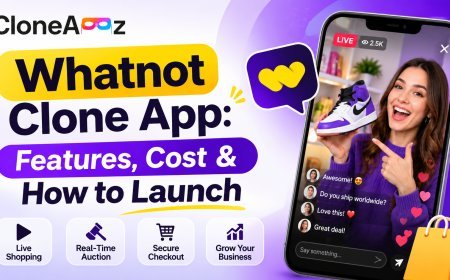






















Whatnot Clone App: Features, Cost & How to Launch
Explore Whatnot Clone App features, development cost, business models, and launch steps to build your own live shopping and auction platform.

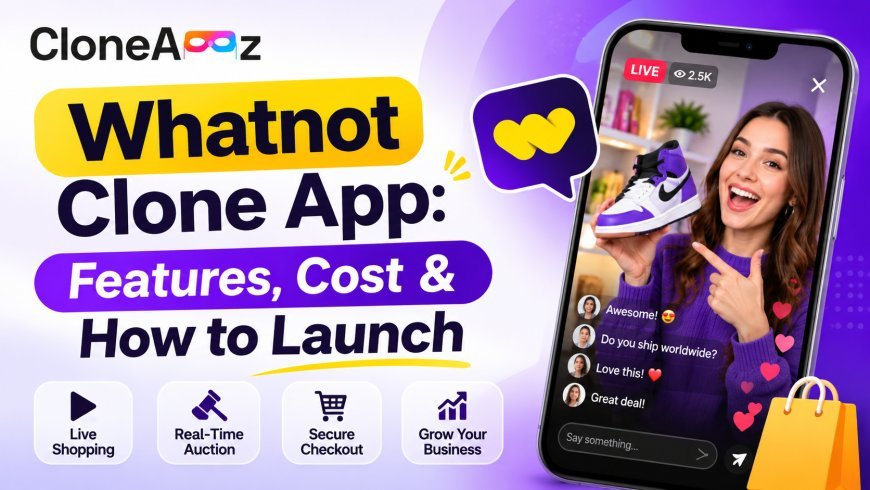
Whatnot Clone App: Features, Cost & How to Launch
Live shopping is changing the way people buy and sell products online. Buyers can watch live videos, ask questions, and place bids in real time. Sellers can show their products and connect with buyers directly.
This trend has created new business opportunities for startups and entrepreneurs. Many businesses now want to build apps like Whatnot to enter the live shopping market.
A Whatnot Clone App is a ready-made or custom-built platform based on the core idea of live selling and online auctions. It lets sellers host live shows, display products, and sell items through real-time bidding.
In this guide, we will explore its features, development cost, business model, and launch process.
What Is a Whatnot Clone App?
A Whatnot Clone App is a live shopping and auction platform. It connects sellers with buyers through live video sessions.
Sellers can display products during a live show. Buyers can ask questions, follow sellers, and place bids. They can also purchase products through a simple checkout process.
The app can support many product types, such as:
-
Fashion and clothing
-
Sneakers and shoes
-
Collectibles and trading cards
-
Electronics and gadgets
-
Toys and accessories
-
Beauty and lifestyle products
A business can use this model to create its own live commerce platform. It can also choose a specific niche to reach the right audience.
How Does a Whatnot Clone App Work?
A live shopping app follows a simple process. Both sellers and buyers can use the platform with ease.
1. User Registration
Users sign up with their email, phone number, or social account. They can create a buyer or seller profile.
2. Seller Setup
Sellers add their store details, upload product images, and set prices. They can also plan live selling events.
3. Live Streaming
Sellers start a live video session and show their products. Buyers can watch the stream and interact with the seller.
4. Real-Time Bidding
Buyers place bids during live auctions. The app updates the bidding activity in real time.
5. Order Placement
When a buyer wins an auction or purchases an item, the app moves the order to checkout.
6. Payment and Delivery
Buyers pay through the available payment options. Sellers then ship the products and update the order status.
Key Features of a Whatnot Clone App
A successful live shopping app needs features that make buying and selling simple. Here are the main features to consider.
1. User Registration and Profiles
Users should be able to create accounts in a few steps. Profiles can show names, profile photos, order history, and seller details.
2. Live Video Streaming
Live streaming is the main feature of a Whatnot Clone App. Sellers can host live shows and display products in real time.
3. Real-Time Auction System
An auction system lets buyers place bids during live sessions. It should show the current bid and remaining time.
4. Product Listings
Sellers can upload product images, descriptions, prices, and stock details. Buyers can browse products before joining a live show.
5. Live Chat and Interaction
Buyers can ask questions and talk to sellers during a live stream. This helps create trust and improves user engagement.
6. Secure Payment Gateway
The app should support safe online payments. Buyers can pay for their orders through cards, wallets, or other supported methods.
7. Push Notifications
Notifications alert users about upcoming live shows, new products, auction updates, and order status.
8. Order and Shipping Management
Buyers can track their orders after payment. Sellers can manage orders, shipping details, and delivery updates.
9. Ratings and Reviews
Buyers can rate sellers and share feedback after a purchase. Reviews help new users make better buying decisions.
10. Admin Dashboard
The admin panel helps the business manage users, sellers, products, payments, and live sessions. It also helps track reports and platform activity.
Advanced Features to Make Your Live Shopping App Better
Basic features can help you launch your platform. Advanced tools can make it more useful as your business grows.
Some useful options include:
-
AI Product Recommendations: Suggest products based on user interests and activity.
-
Multi-Seller Support: Allow many sellers to host live shows.
-
Analytics Dashboard: Track sales, bids, views, and user activity.
-
Multi-Language Support: Reach buyers in different regions.
-
Seller Verification: Check seller details to improve platform trust.
-
Fraud Detection: Identify unusual activity and reduce fake bids.
-
Wishlist: Let users save products for later.
Choose features based on your target market and budget. You do not need every advanced feature on day one.
What Is the Cost to Develop a Whatnot Clone App?
The cost of a Whatnot Clone App depends on its features, design, technology, and development approach.
A simple live shopping app may cost less than a platform with advanced auctions and high-quality video streaming.
Here is an estimated development budget:
| App Type | Estimated Cost |
|---|---|
| Basic App | $10,000–$20,000 |
| Mid-Level App | $20,000–$45,000 |
| Advanced App | $45,000–$80,000+ |
These figures are planning estimates, not fixed market prices. Actual costs depend on the project scope and development team.
Other factors can affect the budget:
-
UI and UX design
-
Live video infrastructure
-
Real-time bidding technology
-
Payment gateway integration
-
Backend development
-
Security and testing
-
App maintenance and updates
A ready-made solution can help reduce the initial development time and cost. It can also give businesses a faster way to enter the market.
Business Models of a Whatnot Clone App
A live shopping platform can earn money in different ways. You can use one model or combine several options.
1. Commission on Sales
Charge sellers a small fee for every completed sale. This is a common way to earn revenue.
2. Seller Subscription
Offer monthly or yearly plans to sellers. Premium plans can include extra tools and features.
3. Featured Listings
Allow sellers to pay for better product visibility. This can help them reach more buyers.
4. Transaction Fees
Charge a small service fee on successful transactions. Make all fees clear before checkout.
5. Advertising Revenue
Offer paid promotions and banner ads to brands and sellers.
Choose a business model that works for your audience. Keep the pricing fair to attract sellers and buyers.
How to Launch Your Own Whatnot Clone App
Launching a live shopping platform takes planning. Follow these steps to build a strong starting point.
Step 1: Choose Your Niche
Decide what type of products you want to sell. You can focus on collectibles, fashion, electronics, or other categories.
Step 2: Research Your Market
Study your competitors and target audience. Find out what buyers want and what sellers need.
Step 3: Select Your Development Approach
You can build a custom app from scratch or choose a ready-made Whatnot Clone Script. Your choice depends on your budget, timeline, and feature needs.
Step 4: Plan the Main Features
Start with user accounts, live streaming, auctions, payments, and order management. Add advanced tools as your platform grows.
Step 5: Design the App
Create a clean and simple design. Make it easy for users to find live shows, browse products, and place bids.
Step 6: Test the Platform
Test video quality, payment flows, bidding speed, and app security. Fix issues before the public launch.
Step 7: Launch and Promote
Start with a small group of sellers. Promote your app through social media, online ads, and influencer partnerships.
Step 8: Improve the App
Collect user feedback and study app performance. Add new features based on real user needs.
Why Choose a Ready-Made Whatnot Clone Solution?
Building an app from scratch can take time and require a large budget. A ready-made solution offers another way to start.
It can provide core features such as live streaming, seller profiles, product listings, auctions, and payment integration.
With a customizable solution, businesses can:
-
Reduce initial development time.
-
Start with essential features.
-
Customize the app design and functions.
-
Add new features as the business grows.
-
Focus more on marketing and customer growth.
CloneAppz offers white label and clone app development solutions for businesses that want to launch digital platforms. Its team can help customize an app based on your business goals and feature needs.
Final Thoughts
The live shopping market offers new opportunities for startups and business owners. A Whatnot Clone App can help you build a platform where sellers showcase products and buyers shop through live videos and auctions.
The right features, pricing model, and launch plan can help create a strong foundation. Start with the features your users need most. Then improve the platform as your business grows.
If you want to enter the live commerce market, a ready-made or custom Whatnot Clone solution can be a practical starting point.
Frequently Asked Questions (FAQs)
1. What is a Whatnot Clone App?
A Whatnot Clone App is a live shopping and auction platform. It allows sellers to showcase products through live videos and buyers to purchase items or place bids.
2. How much does it cost to develop a Whatnot Clone App?
The estimated cost can range from $10,000 to $80,000 or more. The final price depends on features, design, technology, and customization.
3. What features should a Whatnot Clone App have?
Important features include live streaming, real-time bidding, product listings, user profiles, live chat, payment gateways, notifications, and order management.
4. How does a live auction app make money?
A live auction app can earn through sales commissions, seller subscriptions, transaction fees, featured listings, and advertising.
5. Can I customize a Whatnot Clone Script?
Yes. A customizable solution can include your brand name, logo, app design, payment options, and business-specific features.
6. How long does it take to launch a Whatnot Clone App?
The timeline depends on the project scope. A ready-made solution may take less time than building a fully custom platform from scratch.
7. Is a Whatnot Clone App good for startups?
Yes. It can be a useful business idea for startups interested in live commerce, online auctions, and social shopping. Market research and a clear business plan are important before launch.
What's Your Reaction?
 Like
0
 Dislike
0
 Love
0
 Funny
0
 Angry
0
 Sad
0
 Wow
0