




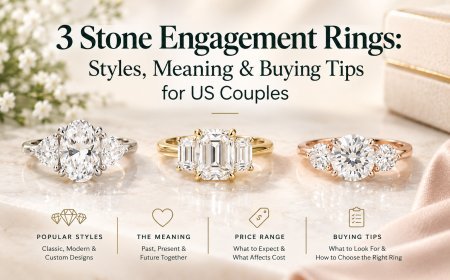











3 Stone Engagement Rings: Styles, Meaning & Buying Tips for US Couples
Discover 3 stone engagement rings for US couples. Explore their symbolism, popular designs, diamond options, and practical tips for choosing the right ring.

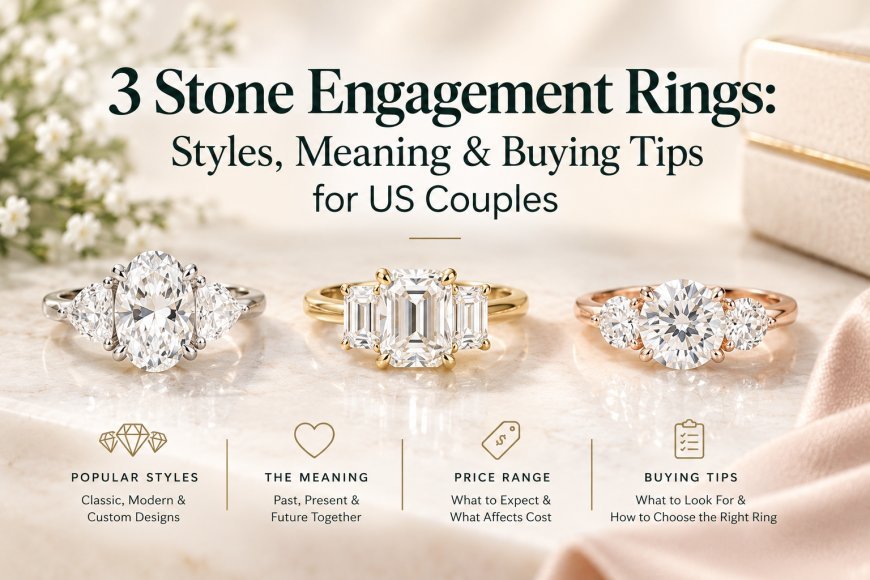
An engagement ring should reflect the story two people share, not just current jewelry trends. That is one reason 3 stone engagement rings continue to attract couples across the United States. With a central gemstone framed by two complementary stones, these rings combine visual balance, personal meaning, and plenty of room for customization.
Whether you are shopping for a proposal, planning a surprise engagement, or choosing a ring together, understanding the symbolism, design options, and practical details can make your decision easier.
What Makes a Three-Stone Engagement Ring Special?
A three-stone engagement ring features a center gemstone and two side stones arranged along the band. The center stone usually serves as the focal point, while the side stones enhance the design and create a distinctive silhouette.
Unlike a solitaire ring, which emphasizes one gemstone, a three-stone design offers more opportunities to combine shapes, colors, and sizes. Couples can choose matching diamonds for a coordinated appearance or mix gemstones for a more personalized look.
For American couples comparing traditional and contemporary engagement rings, this setting offers a versatile alternative that can work with different budgets and individual styles.
What Is the Meaning Behind Three-Stone Engagement Rings?
The most widely recognized symbolism connects the three stones with the past, present, and future of a relationship.
- The past represents your journey: Shared experiences, meaningful memories, and the moments that brought you together.
- The present celebrates your commitment: The relationship, trust, and affection you share today.
- The future reflects your promises: The goals, adventures, and life you hope to build together.
Some couples interpret the stones as love, loyalty, and friendship. Others simply appreciate the balanced design without attaching a specific meaning to it.
There is no single interpretation that every couple must follow. The beauty of this ring style is that its symbolism can be personal, making it suitable for engagements, anniversaries, and other relationship milestones.
Which Three-Stone Engagement Ring Styles Are Popular?
The right design depends on the wearer's taste, preferred gemstone shape, and everyday lifestyle. These five options offer different ways to personalize a three-stone ring.
1. Round Diamond Rings for Timeless Appeal
Round brilliant diamonds are a classic choice for couples who appreciate traditional sparkle. Three round stones create a harmonious design that pairs well with platinum, white gold, yellow gold, and rose gold.
2. Oval Rings for a Modern Silhouette
An oval center stone creates an elongated appearance, while two smaller side stones add balance. This style suits couples looking for a contemporary design that still feels elegant and versatile.
3. Emerald-Cut Rings for Understated Sophistication
Emerald-cut gemstones feature long facets and broad flashes of light rather than the intense sparkle associated with brilliant cuts. Their clean geometry makes them an appealing choice for minimalist and vintage-inspired preferences.
4. Mixed-Gemstone Rings for Individuality
Combining a center diamond with sapphire or emerald side stones can introduce color and personal significance. Birthstones or favorite colors may also inspire the design, creating a ring that feels less conventional.
5. Lab-Grown Diamond Rings for Budget Flexibility
Lab-grown diamonds have essentially the same chemical composition and crystal structure as mined diamonds. Their pricing can make certain designs more accessible, although savings vary by retailer and stone specifications. Compare the quality and total price of the complete ring before making a decision.
How Should You Buy a Three-Stone Engagement Ring in the USA?
Choosing a beautiful design is only part of the process. These practical considerations can help you purchase with confidence.
Establish Your Budget First
Decide on a comfortable spending limit before visiting jewelry stores or browsing online collections. Engagement rings are available at a wide range of prices, and there is no universal spending formula that determines the value of your commitment.
Compare complete-ring prices rather than looking at the center stone alone. The side stones, precious metal, setting, and craftsmanship all contribute to the final cost.
Compare the Four Cs of Diamonds
When purchasing diamond rings, understand the four Cs: cut, color, clarity, and carat weight.
Cut influences a diamond's light performance, color describes its body color, clarity assesses internal and external characteristics, and carat measures weight rather than physical dimensions alone.
In a three-stone setting, examine how the gemstones look together. Matching color and visual proportions can create a more cohesive appearance, even when the stones have different shapes.
Select a Metal That Fits Everyday Life
Platinum offers durability and a naturally white appearance, while yellow gold creates a warm, traditional look. White gold provides a bright finish, and rose gold adds a subtle pink tone.
Consider maintenance requirements, allergies or metal sensitivities, and the wearer's existing jewelry before selecting a band.
Review Certification and Retailer Policies
For diamond purchases, request an independent grading report from a recognized gemological laboratory, such as GIA, where applicable. Verify which gemstone the report identifies.
Before buying online or in-store, review the return policy, resizing options, warranty coverage, shipping insurance, and conditions for custom orders. These details are particularly important when purchasing an engagement ring as a surprise.
Prioritize Comfort and Secure Settings
An engagement ring may be worn for many years, so comfort matters. Consider the setting height, band profile, and whether the stones could catch on clothing. Ask a qualified jeweler about prong security and maintenance, especially if the wearer has an active lifestyle. If you're exploring different styles, understanding what a three-stone engagement ring symbolizes can also help you choose a design that balances personal meaning with everyday wearability.
Are Three-Stone Engagement Rings Worth Considering?
Three-stone engagement rings are worth considering if you want a design that combines symbolic meaning with creative flexibility. They can feel traditional, contemporary, colorful, or understated depending on the gemstones and setting.
However, the best ring is not necessarily the one with the largest stones or the most elaborate design. It is the one that suits your partner's preferences, fits your budget, and feels comfortable enough for everyday wear.
Find a Ring That Tells Your Story
A three-stone engagement ring offers more than a distinctive arrangement of gemstones. It creates an opportunity to represent a couple's shared history, present commitment, and hopes for the future.
From classic round diamonds to colorful gemstone combinations, the right design comes down to personal meaning, thoughtful craftsmanship, and a realistic budget. Take time to compare options, ask informed questions, and choose a ring that feels authentic to your relationship.
Frequently Asked Questions
Do three-stone engagement rings cost more than solitaire rings?
They can cost more because they include additional gemstones, but the final price depends on total carat weight, stone quality, metal, and craftsmanship. Smaller side stones and alternative gemstones may help control the budget.
Can a three-stone engagement ring have different-shaped stones?
Yes. A round center diamond with tapered side stones, an oval center with round diamonds, or a combination of different gemstones can create a distinctive design. Ask your jeweler to assess the proportions before purchasing.
Are three-stone rings suitable for daily wear?
Yes, if the ring has a secure setting and is appropriate for the wearer's routine. Regular cleaning and professional inspections can help identify loose stones or worn prongs before they become bigger problems.
Should you choose natural or lab-grown diamonds?
Both are real diamonds with essentially the same chemical composition and crystal structure. Your choice may depend on budget, sourcing preferences, resale expectations, and the specific stones available. Compare grading information and retailer policies before deciding.
What's Your Reaction?
 Like
0
 Dislike
0
 Love
0
 Funny
0
 Angry
0
 Sad
0
 Wow
0