






















Press Release Distribution Pricing: Key Factors That Affect Cost
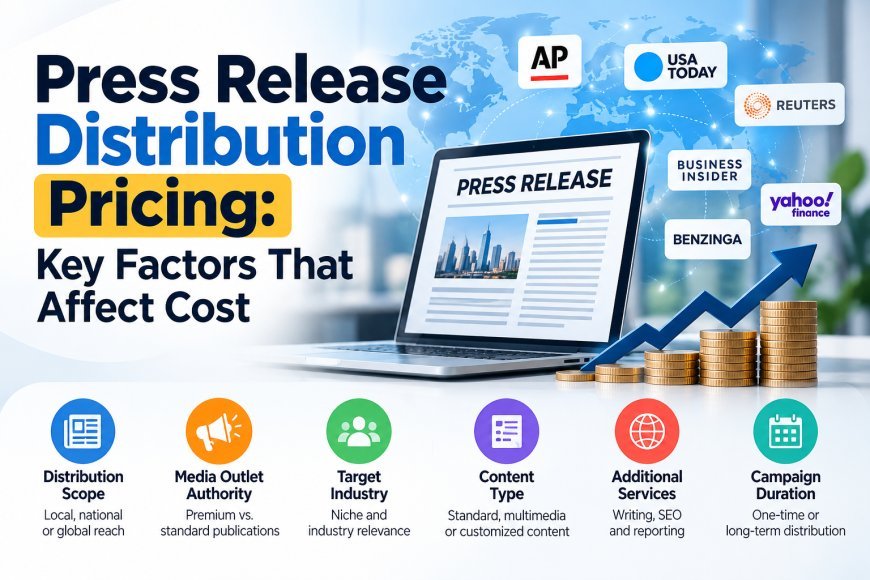
Business owners often ask a simple question before sending their first announcement: what is the press release distribution cost going to be? The honest answer is that it depends. One company may pay under a hundred dollars to push a short release through a basic online service. Another may spend well over a thousand for a release that goes to targeted journalists, includes images, and comes with a detailed performance report.
That wide gap is not random. Each price reflects a set of choices about reach, formatting, support, and measurement. Understanding those choices helps you compare quotes fairly, avoid paying for features you will never use, and set realistic expectations for what a release can achieve.
This guide walks through the main factors that shape the cost of a press release in the United States, what each one means in practice, and how to build a sensible budget. It draws on common industry practice and on the kinds of questions small and mid-sized businesses raise most often when they plan a distribution campaign, including those seen by teams at SP Tech Solutions, a company that works across SEO, web development, digital marketing, content writing, guest posting, and PR.
What You Are Actually Paying For
It helps to separate two things that people often lump together: writing a press release and distributing it. Writing is the craft of turning news into a clear, factual announcement. Distribution is the process of placing that announcement in front of the right audience, whether that is journalists, newsrooms, online news sites, or search engines.
Most pricing pages are about distribution. When you see a price, you are usually paying for access to a network, a delivery method, and a set of optional extras. The release itself, if written in-house, is often free. If you need it written or edited, that is typically a separate line item.
Keeping this distinction in mind makes comparisons easier. A low price may cover only the delivery of a finished document. A higher price may bundle writing, editing, and reporting together. Neither is automatically better; they simply serve different needs.
Factor 1: Distribution Reach and Network Size
Reach is usually the single biggest driver of the press release distribution cost. Services differ in how many outlets, journalists, and websites they connect to.
A smaller network may place your release on a handful of news aggregation pages and syndication partners. A larger one may feed it into established newswire feeds that are monitored by media professionals across the country. The larger the network, the more infrastructure the provider maintains, and that is reflected in the price.
It is worth asking what "reach" really means. Some providers count the number of sites where a release could appear. Others count the number of journalist contacts in their database. These are different measures, and neither guarantees that a reporter will read or cover your story. Treat reach figures as a description of potential exposure, not a promise of coverage.
Factor 2: Geographic and Industry Targeting
A national release costs more than a local or regional one in most pricing structures. Sending news to every state is not the same as sending it to a few metropolitan areas, and providers often price accordingly.
Industry targeting works the same way. If you want your announcement delivered to journalists who cover healthcare, finance, or technology specifically, the provider has to maintain and filter specialized lists. That targeting adds value, because a relevant journalist is far more likely to pay attention than a general newsroom inbox.
For a local business opening a second location, regional distribution may be all that is needed. For a software company announcing a funding round, a national, industry-focused send may make more sense. Matching the scope of distribution to the scope of the news is one of the easiest ways to control spending.
Factor 3: Word Count and Formatting
Many services include a base word count, often somewhere in the range of 400 to 600 words, and charge extra for going beyond it. Longer releases can cost more because they take up more space in the system and, in some cases, require additional review.
Formatting matters too. Hyperlinks, boilerplate sections, and structured contact details are usually included. But if you want multiple links, embedded elements, or special layouts, check whether those are part of the standard plan.
A practical tip: most effective releases are concise. Journalists skim. A tight 400 to 500 word announcement with a clear headline, a strong first paragraph, and a quotable statement typically performs better than a long, padded one, and it often keeps you within the base price.
Factor 4: Multimedia Add-Ons
Images, logos, videos, and infographics can make a release more engaging, but they often come with additional fees. Some providers include a single image in the base price and charge for each extra asset. Others offer multimedia packages at a higher tier.
Multimedia is worth considering when the story is visual, such as a product launch, a new facility, or an event. It is less necessary for announcements built around a personnel change or a policy update. Ask yourself whether the image helps a journalist understand or illustrate the story. If it does not, it may be an expense you can skip.
Factor 5: Writing and Editorial Support
Professional writing and editing is a separate cost for many businesses. Some teams write their own releases and only pay for distribution. Others prefer to hand the entire task to a writer who understands news structure, tone, and the accuracy standards journalists expect.
Editorial support can include drafting, proofreading, fact-checking, headline refinement, and adherence to style guidelines such as AP style. A release that reads like an advertisement is more likely to be ignored or rejected, so careful editing has real value even though it raises the total.
At SP Tech Solutions, content writing and PR are handled as related disciplines, and a recurring observation is that businesses underestimate how much clarity in the draft affects results. A well-structured release can make a modest distribution plan work harder than a poorly written one sent to a bigger audience.
Factor 6: Reporting and Analytics
Basic plans may give you little more than confirmation that your release was sent. More advanced plans provide reports showing where the release appeared, how many people viewed it, which links were clicked, and sometimes which journalists opened it.
If you are running one release a year to meet a company milestone, a simple confirmation may be enough. If you are building an ongoing communications program, detailed reporting helps you see what works and refine future announcements. The more data you want, the more the cost of a press release tends to rise.
A word of caution: reports can look impressive without proving business impact. Pageviews on a syndication site are not the same as press coverage or customer interest. Focus on metrics tied to your goals, such as referral traffic, branded search growth, and any media inquiries that follow.
Factor 7: Timing and Turnaround
Standard distribution often takes a day or two for review and scheduling. Faster turnaround, including same-day or time-specific release, may carry a premium. This matters for time-sensitive news, such as an announcement tied to an event, an earnings date, or an embargo that lifts at a specific hour.
If your news is not tied to a deadline, planning ahead is a simple way to avoid rush fees. Submitting a few days early also leaves room for revisions if a provider flags a formatting issue or requests clarification.
Factor 8: Pricing Model
Providers generally use one of three structures:
- Per-release pricing. You pay a set fee for each announcement. This suits businesses that issue releases only occasionally.
- Bundles or credits. You buy a block of releases at a lower per-release rate. This works for companies with a steady news flow.
- Subscriptions. You pay a monthly or annual fee that includes a set number of releases and other tools. These are common for organizations with active communications teams.
When comparing, look at the effective cost per release rather than the headline price. A bundle that looks expensive may be cheaper per announcement if you will actually use every credit. A cheap single release may become costly once optional extras are added.
Typical Price Ranges in the United States
Prices vary by provider and change over time, so any figures should be treated as rough guidance and verified against current rate cards. In general:
- Basic online distribution with limited reach often starts at under a hundred dollars per release.
- Mid-range national distribution with some targeting and multimedia commonly falls in the low hundreds to the low thousands.
- Premium wire services with broad reach, industry targeting, and detailed analytics can run higher, particularly when add-ons accumulate.
These ranges are not a measure of quality on their own. A higher price does not guarantee more coverage, and a lower price does not mean a release will fail. What matters is whether the service fits your goal.
Costs People Often Overlook
Beyond the quoted fee, a few expenses tend to appear later:
- Extra word count or links. Charges for exceeding the base limits can add up.
- Category or geographic upgrades. Adding regions or industries may change the price.
- Rush processing. Faster scheduling is rarely free.
- Revision fees. Some providers limit free edits after submission.
- Internal time. Gathering quotes, approvals, and assets takes staff hours that are easy to forget.
Asking for a full, itemized quote before you commit avoids most surprises.
How to Build a Practical Budget
Start with the goal. Are you trying to be found in search, reach industry journalists, support a product launch, or simply document a company milestone? Each goal points to a different level of spending.
Next, decide how much of the work you will handle yourself. If you can write a clear release in-house, you can direct more of the budget to distribution. If not, include writing and editing from the start.
Then compare at least three providers using the same criteria: network reach, targeting options, word count limits, multimedia policy, reporting detail, turnaround time, and total cost with the extras you actually need. Reading sample reports and reviews from other businesses can also give you a realistic sense of what to expect.
Finally, treat your first release as a test. Track the results, note what generated traffic or inquiries, and adjust. Many businesses find that a modest, well-targeted release outperforms an expensive, broad one.
Common Mistakes to Avoid
- Choosing on price alone. The cheapest option may not reach the audience that matters to you.
- Paying for reach you do not need. A local story rarely needs national distribution.
- Sending weak news. No budget can rescue an announcement with nothing newsworthy in it.
- Ignoring the writing. A promotional tone can undermine even a well-distributed release.
- Expecting guaranteed coverage. Distribution places news in front of people; journalists decide whether to cover it.
Frequently Asked Questions
Is the cost of a press release the same as the cost of distribution? Not always. The total may include writing, editing, multimedia, and reporting in addition to the distribution fee.
Does a higher price mean better results? Not necessarily. Results depend on the quality of the news, the clarity of the writing, and how well the audience matches your goal.
How often should a business send a release? Only when there is real news, such as a launch, partnership, award, or leadership change. Quality and relevance matter more than frequency.
Can a press release help with SEO? A release can increase visibility and may generate links and referral traffic, but it works best as one part of a broader content and communications plan.
Final Thoughts
The press release distribution cost is shaped by reach, targeting, formatting, multimedia, editorial support, reporting, timing, and pricing model. None of these factors is good or bad on its own. The right combination depends on your news, your audience, and your goals.
By asking for itemized quotes, comparing providers on equal terms, and starting with a clear objective, businesses can spend with more confidence and avoid paying for features that do not serve them. Teams like those at SP Tech Solutions often point out that a clear plan and a well-written announcement tend to matter as much as the size of the budget. Approach the process with realistic expectations, measure what happens, and let each release inform the next.
What's Your Reaction?
 Like
0
 Dislike
0
 Love
0
 Funny
0
 Angry
0
 Sad
0
 Wow
0