





























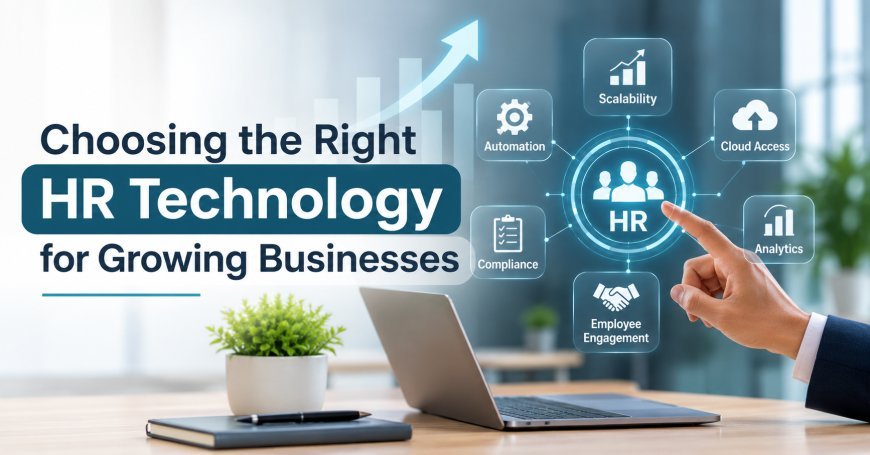
Choosing the Right HR Technology for Growing Businesses

As businesses expand, managing employees, payroll, attendance, and performance becomes increasingly complex. What works for a small team may not be sufficient when an organisation starts hiring more employees, opening new branches, or managing multiple departments. Relying on spreadsheets and manual processes can lead to errors, delays, and administrative challenges. Adopting the right HR technology helps businesses streamline these activities, improve accuracy, and create a more organised work environment. A reliable payroll management system can simplify salary calculations, automate statutory deductions, and ensure employees receive accurate payments on time.
1. Identify Your Business HR Requirements
Before selecting any HR technology, businesses should understand their current challenges and future requirements. Some organisations may need better attendance tracking, while others may struggle with payroll processing, employee records, or leave management.Start by identifying the processes that consume the most administrative time. Consider the number of employees, existing HR workflows, reporting requirements, and expected business growth. Choosing technology based on these requirements helps avoid unnecessary features and ensures the solution supports daily operations.
2. Look for Integrated HR Management Features
Managing different HR activities through separate applications can create confusion and duplicate work. Growing businesses should consider platforms that bring essential employee management functions together.
Important features to evaluate include:
-
Payroll Management: Automates salary calculations, deductions, payslips, and payroll processing.
-
Attendance Management: Tracks employee working hours, shifts, overtime, and attendance records.
-
Leave Management: Simplifies leave requests, approvals, and balance calculations.
-
Employee Database: Maintains employee profiles, documents, and employment information.
-
Performance Management: Helps organisations monitor employee progress and evaluate performance.
-
HR Reporting: Provides useful insights into workforce information and administrative activities.
An integrated platform allows HR teams to manage multiple responsibilities from a centralised system.
3. Prioritise Automation and Accuracy
Manual HR operations can become difficult to maintain as employee numbers increase. Repetitive activities such as calculating salaries, updating attendance records, and preparing reports require considerable time and attention.Automation reduces repetitive tasks and minimises the possibility of human errors. For example, integrating attendance information with payroll can help calculate payable working days, overtime, and deductions more accurately. Automated notifications and approval workflows also help employees and managers complete routine tasks without unnecessary communication delays.
4. Evaluate Scalability and Flexibility
A growing business needs technology that can support its changing workforce requirements. Selecting software that only meets current needs may result in additional expenses when the organisation expands.Look for solutions that allow businesses to add employees, introduce new departments, manage multiple locations, and customise workflows. Flexible systems should also accommodate changes in company policies and operational requirements.Scalable HR technology reduces the need for frequent software replacements and supports long-term business development.
5. Consider Data Security and Compliance
HR platforms store confidential information, including employee details, salary records, bank information, and employment documents. Protecting this information should be a major consideration when evaluating technology.Businesses should look for features such as role-based access, secure authentication, data encryption, regular backups, and controlled permissions. These measures help prevent unauthorised access and protect sensitive employee information.It is also important to evaluate whether the software supports applicable statutory requirements, including tax deductions, Provident Fund (PF), Employee State Insurance (ESI), and other relevant payroll regulations in India. Regular updates can help businesses manage changing compliance requirements more effectively.
6. Check Integration and User Experience
HR technology should simplify work rather than introduce additional complications. A user-friendly interface makes it easier for HR professionals, managers, and employees to understand and use the platform.Before selecting a solution, check whether it integrates with existing accounting software, biometric devices, employee self-service applications, and other business tools. Mobile accessibility is another useful feature, allowing employees to check attendance, apply for leave, and access payslips conveniently.Requesting a product demonstration or trial can help businesses understand the platform's functionality before making a commitment.
7. Compare Pricing and Customer Support
Software pricing should be evaluated based on overall value rather than the initial subscription cost alone. Consider employee-based pricing, implementation charges, training expenses, maintenance costs, and additional feature fees.Reliable customer support is equally important. Businesses should check whether the provider offers onboarding assistance, technical support, product training, and regular software updates. Responsive support helps organisations resolve issues quickly and maintain uninterrupted HR operations.
Conclusion
Choosing the right HR technology is an important step towards building efficient and scalable business operations. By evaluating automation, integration, security, flexibility, and long-term costs, organisations can select a platform that supports their workforce management goals.Businesses exploring the top HR software in India should compare solutions based on their specific requirements, available features, compliance capabilities, and customer support. The right technology can reduce administrative workloads, improve employee experiences, and help HR teams focus more on workforce development and strategic business growth.
What's Your Reaction?
 Like
0
 Dislike
0
 Love
0
 Funny
0
 Angry
0
 Sad
0
 Wow
0