

























Weed Vape Battery: 510 Thread, Voltage and Charging Guide
Understanding the connection type, battery capacity, voltage controls, activation method, and charging interface makes it easier to distinguish between different battery designs.

A weed vape battery is the power component used with compatible cannabis oil cartridges and certain concentrate-focused vaporizer hardware. Unlike an all-in-one disposable, a separate battery can be paired with a compatible cartridge and reused across multiple cartridge replacements.
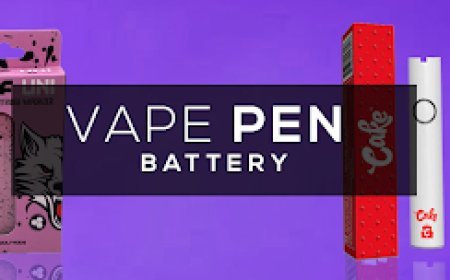
Modern battery designs range from slim pen-shaped devices to larger adjustable-voltage units with screens and multiple operating functions. The current vape battery category includes 510-thread models, variable-voltage batteries, cartridge battery kits, and devices with different battery capacities and charging systems.
Understanding the connection type, battery capacity, voltage controls, activation method, and charging interface makes it easier to distinguish between different battery designs.
What Is a Weed Vape Battery?
A weed vape battery supplies electrical power to a compatible cartridge or atomizer. When the device is activated, electrical energy is delivered to the heating element, which heats the material contained in the attached cartridge or chamber.
Unlike disposable devices, a separate battery is designed as a reusable hardware component. Once a cartridge is depleted, the battery can generally be detached and paired with another compatible cartridge.
The most common connection for cartridge-style hardware is the 510 thread. This standardized screw connection is widely used for oil cartridges and battery devices, although physical compatibility does not necessarily mean that every cartridge performs identically with every battery.
Understanding 510 Thread Compatibility
The 510 connection is one of the most important specifications to check when comparing batteries. A 510-thread battery uses a standardized screw connection that allows compatible cartridges to attach directly to the battery.
The current battery collection includes several 510-thread products, including slim batteries, square-shaped designs, and battery-and-atomizer kits.
However, the word "510" describes the physical connection rather than every electrical specification. Voltage range, resistance compatibility, physical dimensions, activation style, and cartridge fit can still vary between devices.
This makes checking the complete specification more useful than relying on threading alone.
Fixed-Voltage vs. Variable-Voltage Batteries
Voltage determines the electrical output delivered by the battery to the connected heating element.
A fixed-voltage battery operates at a predetermined output, making its controls relatively simple. Variable-voltage models allow the output level to be changed between available settings. Current 510 battery guides commonly describe adjustable ranges beginning around the mid-2V range and extending toward approximately 4V, depending on the device.
Variable-voltage designs provide more control over the operating characteristics of different cartridges. Some batteries use three or four preset voltage levels, while more advanced models provide a dial or digital control.
The choice between fixed and adjustable voltage is therefore primarily a hardware and control consideration.
Battery Capacity and mAh Ratings
Battery capacity is generally expressed in milliamp hours, abbreviated as mAh. A higher mAh rating indicates a larger electrical storage capacity, although actual operating time also depends on voltage, cartridge resistance, draw duration, and other factors.
For example, one current cartridge battery listing describes a 550mAh battery paired with a 510-thread connection and Type-C charging.
When comparing batteries, mAh should be considered together with the physical dimensions of the device. Higher-capacity batteries can require larger housings, while compact pen-style models often prioritize portability.
Preheat Function
Some variable-voltage batteries include a preheat mode. Rather than operating continuously at the selected voltage, the battery temporarily applies a lower-power heating cycle before normal operation.
Preheat is commonly implemented as a dedicated button sequence. For example, some 510 battery designs activate preheat through two rapid button presses.
This feature is particularly relevant to cartridges containing thicker formulations because warming the cartridge can change the viscosity of the material before normal heating begins.
The exact preheat duration and operating voltage vary between batteries, so the manufacturer's specifications should be checked rather than assuming every device uses the same cycle.
Button Activation and Draw Activation
Activation is another major difference between battery designs.
Button-Activated Batteries
Button-operated batteries require the user to press a physical button to activate the heating element. Some devices use additional button combinations for functions such as turning the battery on or off, changing voltage, or activating preheat.
This approach gives the user direct control over when the heating cycle starts.
Draw-Activated Batteries
Draw-activated batteries use an airflow sensor instead of requiring a physical firing button. When the user draws through the connected cartridge, the sensor detects airflow and activates the heating system.
Both systems are found across the broader vape hardware market, so activation type should be checked when comparing a weed vape battery.
Charging Ports and Rechargeable Design
Rechargeable batteries are designed around a built-in battery cell and charging connection. USB-C has become increasingly common across modern vape hardware, although some older devices use Micro-USB or proprietary charging connections.
A current DazzLeaf Alien Cartridge Battery listing, for example, specifies Type-C fast charging and a 550mAh battery.
USB-C also allows the charging port to be integrated directly into the battery body, eliminating the need for a separate proprietary connector on many newer designs.
When comparing models, check both the port type and whether a charging cable is included.
Display and Control Features
Basic batteries may use a simple LED indicator to communicate charging status or operating mode. More advanced models can incorporate digital displays.
The DazzLeaf Alien Cartridge Battery listed in the current collection features an LED screen alongside its 510-thread connection and 550mAh battery.
A screen can provide information such as voltage, battery status, or other operating data, depending on the particular hardware.
This creates a distinction between simple pen-style batteries and feature-rich cartridge batteries with more detailed controls.
Pen-Style vs. Box-Style Battery Designs
Physical shape is another way to classify a weed vape battery.
Pen-Style
Pen-style batteries are generally narrow and cylindrical. Their dimensions are designed around portability and a cartridge mounted at the top.
Slim Twist-style products are examples of this format, with the current collection including 510-thread pen batteries and battery-and-atomizer kits.
Box-Style
Box-shaped batteries provide more surface area for larger batteries, screens, controls, or additional circuitry. They may also provide a more substantial base for wider cartridges.
The choice between the two is therefore largely determined by the desired combination of size, controls, battery capacity, and cartridge compatibility.
Key Specifications to Compare
|
Specification |
What It Describes |
|
Thread |
Cartridge connection type |
|
mAh |
Battery capacity |
|
Voltage |
Electrical output |
|
Preheat |
Temporary warming function |
|
Activation |
Button or draw activation |
|
Charging |
USB-C, Micro-USB, or other connection |
|
Display |
Battery, voltage, or operating information |
|
Shape |
Pen, box, or enclosed design |
|
Cartridge fit |
Physical compatibility with attached hardware |
Looking at these specifications together gives a more accurate picture of the differences between battery models.
Choosing the Right Battery Format
When comparing a weed vape battery, start by identifying the cartridge connection. If the cartridge uses a 510 thread, a compatible 510 battery is the logical hardware category to investigate.
Next, consider whether fixed or adjustable voltage is preferable, followed by battery capacity and charging type. Preheat functionality can be useful as an additional hardware feature, while displays and button controls provide different levels of operating information.
Physical dimensions also matter. A slim battery may be convenient for compact cartridges, while a larger battery can accommodate additional controls or a higher-capacity cell.
Conclusion
A weed vape battery is more than simply a power source; it is a configurable piece of cartridge hardware with specifications covering threading, voltage, capacity, activation, charging, and physical design. Current options include slim 510-thread pens, variable-voltage models, battery-and-atomizer kits, and screen-equipped devices. For readers comparing available battery hardware, Zmarksthespot provides a reference point for examining different battery formats and specifications. Checking the connection type first and then comparing voltage, mAh, charging, activation, and additional controls provides a straightforward way to understand how individual batteries differ.
What's Your Reaction?
 Like
0
 Dislike
0
 Love
0
 Funny
0
 Angry
0
 Sad
0
 Wow
0